The Traveller’s Guide to the Algerian Sahara
WHY NOW IS THE TIME TO EXPERIENCE The WONDERS OF THE Tassili N’Ajjeer National Park
Many people dream of gazing at the vast sand seas, palm fringed oasis, and otherworldly rock forests of the Sahara Desert, but access to this awe-scape has been difficult due to visa restrictions and uncertainty.
But this is changing.
Algeria, host to a large swathe of the Sahara Desert, is now encouraging tourism, and providing a visa-on-arrival program for travellers on organised Sahara tours.
Algeria is now the safest, and most accessible way to experience the wonders of the world’s largest dry desert: The Sahara.
The Tassili N’Ajjer National Park: the most accessible way to visit the Sahara Desert
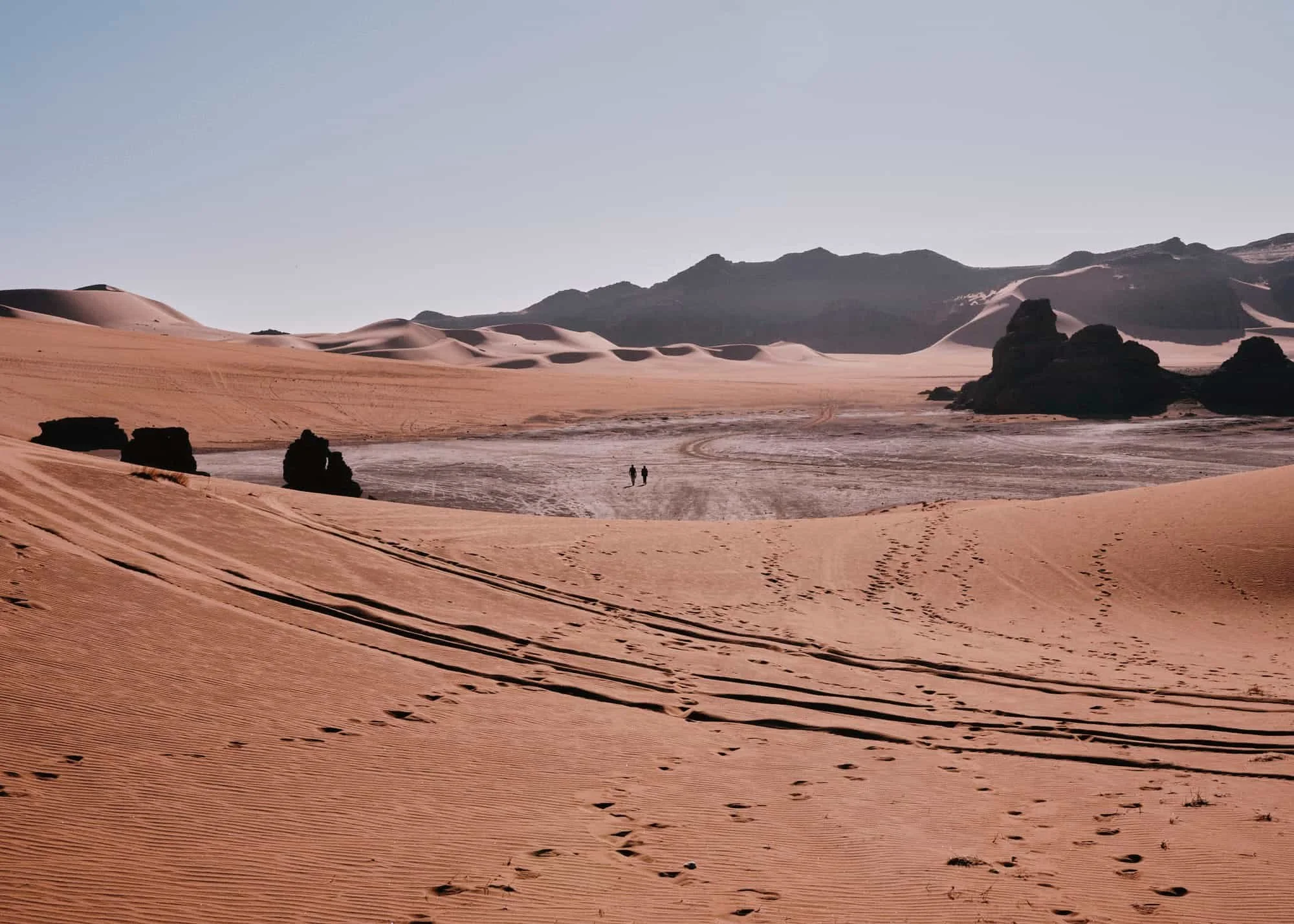
This guide concentrates on the Tassili N’Ajjer National Park, one of the most spectacular landscapes on earth and the largest national park in Africa. Providing a mix of natural grandeur and ancient history
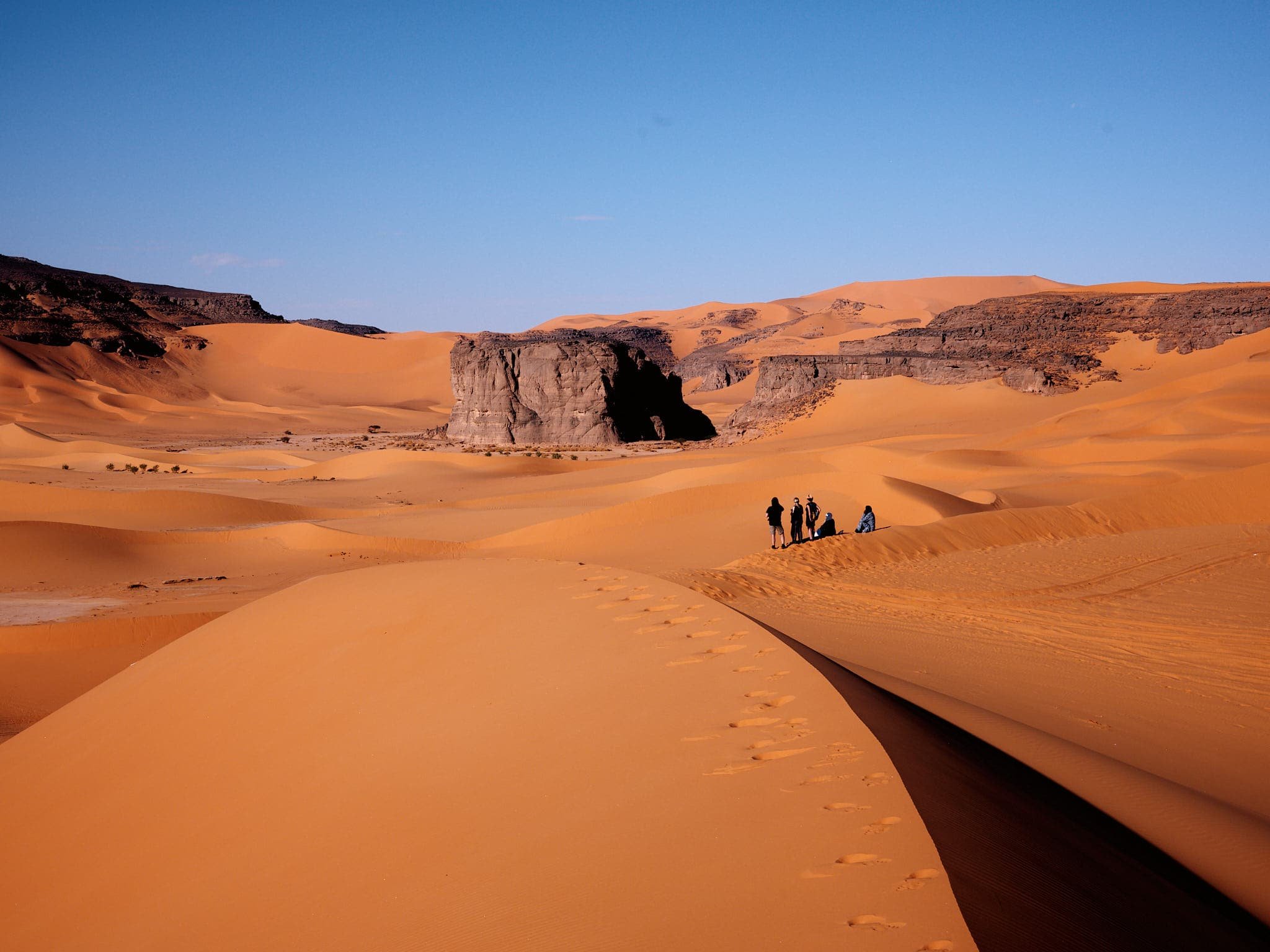
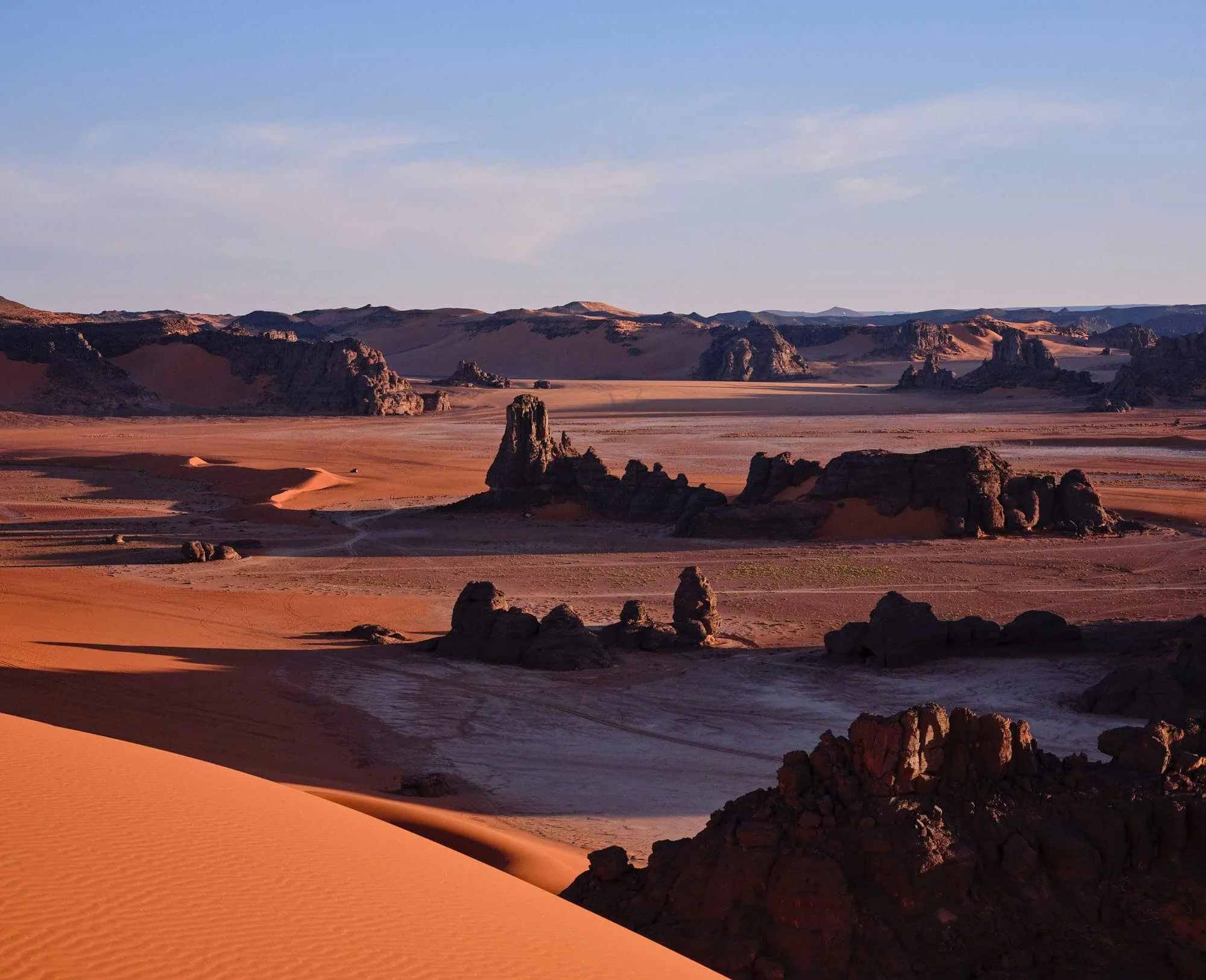
Unesco, which inscribed the park as a World Heritage Site, describes it as ‘resembling a strange lunar landscape.’ With its surreal sculpted outcrops and deep pink dunes, it’s easy to see how people compare it to Mars.
There are some compelling reasons to consider visiting the Tassili N’Ajjer National Park now.
(Note: Visitors with more time might combine Tassili with the Ahaggar National Park, an extraordinary mountain range accessible from Tamanrasset, a 45-minute flight west from Djanet.)
Many people dream of gazing at the vast sand seas, palm fringed oasis, and otherworldly rock forests of the Sahara Desert, but access to this awe-scape has been difficult due to visa restrictions and uncertainty.
But this is changing.
Algeria, host to a large swathe of the Sahara Desert, is now encouraging tourism, and providing a visa-on-arrival program for travellers on organised Sahara tours.
Algeria is now the safest, and most accessible way to experience the wonders of the world’s largest dry desert: The Sahara.
This guide concentrates on the Tassili N’Ajjer National Park, one of the most spectacular landscapes on earth and the largest national park in Africa. Providing a mix of natural grandeur and ancient history
Unesco, which inscribed the park as a World Heritage Site, describes it as ‘resembling a strange lunar landscape.’ With its surreal sculpted outcrops and deep pink dunes, it’s easy to see how people compare it to Mars.
There are some compelling reasons to consider visiting the Tassili N’Ajjer National Park now.
(Note: Visitors with more time might combine Tassili with the Ahaggar National Park, an extraordinary mountain range accessible from Tamanrasset, a 45-minute flight west from Djanet.)
Five Reasons to visit the Tassili n'Ajjer National Park
A SPECTACULAR, YET LITTLE VISITED Landscape
The Tassili n'Ajjer National Park is one of the planet’s most spectacular yet little-visited landscapes: renowned for its gigantic dunes and dramatic sandstone monuments. The Algerian government is now encouraging tourism, and there will be an upswing in tourist numbers. Now is a great time to go.
View my slideshow - wide eyed in wonder on a tour of the Sahara with the Tuareg
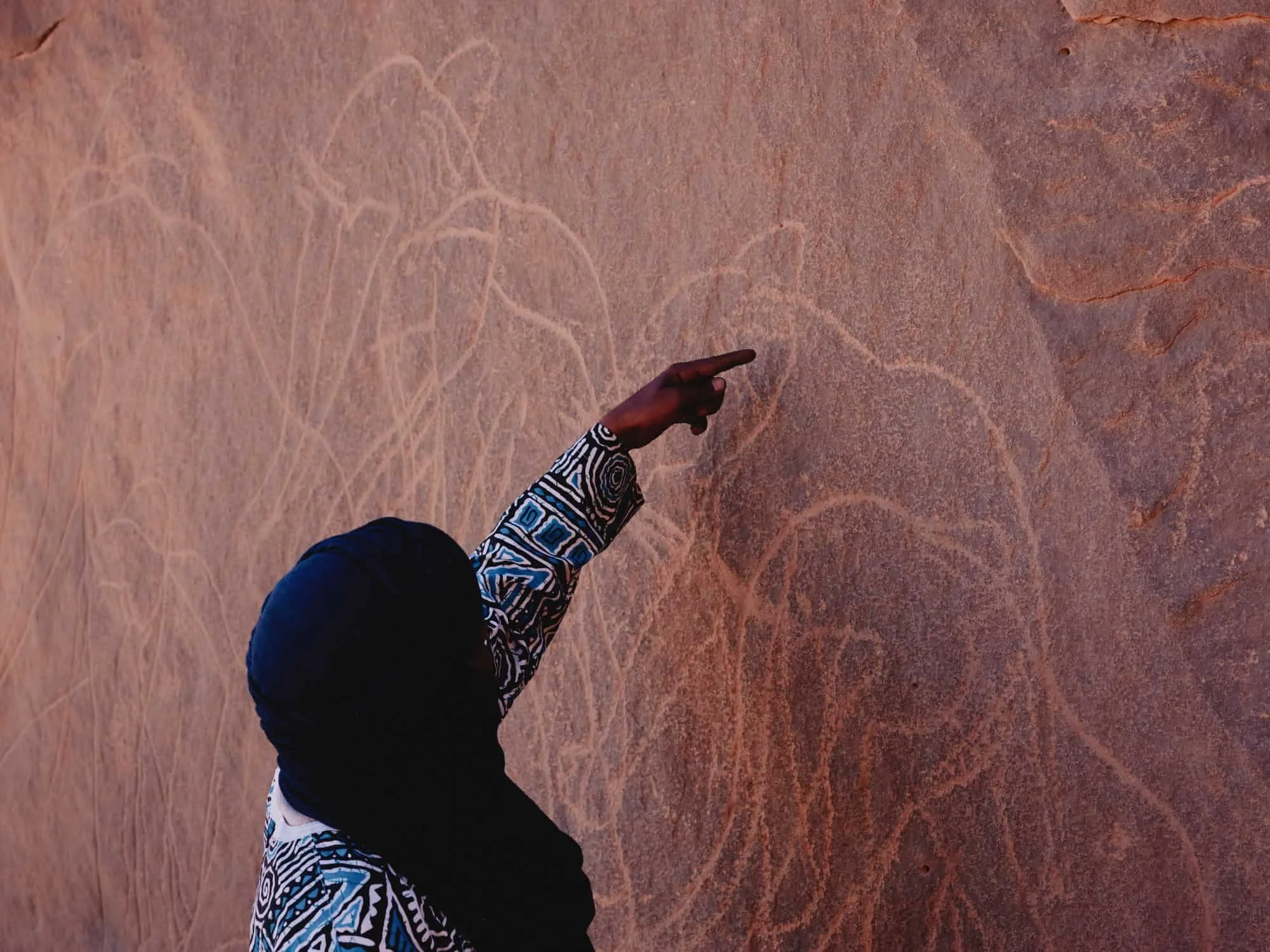
SEE ‘the greatest museum of prehistoric art in the world’
The Tassili n'Ajjer National Park has over 15,000 words of rock art, dating from the time when the Sahara was green and supported human and animal life. The park has been called ‘the greatest museum of prehistoric art in the world’, and is inscribed on UNESCO’s World Heritage List.
Read more: Deep in Algeria: Prehistoric Art from when the Sahara was Green
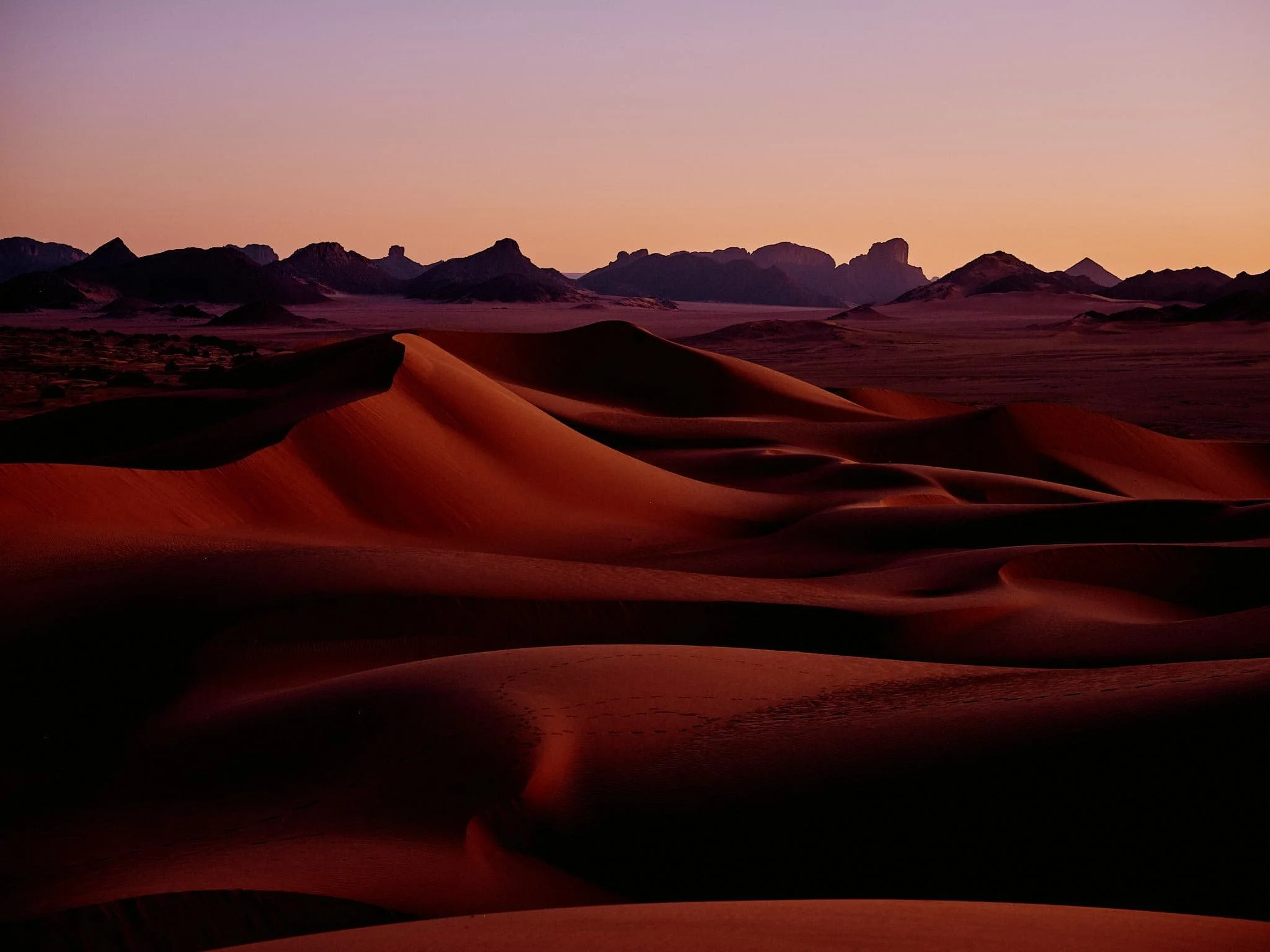
SUNRISES, SILENCE, SUNSETS, aND STARGAZING
Sunrises and sunsets in the Sahara bathe the landscape in a surreal and palettes of colour. The Sahara is one of the quietest and least light-polluted places on earth. The ‘Saharan silence’ is all around and can feel profound.
Read more: My ‘Baptism of Solitude’ in the Sahara Desert.
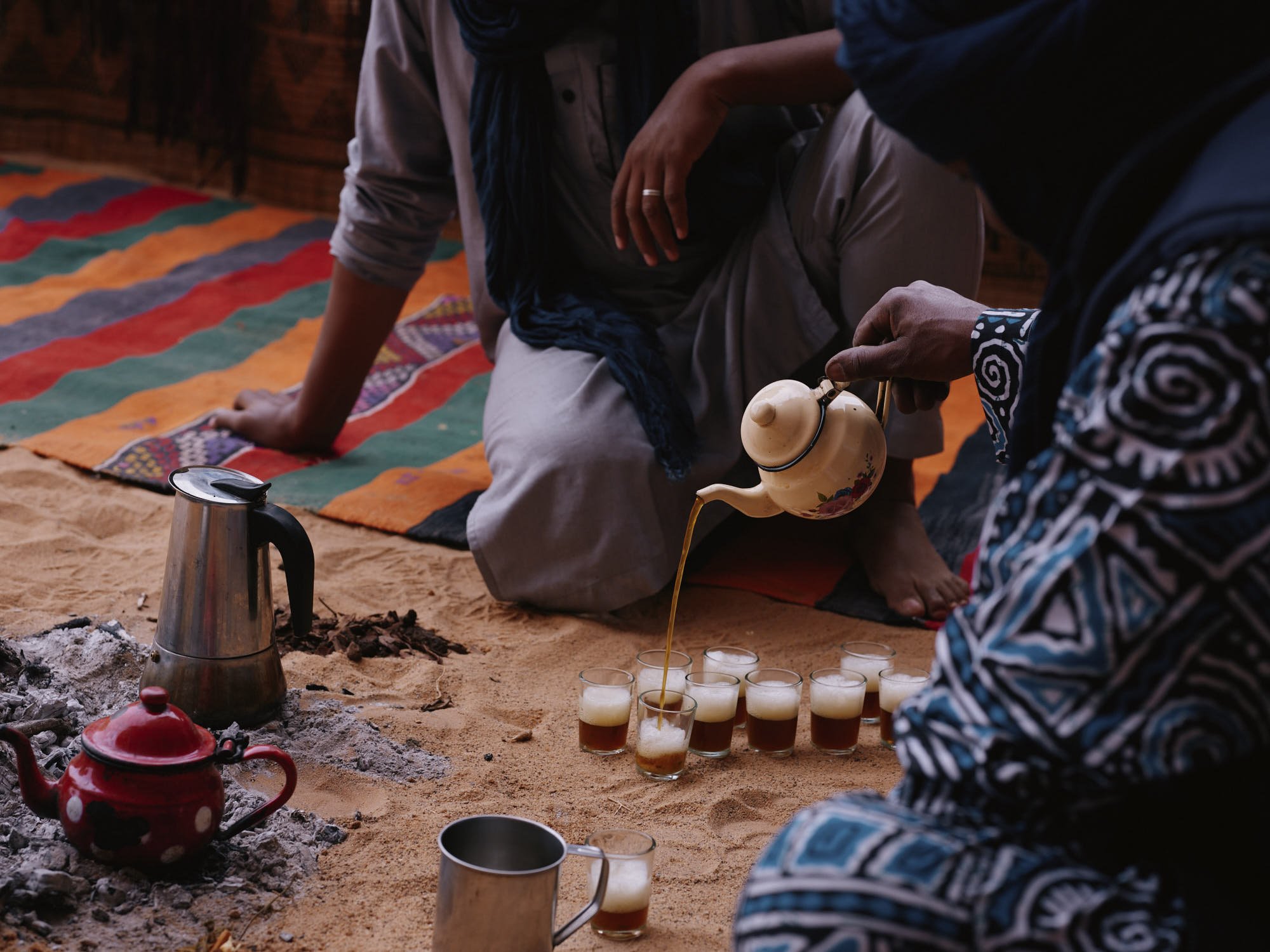
EXPERIENCE Tuareg Culture
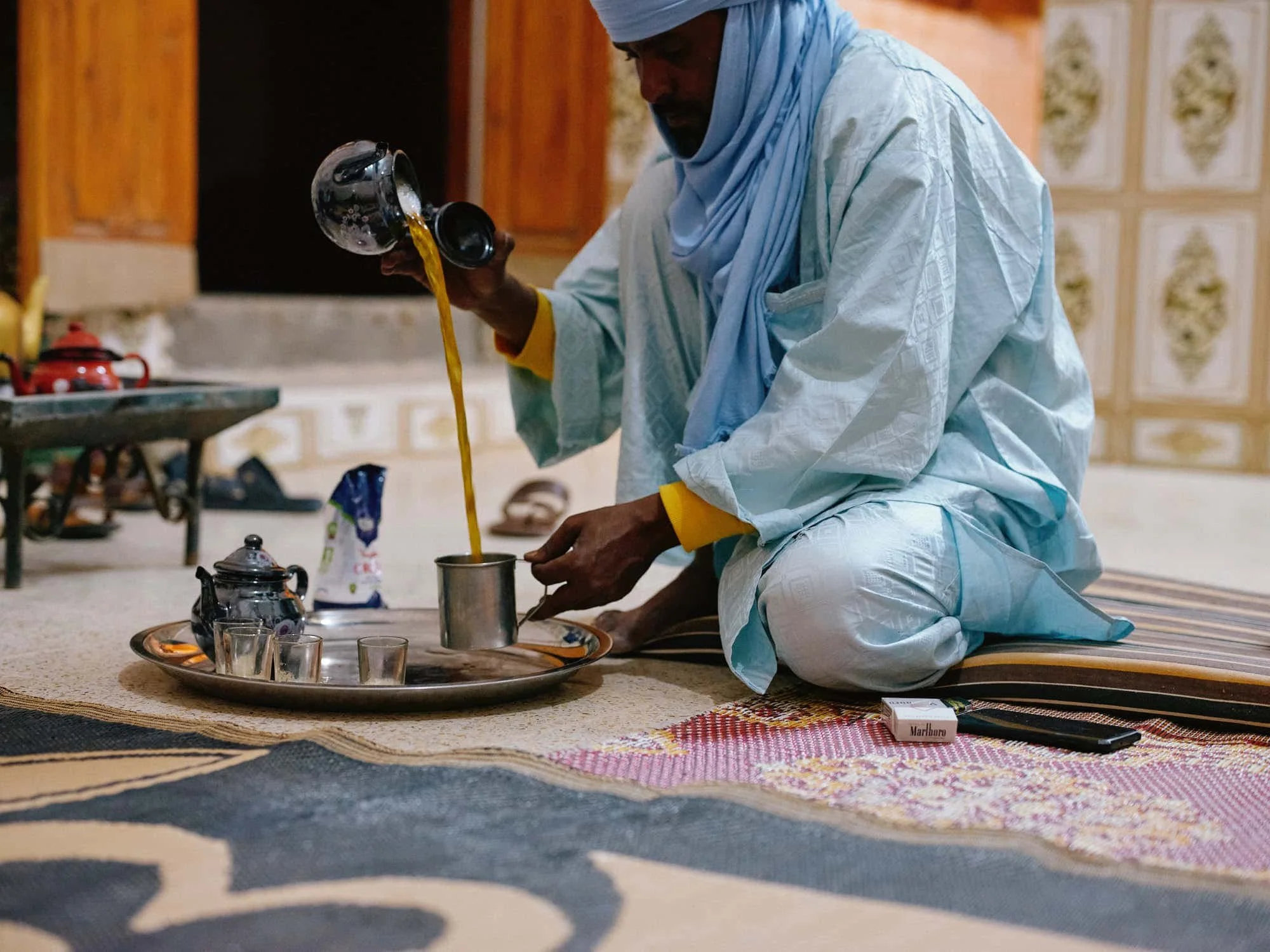
You will experience the hospitality of the Tuareg people firsthand. Tuareg men wear the legendary blue veil, turn tea-making into an art from, and the play mesmerising Desert Blues around the campfire at night.
Read more: A people without borders: at home with the Tuareg, and Experiencing Tuareg desert blues around the campfire in the Sahara
NO mass tourism
Algeria has gone to great lengths not to dilute its culture through tourism – visitors to southern Algeria get a rich experience, without a Starbucks in sight.
Improved Accessibility
easier visaS
After years of difficulty, there is now a visa-on-arrival program (up to 30 days) for tourists on organized Sahara tours.
Direct Flights
Air Algerie now flies between Paris and Algiers, where you can connect with an internal flight to Djanet, the gateway to the Tassili N’Ajjer.
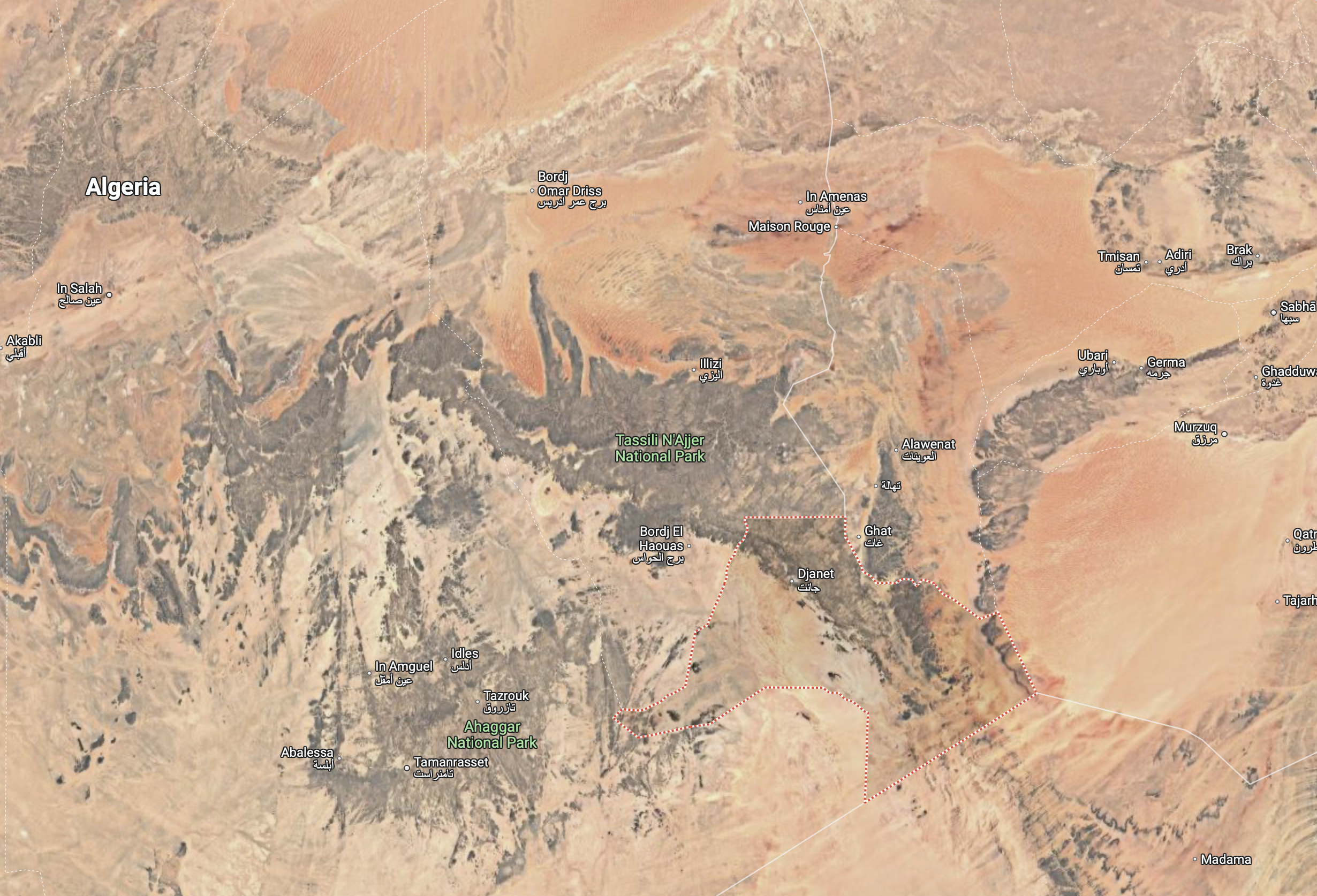
Djanet and the Tassili n'Ajjer National Park lie deep in Southern Algeria: a 2.15 hour flight from Algiers.
Five Wonders of the Tassili n'Ajjer National Park
Tassili N’Ajjer is a vast UNESCO World Heritage site, renowned for its dramatic sandstone landscapes and archaeological value. The park is vast and full of many wondrous sights. Here are a few five well-known highlights that you can experience on a tour.
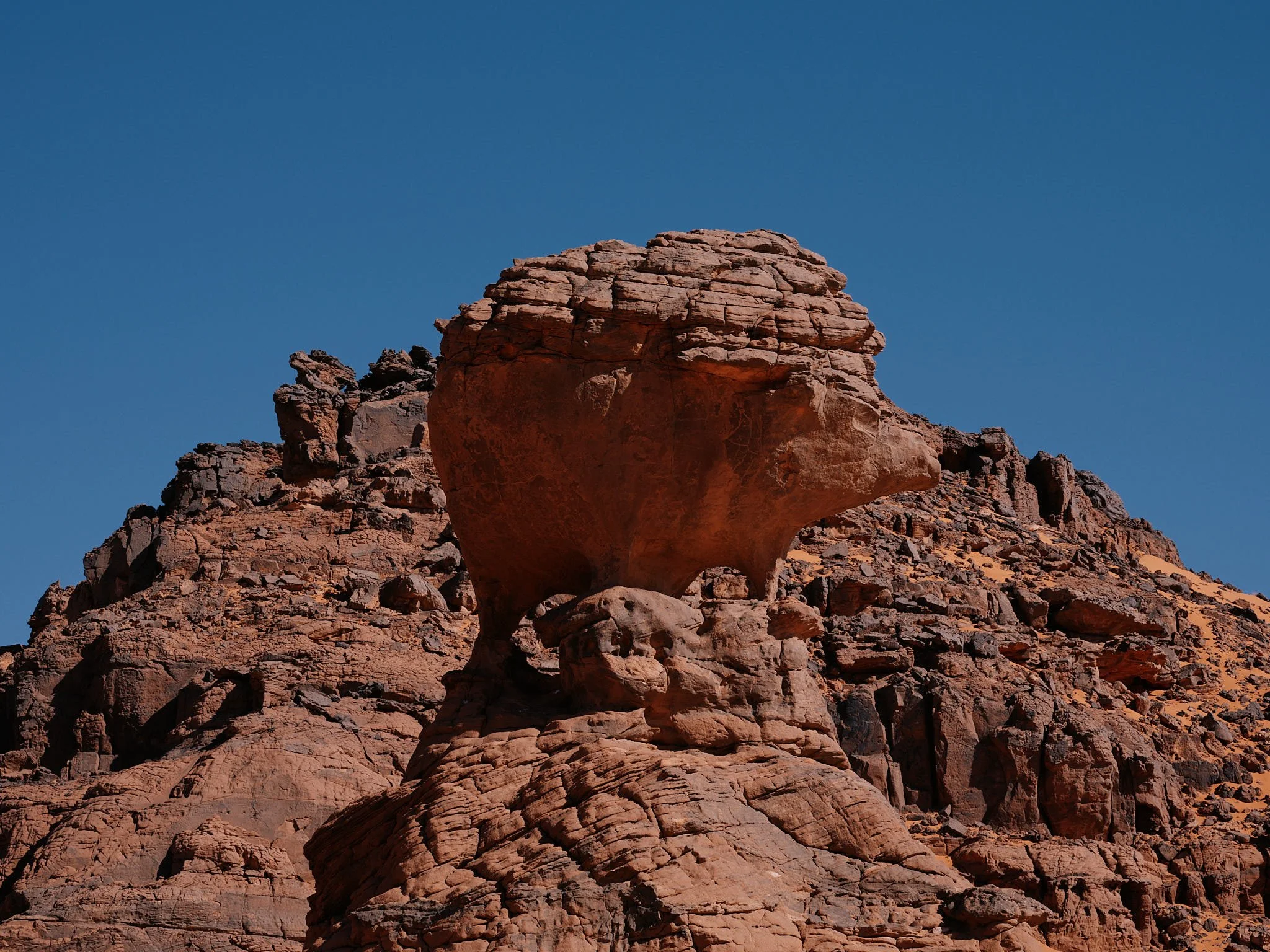
THE HEDGEHOG (TAMRIT)
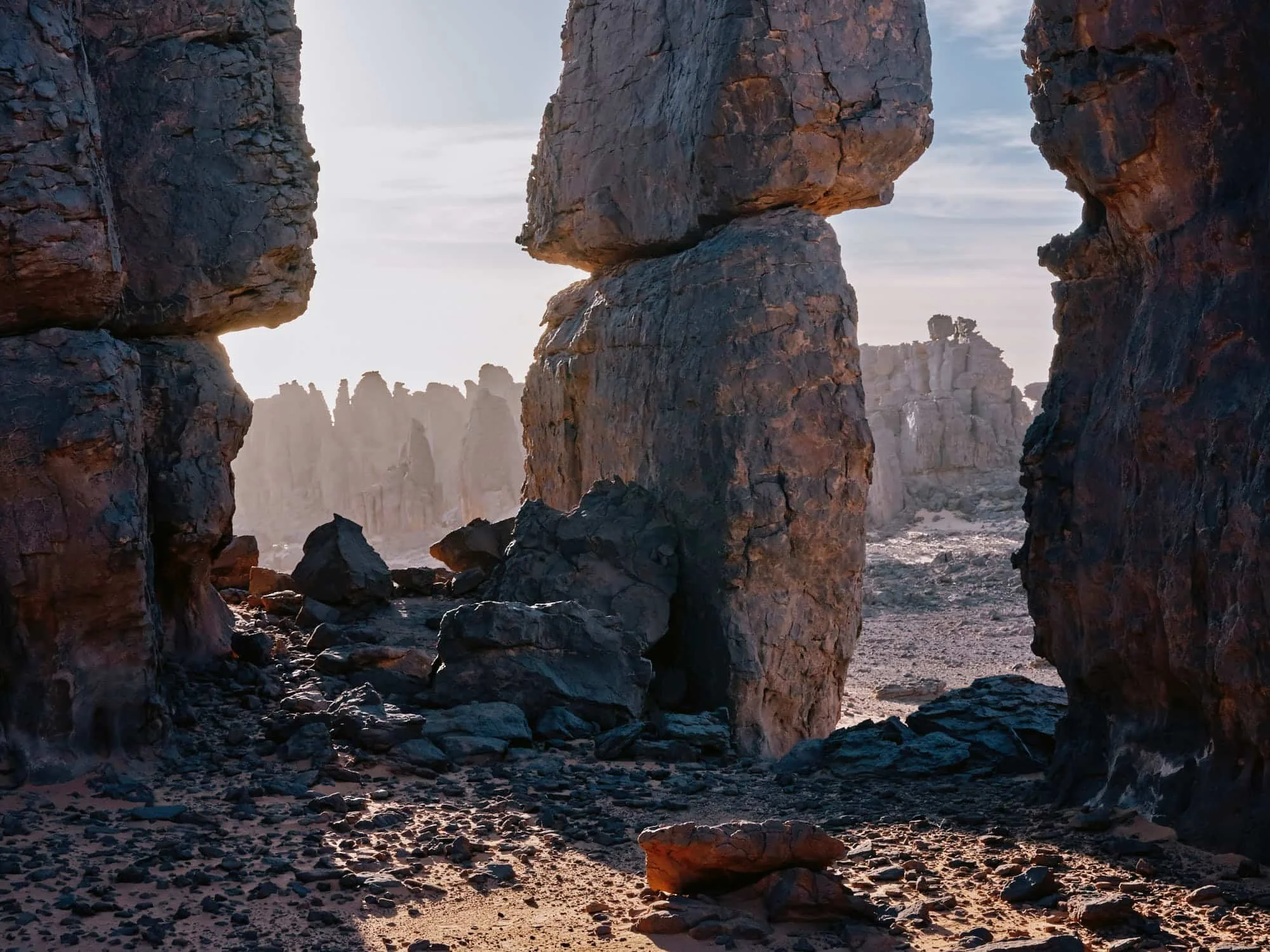
The Hedgehog is one of Tassili’s most surreal rock formations: a freestanding sandstone monolith that has been eroded by wind and sand into a distinctly spiky, rounded shape.
Located near Tamrit, this site provides a powerful perspective on the scale and erosive force of the desert elements.
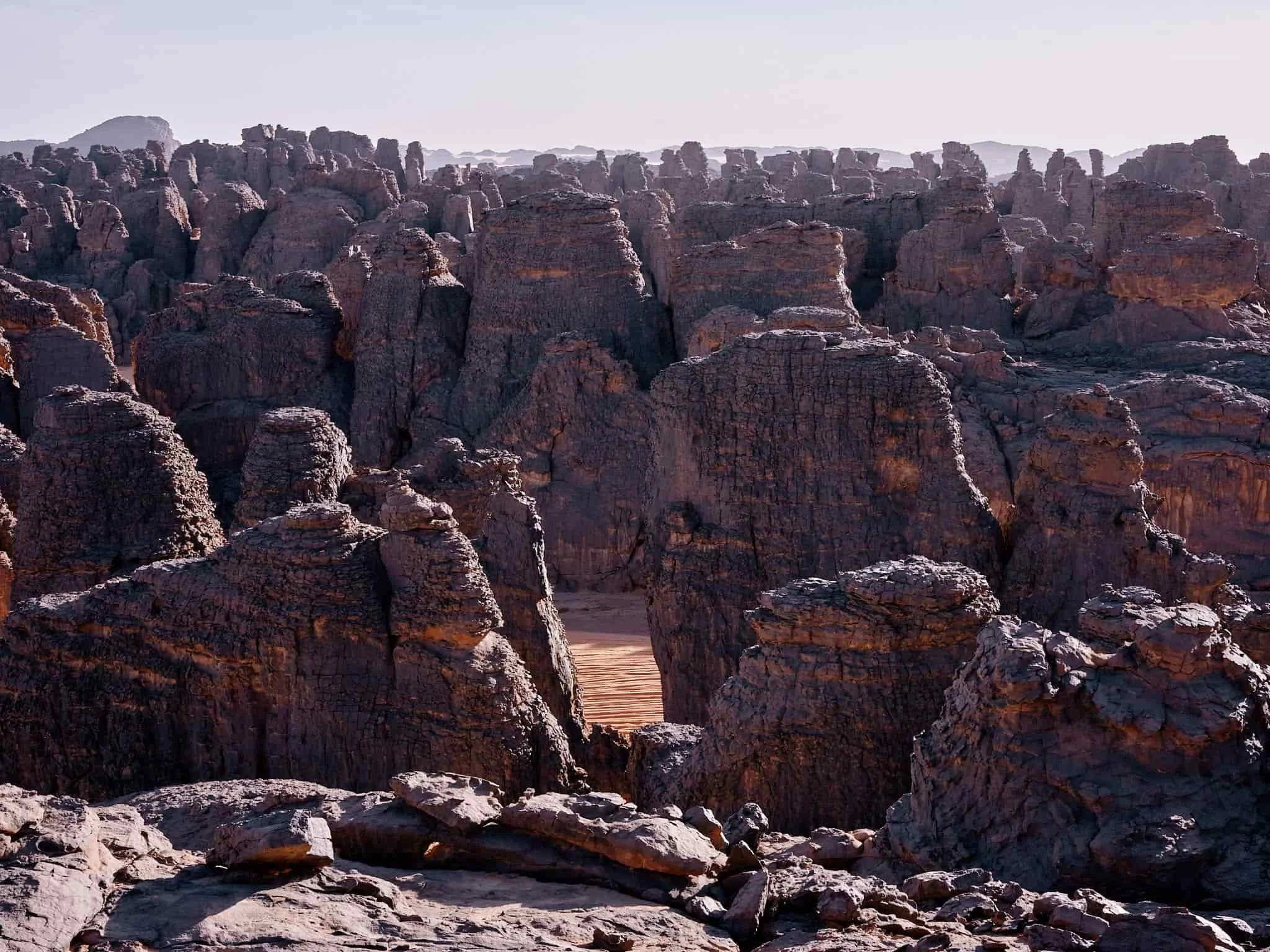
The Rock Gardens (Stone Forests)
On the Tassili plateau are areas where wind and water have sculpted the sandstone into complex, intricate formations. These ‘stone forests’ are characterised by high, thin spires, arches, and eroded mushroom-like rocks. These areas feel genuinely otherworldly, and feel like an endless, natural exhibition of abstract art.
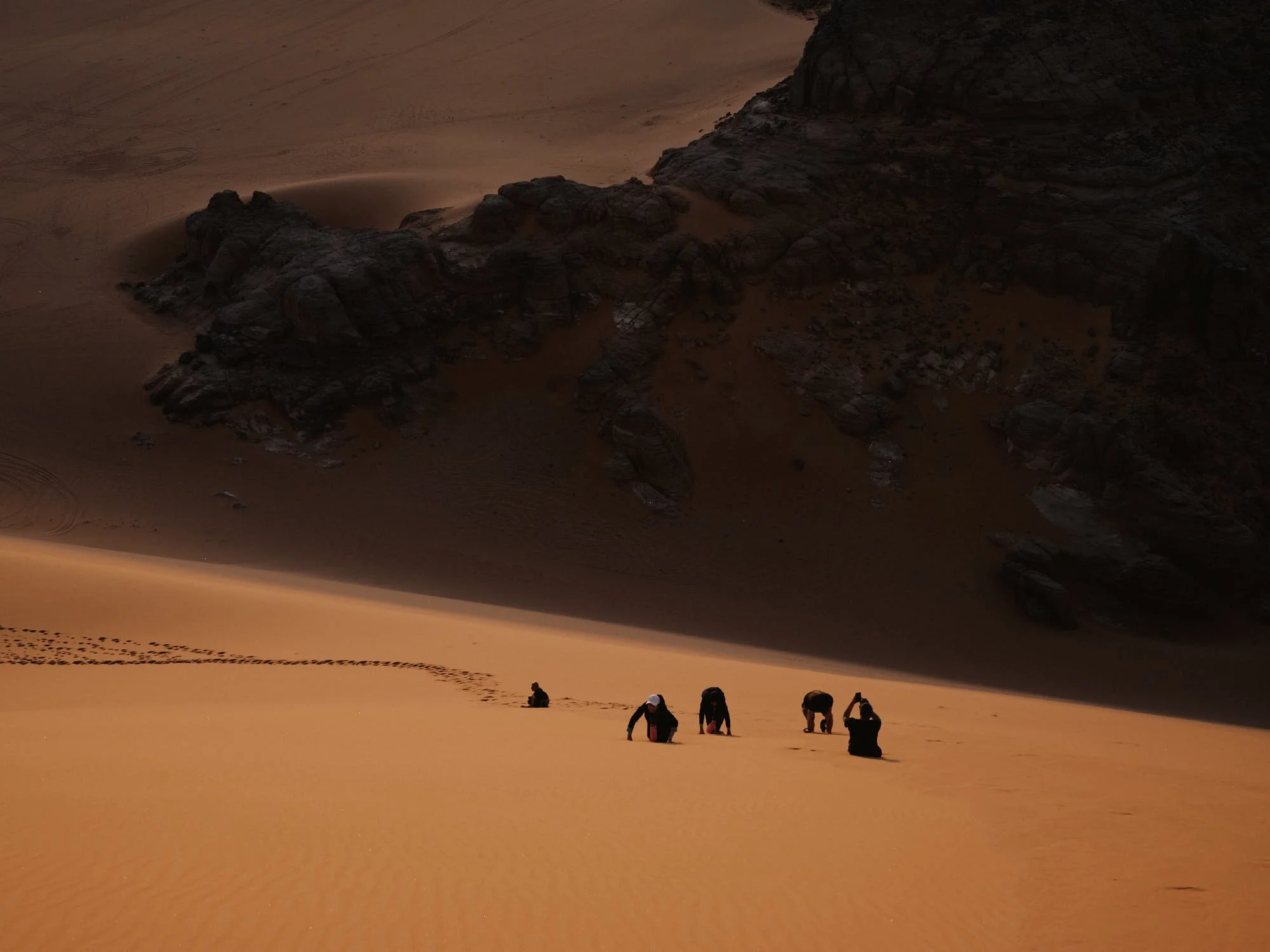
Tin Merzouga: The Red DuneS
Located deep within the Tadrart Rouge, Tin Merzouga is the name given to a spectacular expanse of towering, fiery-red dunes. This vibrant hue is caused by a high concentration of iron oxides in the sand.
Climbing one of these monumental crescent-shaped dunes is a challenge, (some are up to 200m high) but the reward is a panoramic view of the red sand sea that is especially beautiful at sunrise and sunset, when the dunes glow with their most saturated, intense colour.
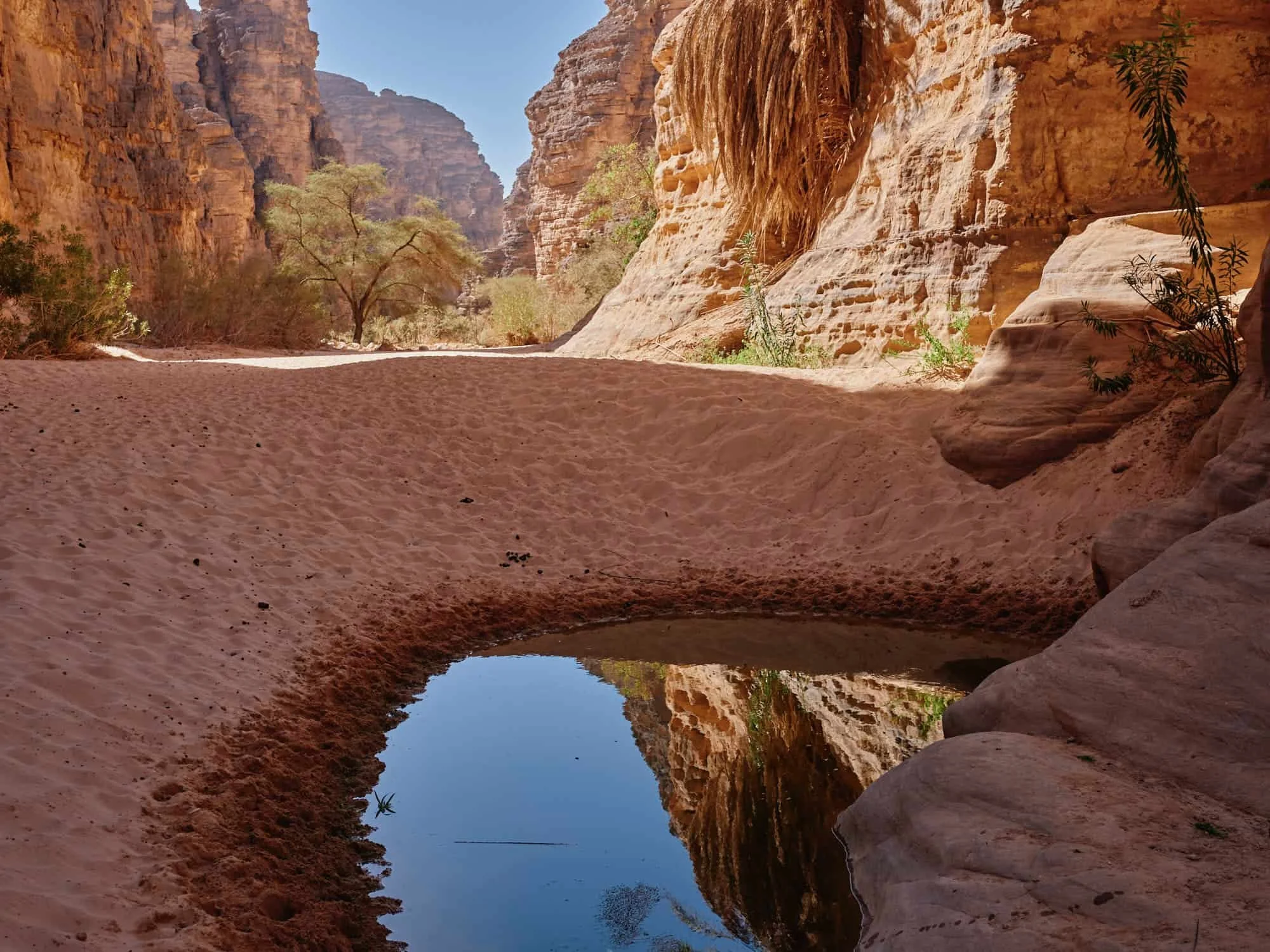
Essendilène Canyon
A deep, narrow gorge carved into the plateau that provides an intimate, shaded exploration of the desert's hidden life. The canyon walls offer shade and capture precious water, creating one of the few natural sanctuaries where plant life can survive in the region.
The trek through the canyon is cool and sheltered, leading to gueltas (natural pools). These essential water sources sustain local wildlife and offer a refreshing break from the arid heat of the plateau.
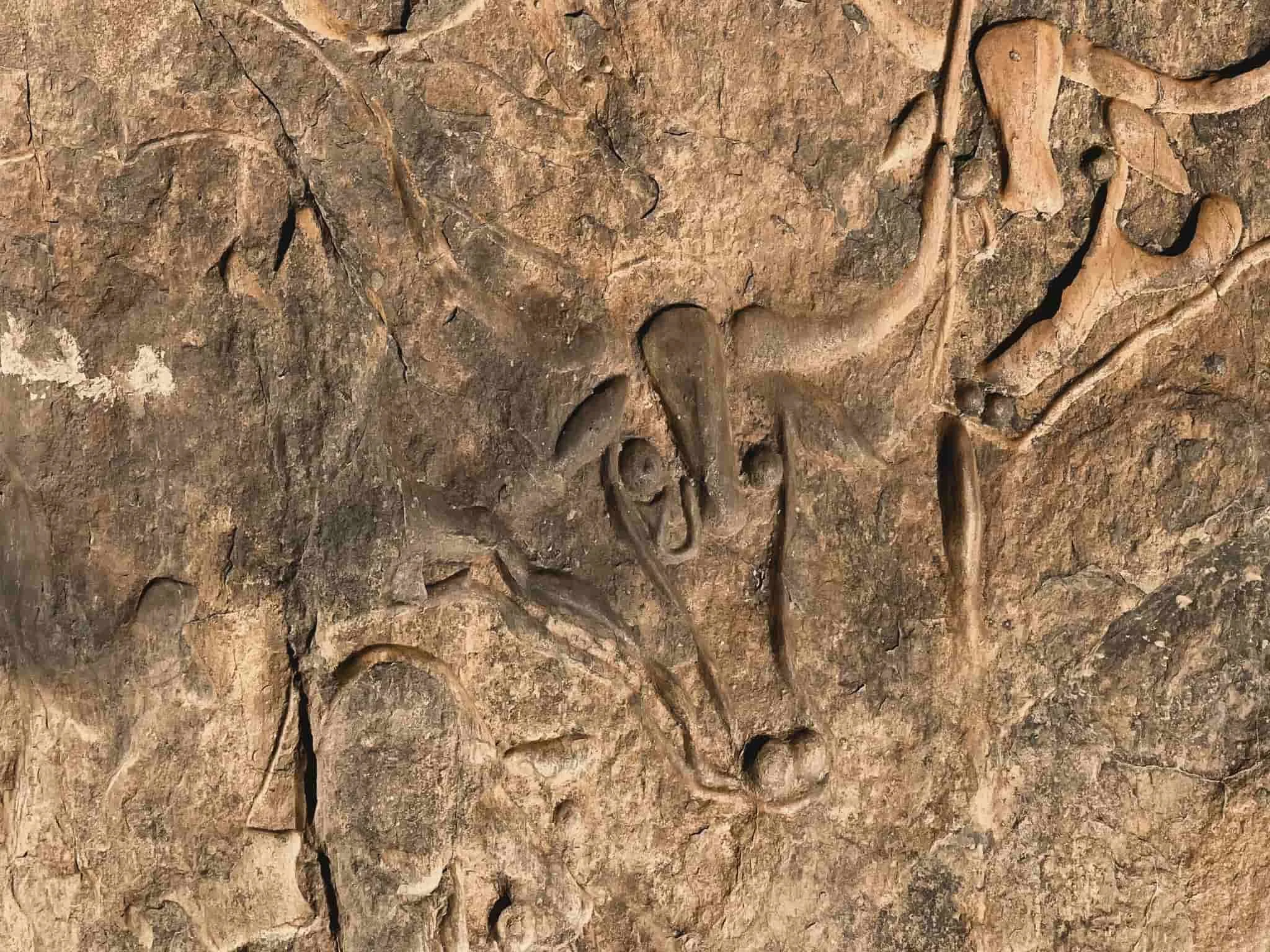
The Crying CowS (Aghram)
The “Crying Cows,” are a series of Neolithic engravings on rock face located south of Djanet. The way the teardrops appear to roll down the faces of the animals is thought to represent the despair of a herder as he watched his cows die when the “African Humid Period” ended and the Sahara became desert.
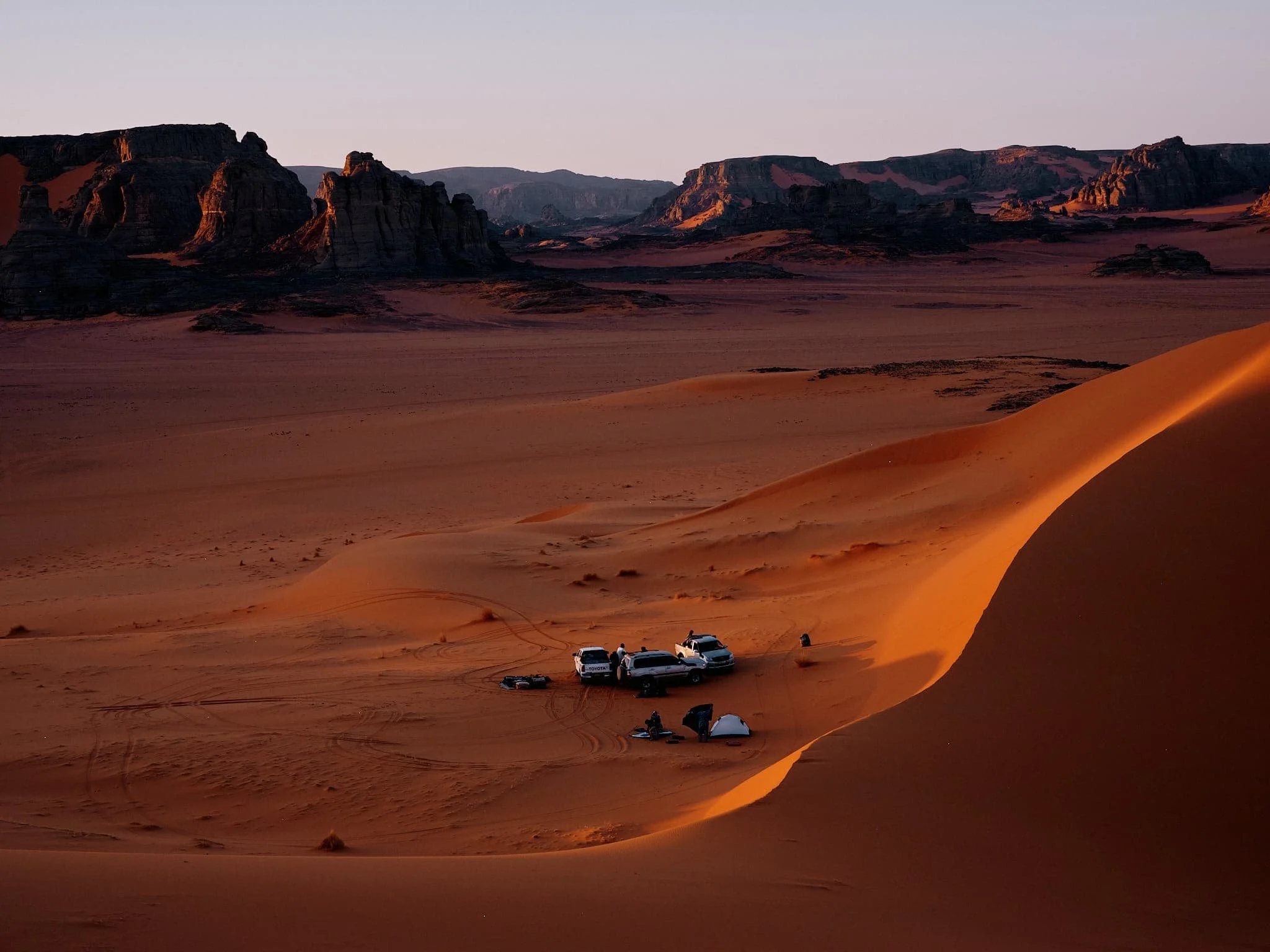
Your Only Way In: A Guided Tour
You must join a guided tour to safely and legally explore the Algerian Sahara, unless you arrive in your own capable 4x4 vehicle. (I met a group of French 4x4 drivers in the Tassili, they told me that they spent a lot of time in liaison with the Algerian Authorities and they still needed to hire a Tuareg Guide).
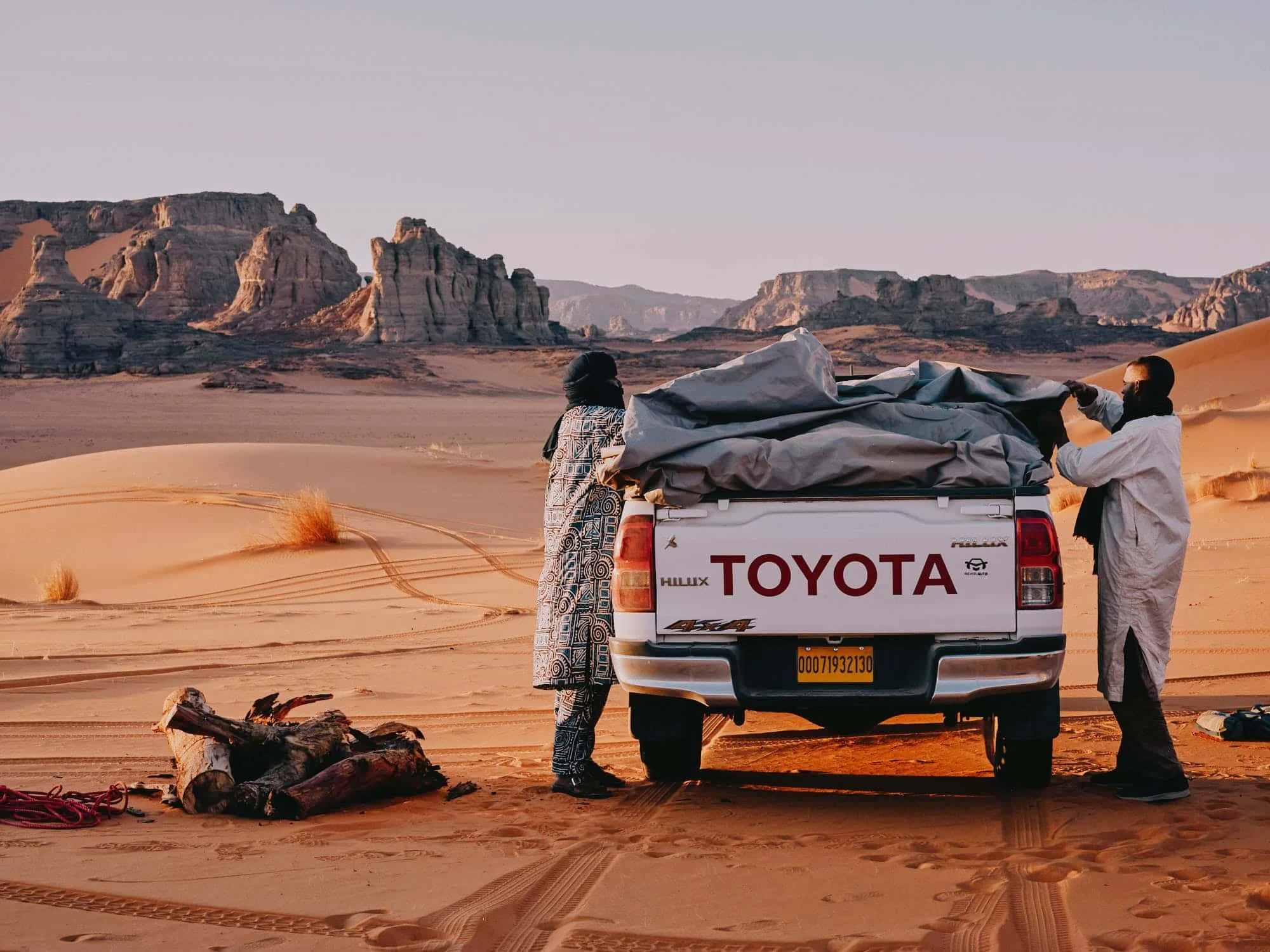
The Sahara is an extreme environment and a guided tour with the Tuareg offers an authentic desert experience. You will travel in rugged and comfortable Toyota 4x4s, with back-up vehicles led by experienced Tuareg guides who prioritise your comfort, safety and cultural insight.
I loved every minute of my tour and learned so much about Tuareg culture.
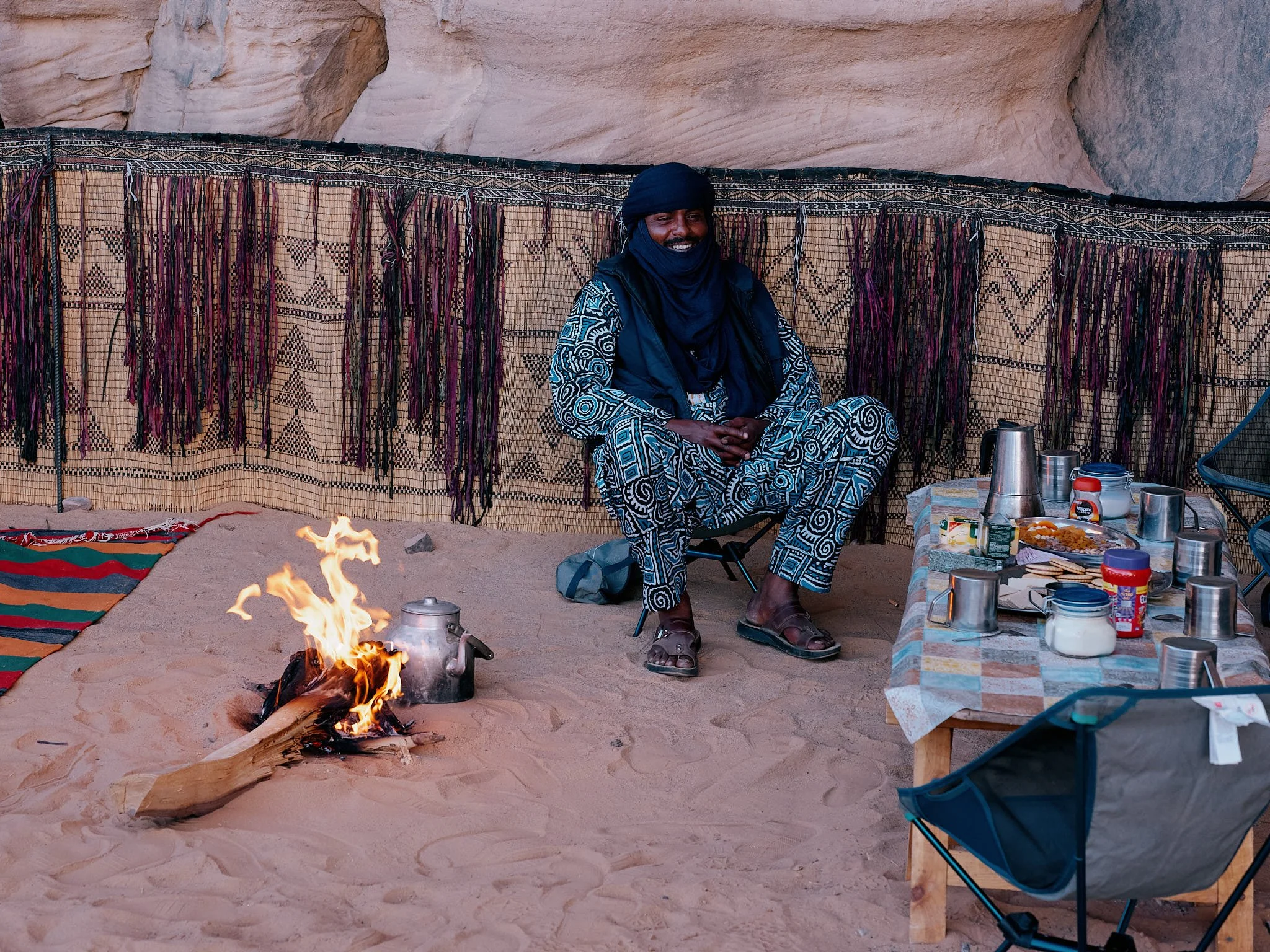
What’s life like on a small group guided tour?
More civilised, and more exhilarating than you might imagine.
See my slideshow: Wide-eyed in wonder on a Saharan tour with the Tuareg
Arrival and meeting the team
On arrival in Djanet Airport, Tito, our Tuareg tour guide met us and carried our luggage to the Toyota 4x4.
From that moment on I felt in the complete care of our Tuareg guide and crew.
The next morning we had breakfast at a simple, whitewashed lodge in the oasis town of Djanet.
Meanwhile our Tuareg crew filled up containers with many litres of fresh water from the spring and loaded the Toyota with food and camping gear.
We headed out of town and turned off the tarmac into the desert.
That moment was raw exhilaration, but it was just the beginning.
The Daily Experience
What I found in the Tassili N'Ajjer National Park in the south of Algeria left me in a state of open-mouthed wonder. Around every corner was a new spectacle: colossal dunes, sandstone pinnacles formed into strange shapes, thousands of ancient rock art drawings and vast ‘rock forests’.
What I found in the Tassili N'Ajjer left me in a state of open-mouthed wonder. Around every corner was a new spectacle: colossal dunes, sandstone pinnacles formed into strange shapes, and vast ‘rock forests’.
The Vibe: I found the Tuareg to be honourable, warm, and fun. There is so much space in the Sahara that it often felt like we had this vast land to ourselves. When we did meet other visitors, (mostly Algerian and French) it was cause for celebration as the Tuareg guides exchanged news on the ‘bush telegraph’.
Camp Life: Our tents were put up every night, extra blankets were provided, and we were entertained with desert blues around the fire under a sky thick with stars. [Read more: Experiencing Tuareg desert blues around the campfire in the Sahara]
Food: The food, prepared freshly at camp by our cook, was excellent. Salads were lavish, served with rice or potatoes, and suitable for vegetarians/vegans. There were frequent stops for Tuareg tea (essential for all desert travellers) and Earl Grey (with the British Houses of Parliament on the box) was served in the afternoon with lots of biscuits.
Pace of Travel
Travel is by 4x4, the pace is relaxed with not more than 2/3 hours driving and stops to see rock art, incredible rock formations or wild camels. There was plenty of time set aside for personal exploration around the camp and wonderful group walks in the morning when it was cooler.
I would wake up and climb a dune to watch the sunrise, often arriving on the top to find that the 70 year old Polish grandmother in our group had beaten me to it.
Practicalities & travel essentials
Logistics & Safety
How to Go: A guided tour is the only way to experience the Sahara unless you have your own 4x4 vehicle or camel 🐪
Safety: It is essential to travel with an experienced guide, a crew, and a back-up 4x4 vehicle. Guides have operated here for years without incident, and there is a strong military presence near the Libyan border.
Insurance: Algeria is usually covered on a worldwide travel insurance policy. But do check with your insurance provider.
When to Go: November to March. Guides will not take you into the parks during summer as it is dangerously hot.
Language: French is widely spoken; English is less useful.
How long to go for: Allow 7-10 days for the Tassili n'Ajjer National Park and 4-8 days for the Ahaggar National Park.
Getting There
International: Fly to Algiers (2.15 hrs)
Internal: Fly Algiers to Djanet (2.15 hrs) (for Tassili N'Ajjer).
Extension: Tamanrasset (for Ahaggar) is a further 45-minute flight from Djanet.
Visas
Option A (Recommended): Visa on Arrival. Available for up to 30 days if organized by your tour operator for travel in the South.
Option B: Consulate Application. Apply via the Algerian Consulate in your home country. Note: This requires patience. Approvals can be slow, sometimes arriving just days/weeks before travel.
Money & Shopping
Currency: Algerian Dinar. Only available in-country.
Cash: Bring Euros (€) to exchange.
Card: In Southern Algeria, the use of credit cards and payment machines is extremely limited. Bring enough cash for your entire time in Algeria.
Costs: On guided tour most of your expenses (food/accomodation/transport) are covered by the cost of the tour. Tours are very reasonably priced for what is on offer (approximately £1000 - £1500 for a tour 0f 7-10 days from a local Tuareg operator. I took cash and paid after the tour was over (I found the Tuareg to be very honourable and honest).
Costs outside of the tour:
- Budget Hotels: Start from around €30+ per night, often including breakfast.
- Mid-Range and higher: €200+, as hotels are pricey due to low mass tourism.
- Inexpensive Meal: Around €2-€5.
- Mid-Range Restaurant (3-course meal for 2): Around €20.
- Local Transport: Very cheap, often just a few euros.
Shopping: Look for Tuareg silver jewellery or a ‘Tagelmust’ (Tuareg headscarf) in the market in Djanet.
Tech & Packing
Phone: Buy a local SIM at Algiers Airport. Or use the Saily eSIM.
Coverage is patchy in the South; some hotels have Wi-Fi.
Pack: A hat with good coverage from the sun, Sunglasses, water bottle, sunscreen walking boots/shoes. Many Tuareg like a bar of chocolate as a gift.
Soundtrack: Get in the mood before you travel. [Listen: Tuareg Desert Blues–a Spotify playlist]
READING
Read my post: 6 Favourite Books: The Sahara Desert
Contacts & Operators
Personal Recommendation: Tito Khellaoui (@titokhellaoui on Instagram). Tito speaks French. Pióra Klinger (@algerian_sahara_lover on Instagram). English-speaking support, organises non-profit trips via Instagram).
I have traveled with Tito and Pióra and can firmly recommend them.
(I paid full price for my trip and get no financial reward for recommending)
Algerian Operators: Tinariwen Tours and Duneya Tours.
These are well-known Tuareg owned operators, I have no experience with them but provide as a resource.
International Operators: Wild Frontiers UK-based, offers "Algeria: Saharan Desert Adventure" and Native Eye offer ‘Algerian Odyssey’.
These are well-known UK Travel operators, I have no experience with them but provide as a resource.
Independent Research
Chris Scott’s website Sahara Overland
A goldmine of information for everything Sahara related.
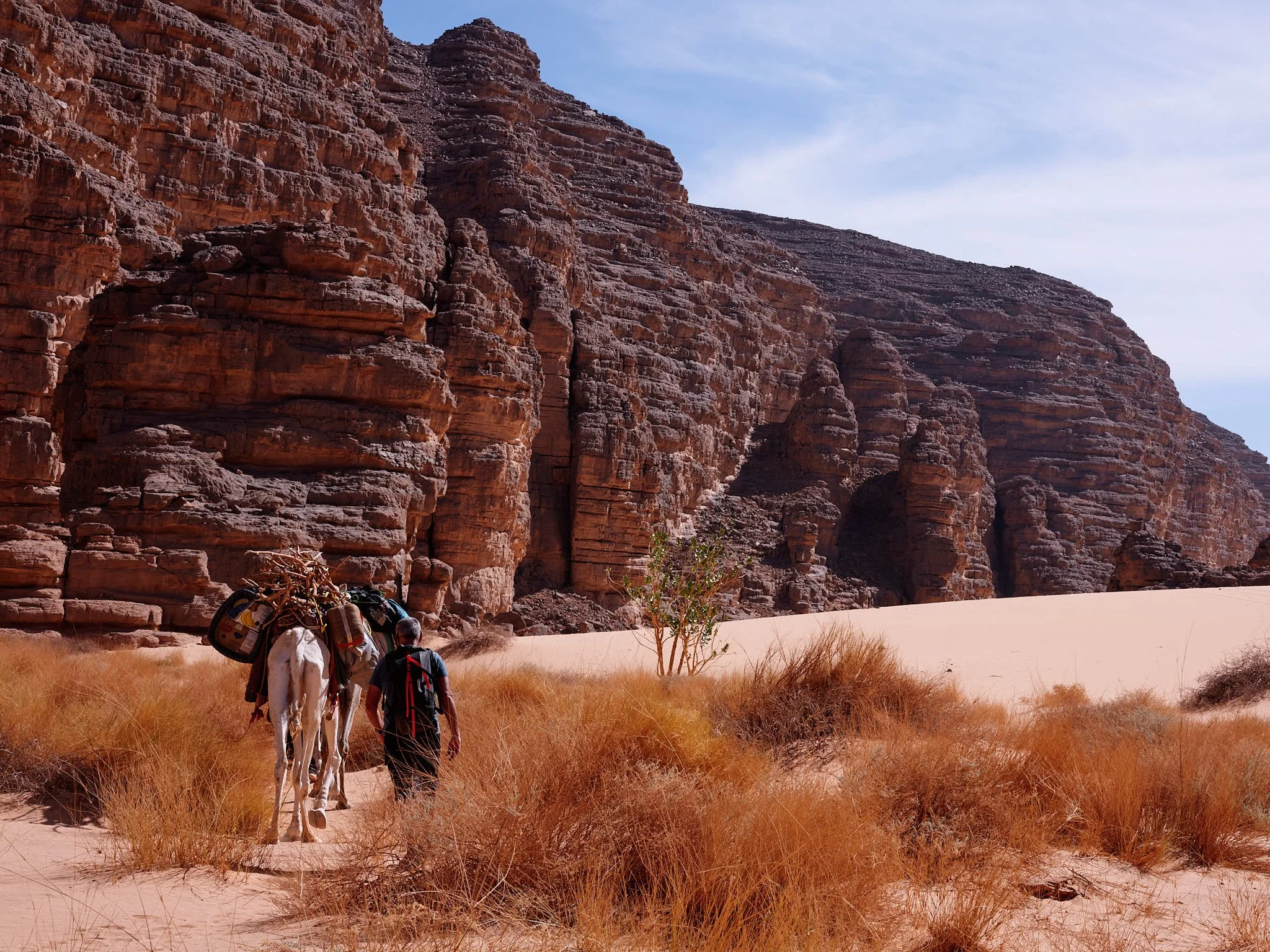
A Venezuelan man on a camel trek in Essendilène Canyon
The Slow Travel Alternative: A Tour with Camels
The Tuareg swapped the camel for the 4x4 Land Cruiser long ago. But for those who seek a more romantic mode of travel, a camel trek (méharée) is the ultimate "slow travel" experience.
Unlike a 4x4 tour where you cover big distances, a camel trek focuses on depth rather than breadth. In Algeria, you typically cover 15–20km a day, walking alongside your camel rather than riding it (the camels carry your supplies).
Why choose this?
On a camel trek you belong to an older, slower world: Travel by camel reveals the wonders of the Sahara – wild camels will wander up, you will become intimate with the tracks of a fennec fox, the resilience of desert flora, and the whirlwinds of sand that suddenly appear and take off across the landscape.
The Silence: Without a vehicle engine, the "Saharan silence" is absolute. Except for the occasional chewing sound from your camel.
The Connection: Trekking with Camels offers a meditative rhythm that connects you more deeply to the landscape, the traditional Tuareg way of life and an incredible animal that can walk for days without a drop of water touching its lips.
Where to do it?
The most popular area for camel treks is Essendilène Canyon (north of Djanet), which offers a magnificent mix of deep gorges, gueltas (water pools), and rock forests that are perfect for walking.
How to book?
Most Tuareg travel agencies can arrange this if requested in advance.
Tinariwen Tours and Duneya Tours (both based in Djanet) specifically list camel trekking itineraries.
Expert Algeria offers a specific "Essendilene by Camel" itinerary.
These are well-known local travel operators which I as provide as a resource.
I have no personal experience with them, nor do I earn commission from them.
Please use this information as a starting point and always check the latest government travel advice for Algeria.
Last checked: Dec 2025