Guide to Tibet
A traveller’s orientation to Tibetan Plateau
“Europe wants like anything to go to Tibet; but Tibet has never evinced the slightest desire to go to Europe.”
For decades, Tibet has existed in the Western imagination as a high, remote sanctuary — monasteries in the clouds, nomads on the grasslands, ritual and silence behind its borders.
The current reality is more complex. Today, the Tibetan Plateau exists in two parallel forms for the traveller:
The Tibet Autonomous Region (TAR) — regulated, iconic, tightly controlled. The Tibet of postcards.
Kham and Amdo — culturally Tibetan, geographically vast, where the traveller can have deeper encounters, and comparatively more freedom.
Understanding this divide is the key to understanding the journey ahead.
WHICH TIBET DO YOU WANT TO VISIT?
1. The Tibet Autonomous Region (TAR)
This is the Tibet most people picture: Lhasa, the Potala Palace, the road to Kailash, the high passes towards Everest.
It is also the most restricted.
Travel requires a Tibet Travel Permit and an organised tour. Itineraries are fixed. Movement is monitored. Guides cannot speak freely about politics or history. Expect bag scans, cameras in vehicles, and a general sense of being observed.
And yet, the icons remain powerful.
Why choose the TAR?
To walk the Barkhor circuit around the Jokhang Temple
To visit the Potala Palace rising above Lhasa
To travel to Mt. Kailash, Gyantse, Shigatse, or Everest Base Camp
To witness major festivals such as Saga Dawa (June) or the Nagqu Horse Racing Festival (August)
The TAR offers the canonical images of Tibet — but at the cost of spontaneity and freedom.
2. Kham & Amdo
Outside the TAR, the plateau opens. No permits. No fixed routes. No surveillance in the car. You can travel solo or with a Tibetan guide who can speak freely, improvise, and introduce you to the rhythms of daily life.
This is where nomad encampments, remote monasteries, sacred lakes, and long roads that cross grasslands without a single checkpoint. The Chinese Authorities are present but did not interfere with my experience.
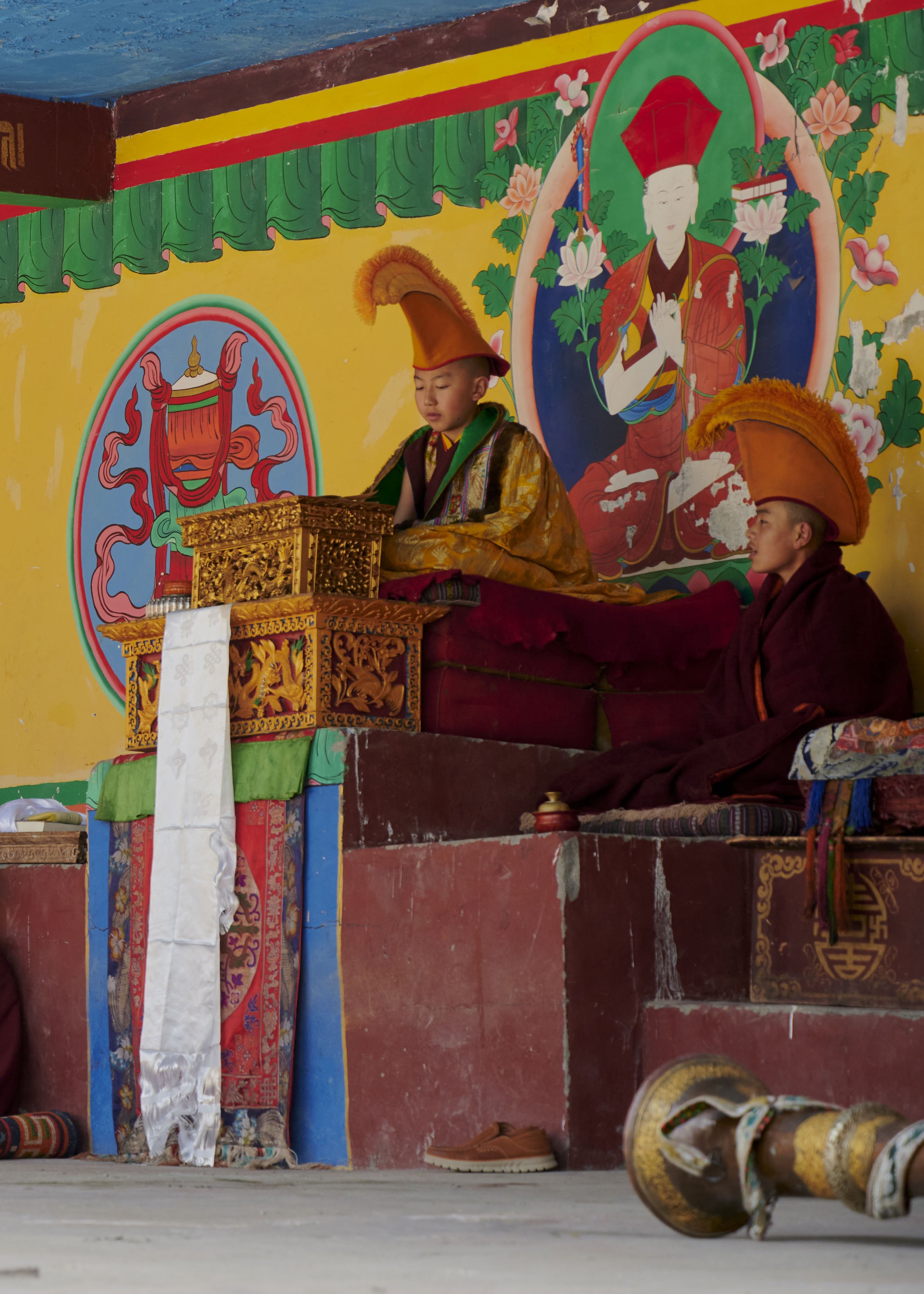
My own time in Kham unfolded in ways impossible inside the TAR: riding motorcycles with nomads, meditating with monks, sharing lunch with a High Lama, witnessing ceremonies normally closed to outsiders. The freedom to linger — or to follow a thread of curiosity — is the region’s greatest luxury.
Why choose Kham & Amdo?
To travel independently and shape your own itinerary
To stay with nomads in winter houses or yak‑hair tents
To visit sacred and scholarly sites such as:
Derge Printing House — guardian of ancient woodblocks
Dzongsar Monastery — meditation caves and hidden termas
Yilhun Lhatso — a sacred lake with a kora route
Yarchen Gar — a vast settlement of nuns in solitary retreat
To experience Tibetan culture with fewer layers of regulation
If your priority is cultural immersion rather than iconic landmarks, this is the more generous route.
THE DECISION
It reduces to a single question:
Do you want the icons — Potala, Kailash — or the freedom to move?
If time and budget allow, the ideal journey spans both. If not, choose the version of Tibet that aligns with the experience you seek.
ETHICS
China annexed Tibet in 1950. The PRC considers Tibet an integral part of China; the Tibetan government‑in‑exile considers it an occupied state.
Whether to visit is a personal decision.
The Dalai Lama has encouraged travellers to go, arguing that presence supports Tibetans living under Chinese rule and helps sustain their culture. For many, this guidance provides the ethical footing needed to proceed.
PRACTICALITIES
Access
TAR: Flights to Lhasa from Beijing, Chengdu, Chongqing, Xi’an, Shanghai; international flights from Kathmandu; daily train from Beijing.
Kham & Amdo: Fly to Yushu from Chengdu.
Getting Around
Travel is by car. Remote roads may be unsurfaced but are generally passable. There is no public transport in Kham or Amdo.
Season
June–October: clear roads, warmer days
Mid‑February to March: closures around Losar (Tibetan New Year)
Accommodation
Hotels: basic but adequate
Monasteries: simple rooms, communal meals
Villages: rustic guesthouses, limited facilities
Nomad homes: warm hospitality, no running water
Remote areas: camping in family compounds; bring a sleeping mat and bag
Food
Tsamba (barley flour mixed with butter tea)
Yak meat, boiled or dried
Rice and noodles Vegetarian travel is possible with some flexibility.
Money
Chinese Yuan. ATMs are scarce — carry cash.
Visas
As of April 2026, most visitors to the UK who do not need a visa for short stays (up to 6 months) must obtain an Electronic Travel Authorisation (ETA). Other Nationalities should check the current status.
Communication
Local SIMs available, although I often use Saily. Google and WhatsApp do not function; download WeChat (the equivalent of WhatsApp before arrival).
Language
Tibetan and Chinese. English is limited outside major towns.
Costs
Guides and tours are reasonably priced. Local meals: 40–100Y per day.
Altitude
Lhasa: 3,656m
Yushu airport: 4,000m
Hydrate, rest, avoid exertion on arrival. Read up on altitude sickness.
Operators
SnowLion Tours — Tibetan‑owned, operating in TAR, Kham, Amdo
Tibet Highland Tours — based in Lhasa; the first Tibetan travel agency owned by a woman (Acha Dechen)
Packing
Warm layers
Scarf or mask for dust
SPF50
Sunglasses and hat
Sleeping mat + bag for remote areas
Shopping
Singing bowls, Dzi beads, handmade rugs, wooden bowls, Buddha statues, prayer flags, incense.
Further Resources
See the latest China travel advice on Gov.uk. The Bradt Guide to Tibet remains useful.
TIBET