Pre-Season in the Disneyland of Hiking
Torres del Paine national park in October—before the crowds arrive.
I awake at 5:30am and crawl out of my tent, shivering in the pre‑dawn air. Nursing a coffee and swaddled in my duvet jacket, I make a mental plan to sell this coffin‑like tent and the “4‑season” sleeping bag the moment I get home. My friend Aky, roused by the sound of the brewing coffee, emerges from his tent to announce he’s had a “very cosy” night’s sleep. Naturally, his gear was sourced from China for a third of the cost of mine.
It’s too cold to sit around, so we walk through the mostly empty campsite toward the scenic viewpoint. We watch in excited silence as two Black-chested Buzzard-Eagles feed their young with small fish from Lake Pehoé, their shapes silhouetted against the glow of civil dawn. Reaching the top of the bank, the landscape opens — vast water, wind, and the jagged outline of the Cuernos del Paine, being enjoyed by a couple of geese. We stand beside them as the first light turns the water and peaks pink. For a while, we have it to ourselves.
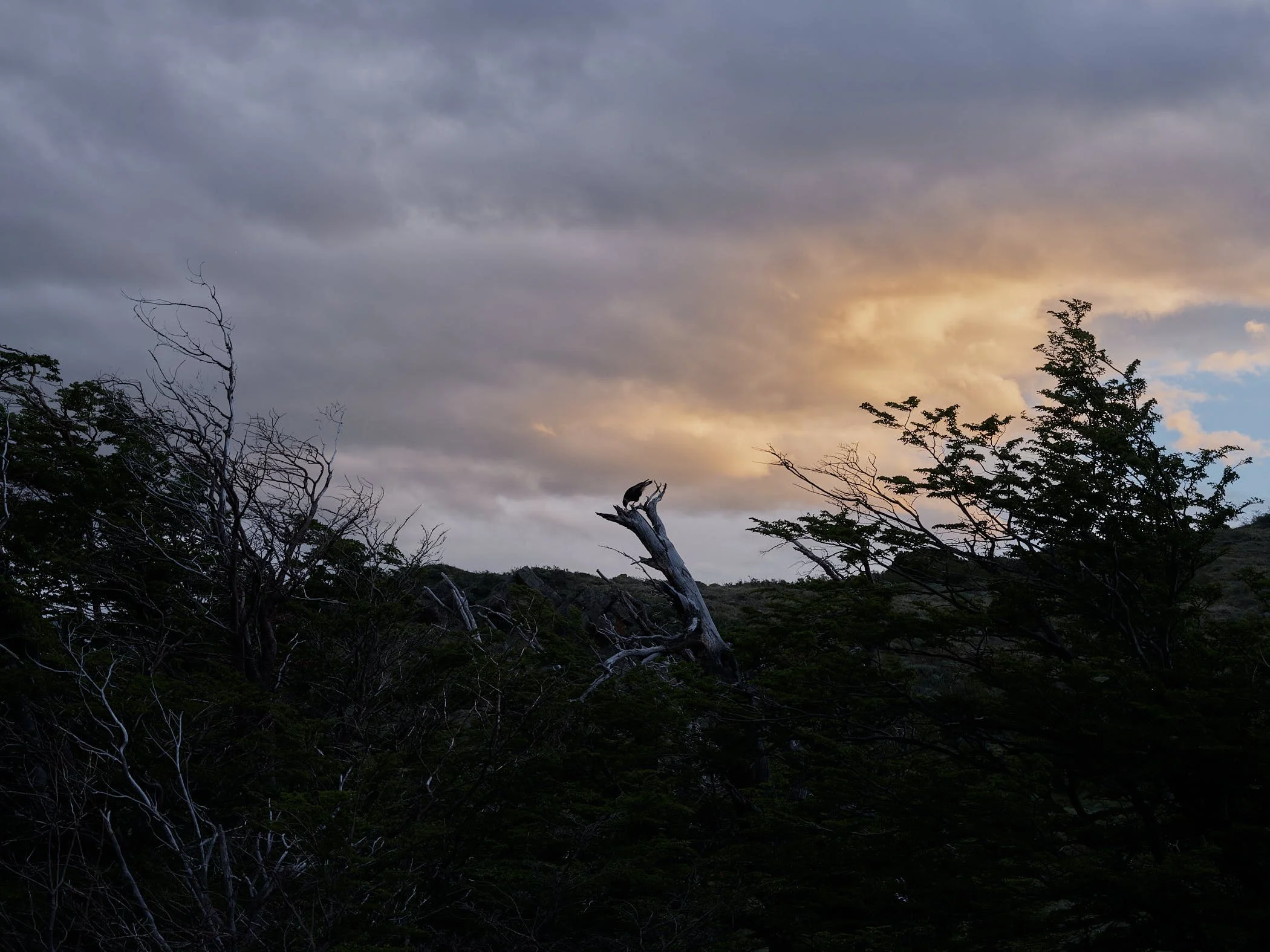
A Black-chested Buzzard-Eagle (Aguila Mora) feeding its young at dawn
At moments like this, Torres del Paine has a surreal perfection — it looks too composed, too symmetrical, too cinematic to be real. It’s this perfection that draws the crowds.
I didn’t end up here through any planning wizardry; my artist residency in the Atacama Desert finished in early October, and Patagonia felt like the natural place to gravitate toward.
We arrive at Park ‘Wake Up’, when Torres del Paine shakes off its winter slumber and the gates have just swung open for the year. The fire‑red Notro flowers are beginning to bloom alongside lingering snow in the higher elevations.
We are camping next to Pau, a Mexican artist I met during the residency. Travelling with a Spanish speaker has its advantages: Pau sweet‑talked the host of a coffee shop into giving us the staff Wi‑Fi code — gold dust in these parts — and drew out a revealing chat with the campsite cook. “In December,” he warns us, “high season arrives and everything changes.”
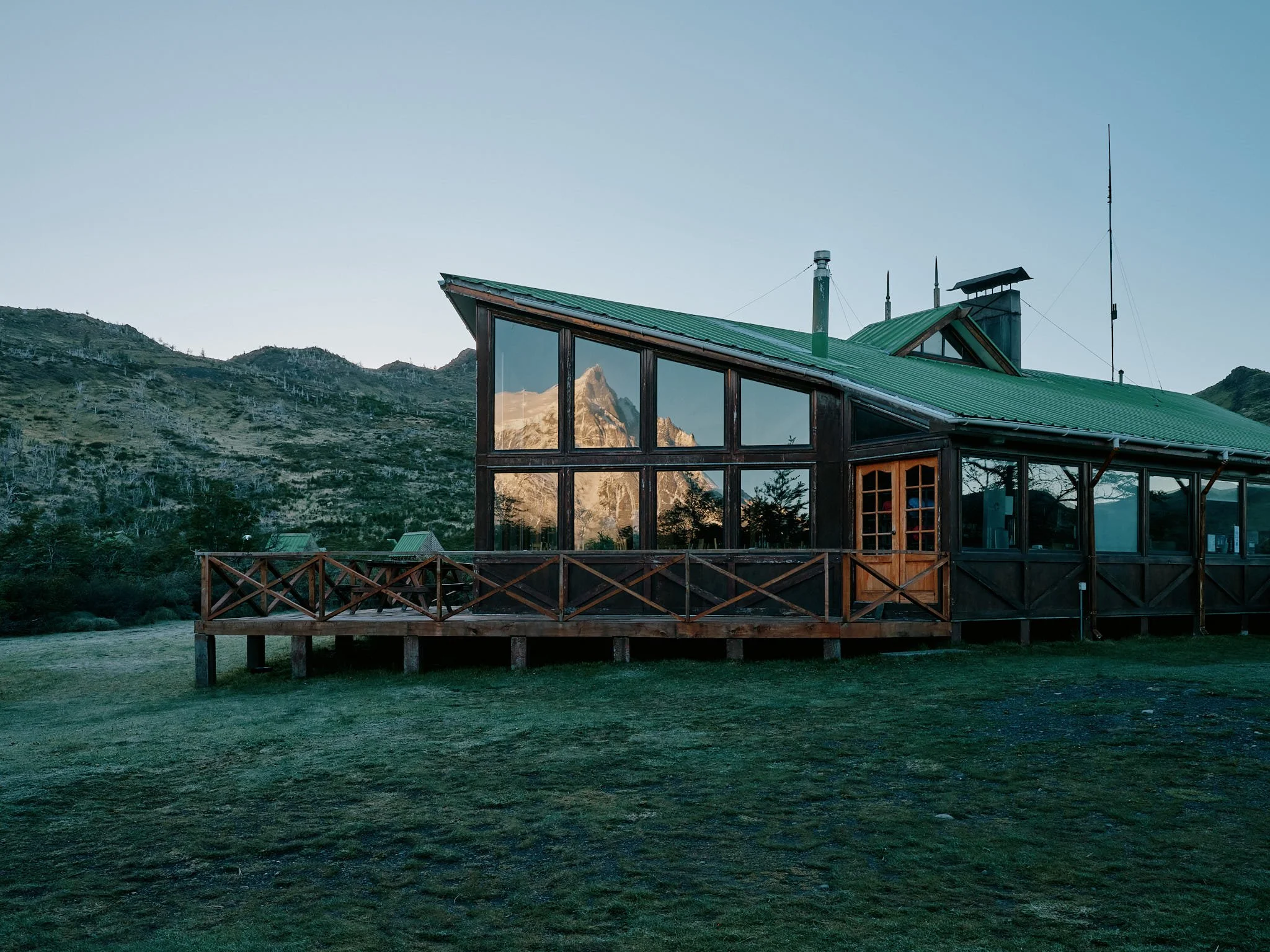
The Restaurant at Camping Pehoé
There is, of course, a reason why most people visit between December and February. The weather is more reliable (if Patagonian weather could ever truly be called reliable) and offers warmer temperatures and longer days. We aren’t here for serious hiking, though if I was, I might think twice. A week after we left, a sudden, violent snowstorm took the lives of five hikers on the ‘O’ circuit.
We drive the gravel roads, past grazing guanacos, to Hotel Lago Grey. It’s an upmarket place with a line of people winding across the alluvial plain to gaze at a crystalline iceberg. Lago Grey is pre‑packaged tourist territory, but a boat trip to the Grey Glacier is hard to pass up.
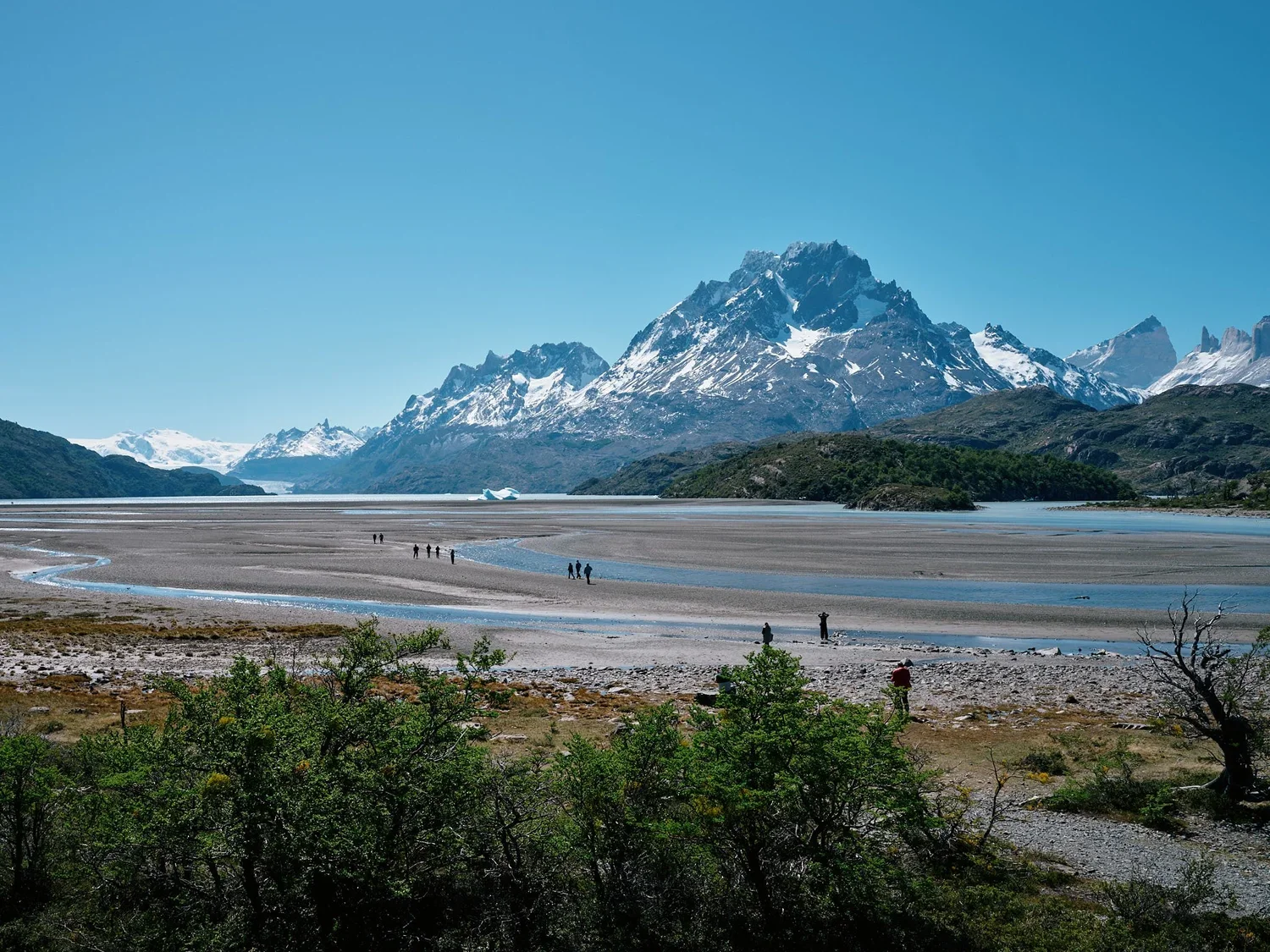
View from the Hotel Lago Grey
Aboard the Grey III, a white‑and‑red catamaran, I talk to Alberto, a Chilean guide. “The best way to think of the glacier,” he says, “is as a river — just frozen, and moving very slowly.” “The human eye can’t grasp the flow,” he adds, looking at the chunk of glacier ice chilling my Pisco Sour, “but it’s moving.”
Out on the water, it has taken centuries for snow falling high in the Andes to be compressed into solid blue ice and move to the front of the glacier where we are now. Patagonia was once completely covered in ice like this. You feel the age of it more than you understand it.
After the boat trip we climb up onto Isla de los Hielos (Ice Island) to get a closer look at the lone iceberg. While I’ve flown over icebergs in East Greenland, I’d never seen one up close. This chunk of ice is the size of a house and has recently tipped, revealing its shimmering blue underside. The colour feels almost impossible — a compressed, luminous blue pulled from deep time.
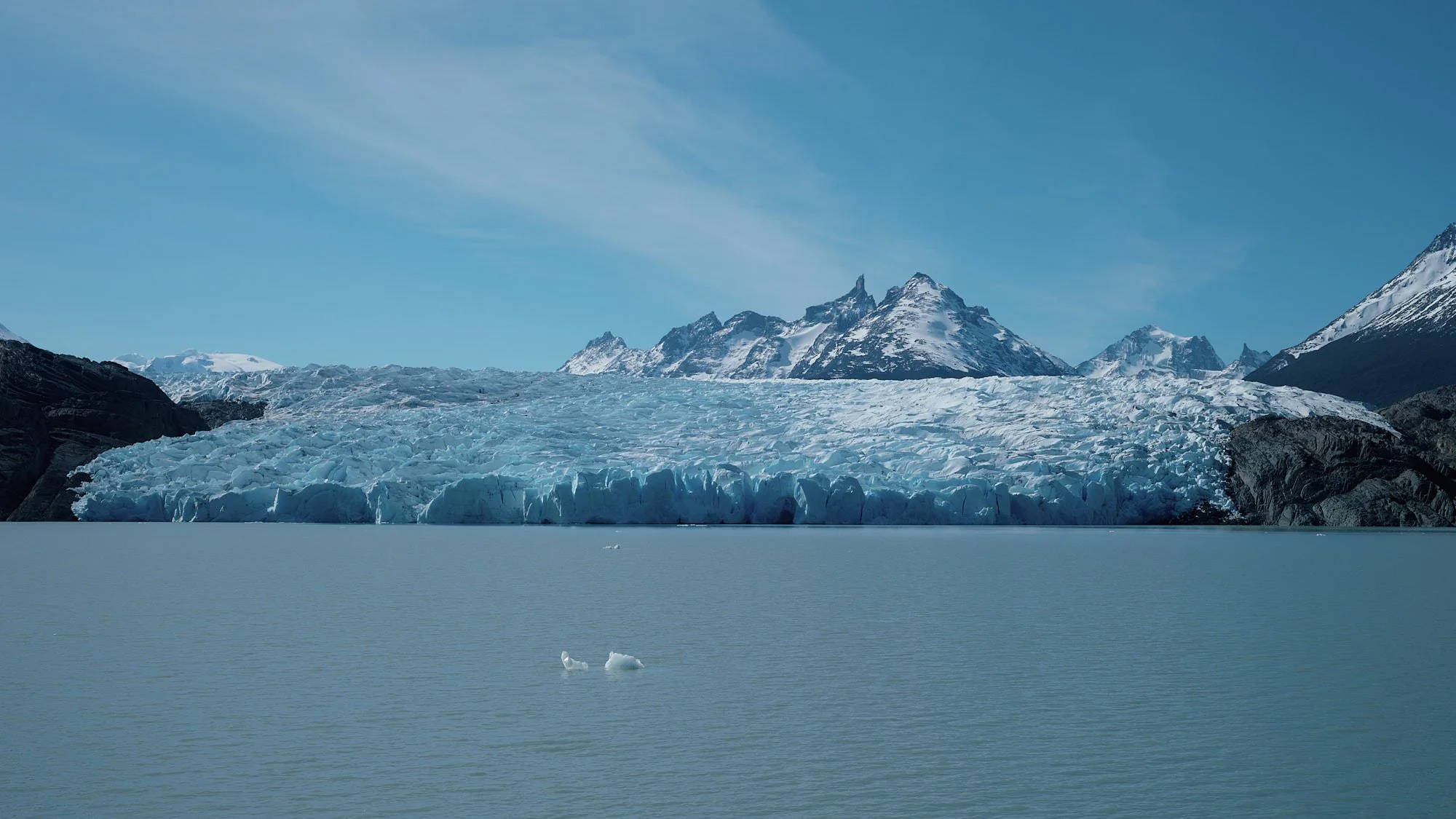
The Grey Glacier
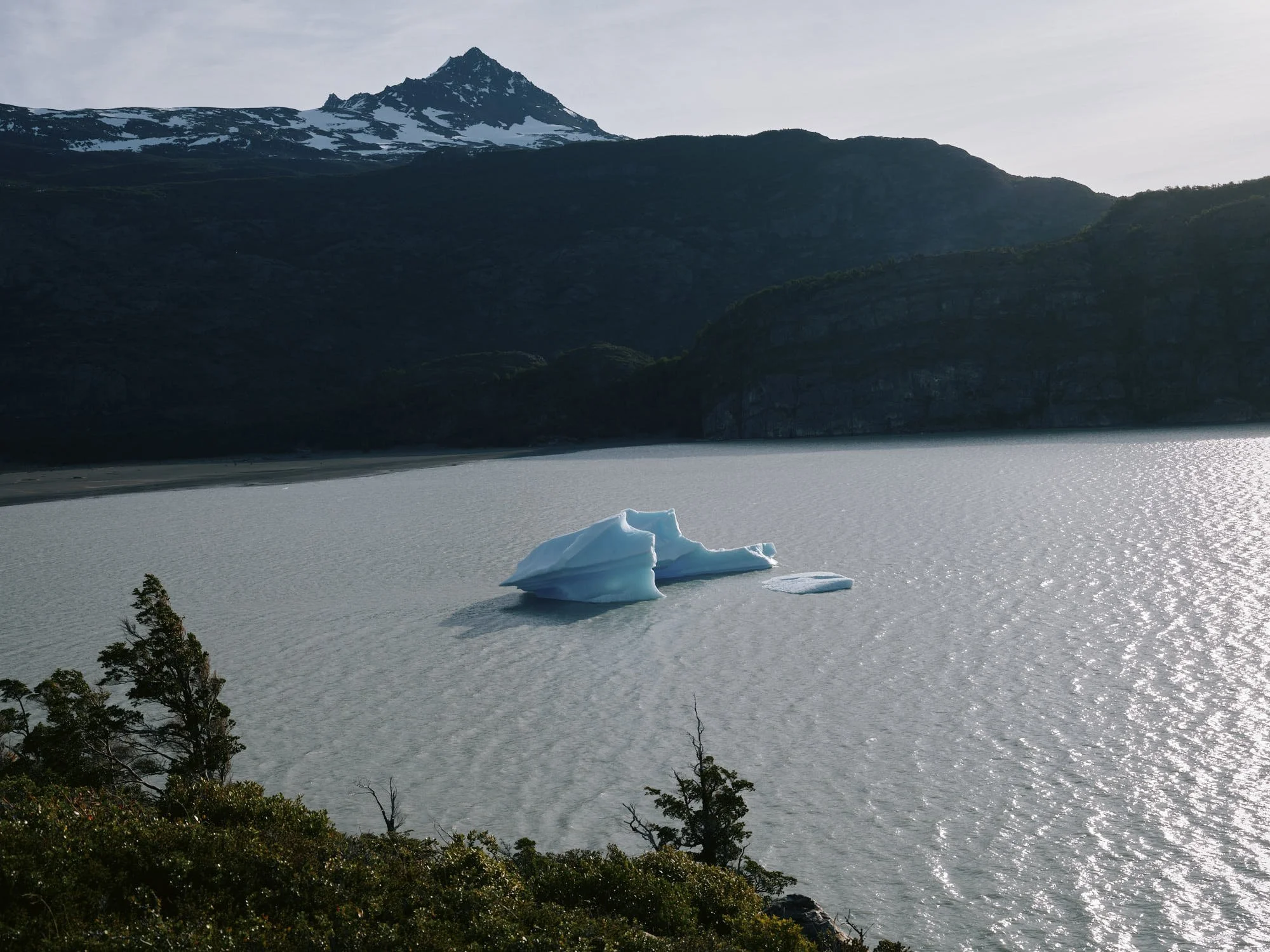
A lone Iceberg floats on Lago Grey
Though the summer crowds haven’t arrived yet, popular hikes in the park, such as the Mirador Cuernos trail, already feel busy with coach parties. Trekkers bus in for the day from Puerto Natales to hike the French Valley, in a long 12‑hour day.
Between the mandatory bookings made months in advance and the strictly defined trails, Torres del Paine can feel a bit rigid compared to the wilder parts of Patagonia. But this orchestration is what keeps the park pristine, and the turquoise lakes and granite towers from being overrun in peak season.
It can be tempting to be reductionist and just pick off the ‘must‑do’ sights or trails. But in pre‑season, with a hire car and a little time, you can be intimate with the quiet dawns, the birds of prey, the empty viewpoints, and the subtle movements that appear when the park is still waking up.
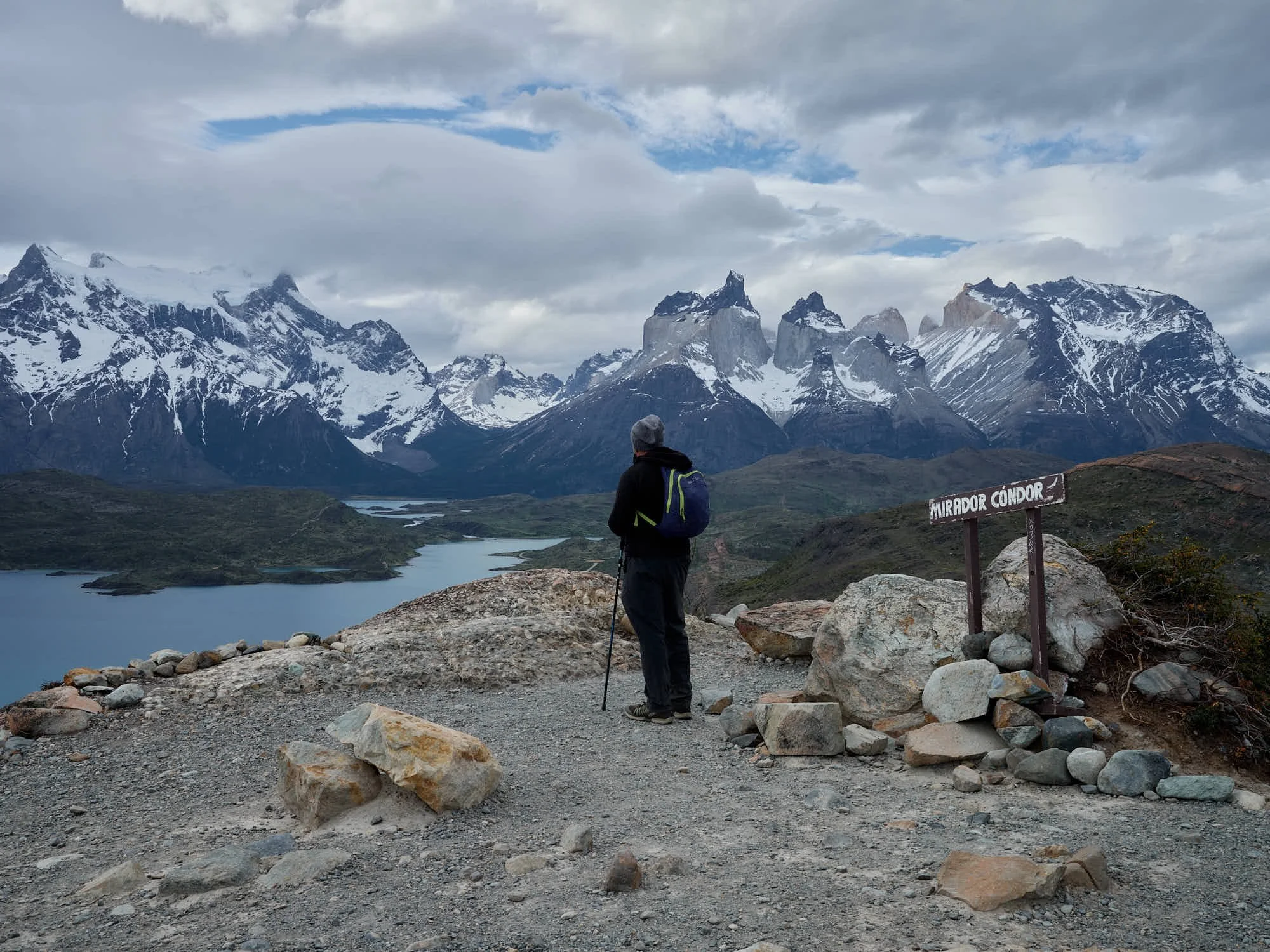
View from the Summit of the Mirador Condor hike overlooking Lake Pehoé
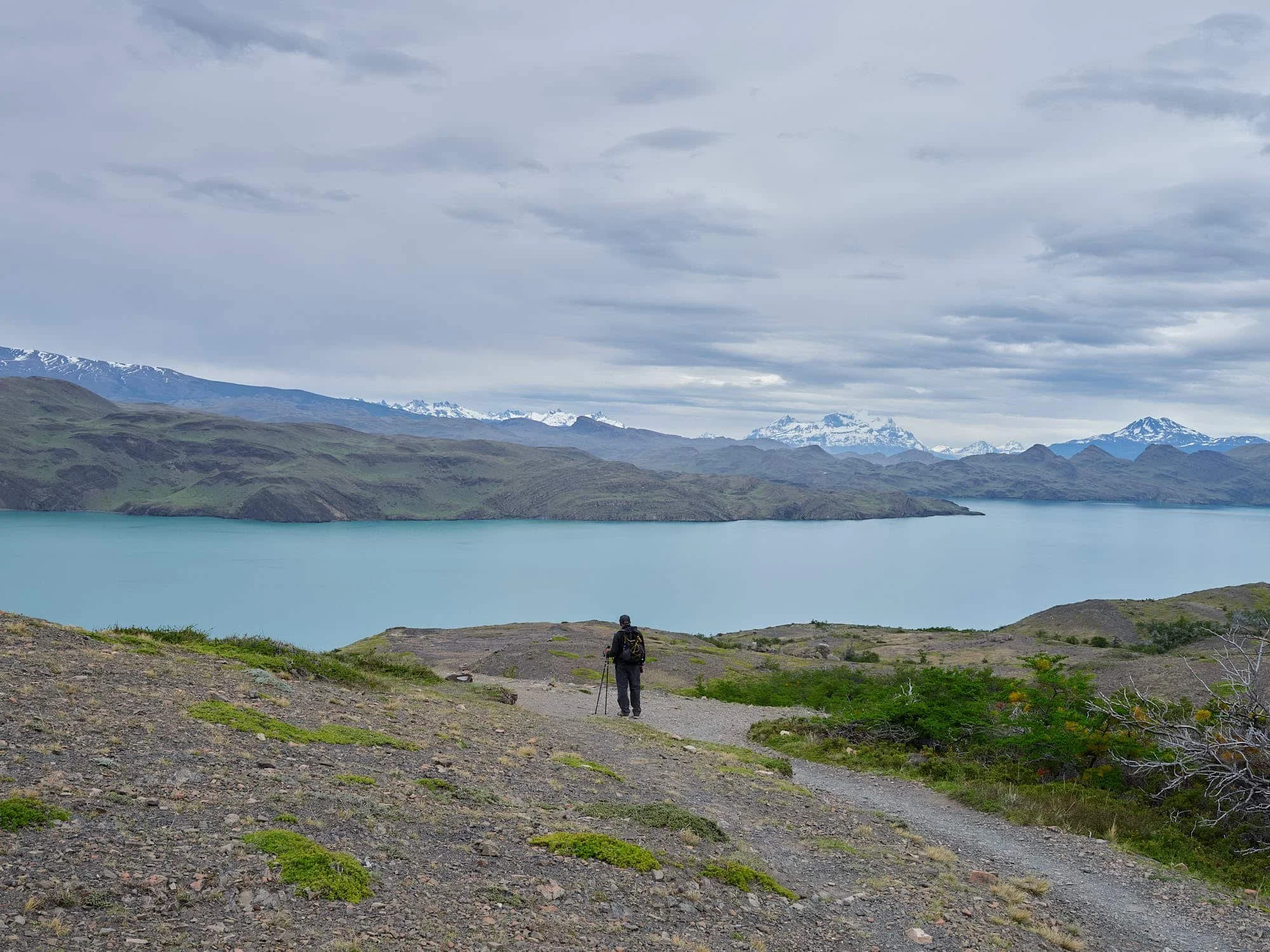
Hiking from Hotel Tierra Patagonia
PRACTICALITIES
To experience Torres del Paine without feeling like you’re on a conveyor belt, you have to break the standard traveller logic.
Visit Pre-Season
In October/November there are fewer crowds and more availability. The caveat here is that shuttle buses don’t run, the nights are colder and the days are shorter.
Hire a Car
Hiring a car is the only way to see and experience Torres del Paine at your own pace. I have had good experiences with the following companies.
booking.com good rates if you book ahead.
recasur-rac.com have offices in Puerto Natales and Punta Arenas.
discovercars.com charges a fee, but has a good range of vehicles at short notice.
Cars in Puerto Natales book up months in advance. If you’re stuck, look at Punta Arenas. It’s further away, but has better availability and lower prices.
Stay in the Park
For a richer experience of Torres del Paine stay for a few nights.
Staying at Lake Pehoé
Best for its viewpoint, short hikes, and easy access to catamaran for the French Glacier hike.
Camping Pehoe has good camping pitches at reasonable prices, and a restaurant. For those who don’t want to camp they also have 5 five domes available that sleep up to 3 people. The campsite backs onto the best panorama of Cuernos del Paine.
Hotel Pehoe a hosteria (a level down from being a full-on hotel) on the edge of the lake.
Explora Torres del Paine A luxurious hotel on the edge of the lake.
Staying at Lake Sarmiento
Best for access to the start of the ‘W’ Circuit and the base of the towers day hike.
Tierra Patagonia a luxurious hotel
Patagonia Camp luxury glamping
For more booking options see bookingpatagonia.travel