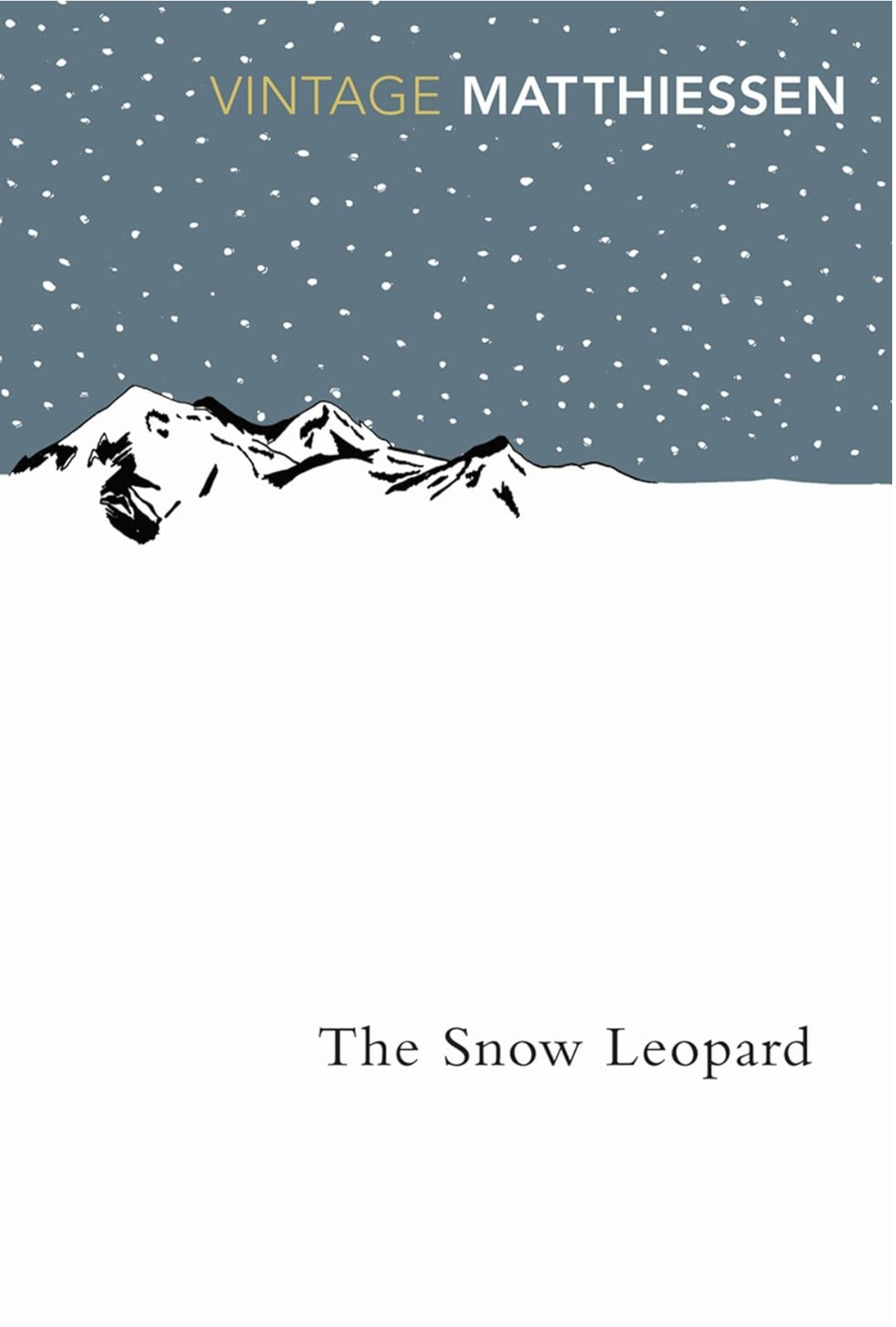
Peter Matthiessen on Silence in The Snow Leopard
Peter Matthiessen went into the Himalaya in search of a snow leopard and found something rarer: silence.
The Snow Leopard is both a travelogue and an inward journey — a man moving through grief in thin air, guided by Zen teachings only partly understood.
Matthiessen enters the mountains after his wife’s death, carrying with him the habits of Western striving into a landscape that refuses them. The Himalaya, severe and soundless, strip him barer than any monastery cell.
“At the snowfields depot there is nothing but snow and silence, wind and blue… my presence in such emptiness seems noticed, although no one is here.”
Silence becomes a mirror. The trek itself takes on the rhythm of Zen practice — repetitive, wordless, breath measured against altitude. Endurance gives way to something quieter. The leopard may never appear, but the silence offers something vaster.
“Tears come to my eyes that have nothing to do with ‘I.’”
Grief loosens its grip, becoming impersonal, almost elemental.
“In the dead hush, like the hush in these snow mountains, the silence swelled with the intake of my breath into a Presence of vast benevolence.”
The absent leopard — glimpsed only in tracks — becomes the book’s central paradox: true finding lies in not-finding. Solitude here is not isolation but intimacy — with wind, glacier, and the slow dissolution of the self. The personal shrinks, then vanishes, leaving the world immense.
“The Lama of the Crystal Monastery appears to be a very happy man… in the silences of Tsakang, which he has not left in eight years.”
In an age of constant noise, The Snow Leopard reminds us that the rarest sightings occur when the outer world goes quiet.