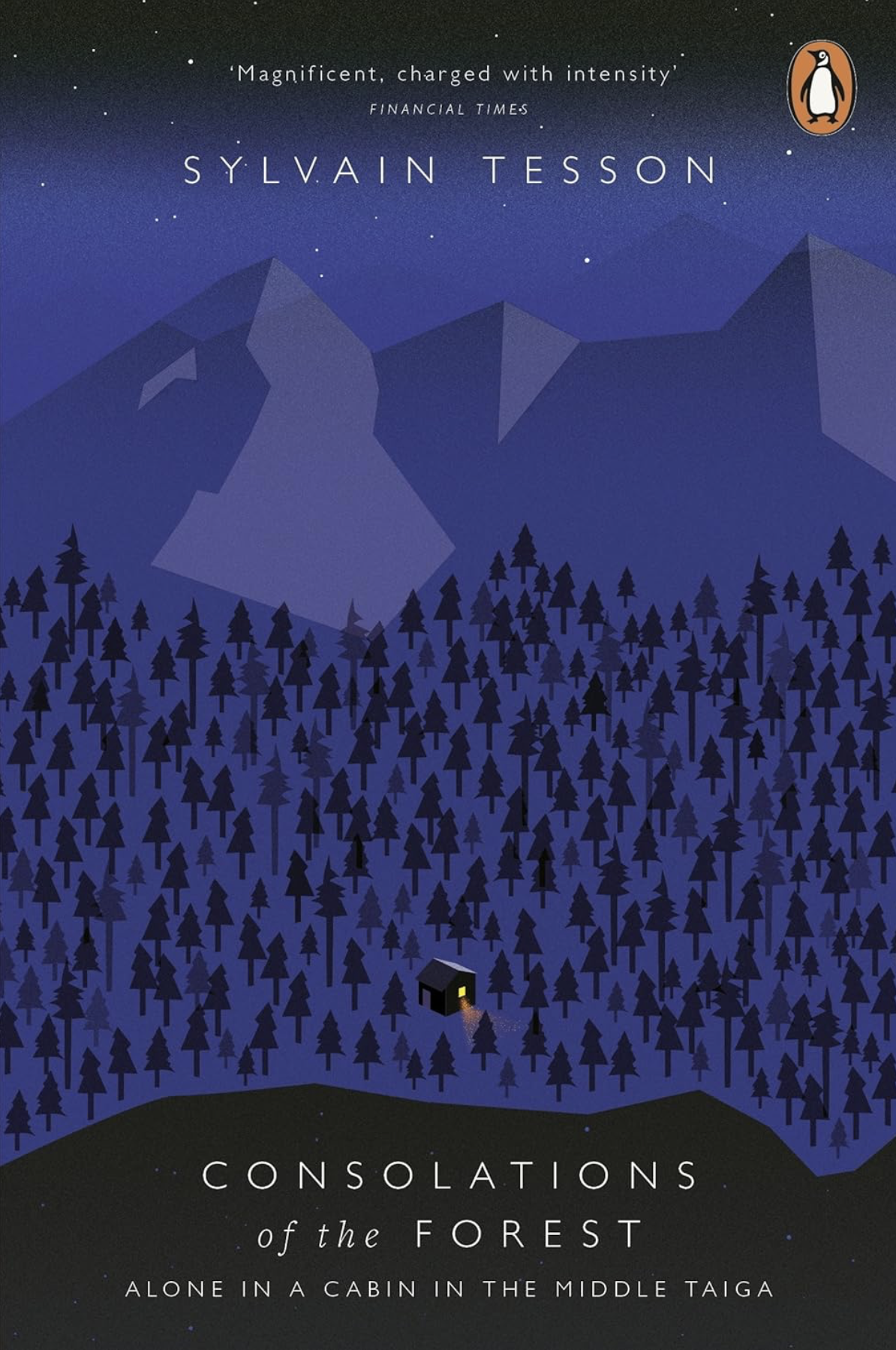
High-Proof Stillness: Sylvain Tesson and the Siberian Cabin
Sylvain Tesson — heir to Thoreau, but with a vodka-soaked sense of humour — locked himself for six months in a Siberian cabin on the edge of Lake Baikal. A log izba pinned between cedar forest and the abyss of ice. In Consolations of the Forest, winter and silence act as “cleaning agents,” stripping life to its essential rites.
Tesson is no ascetic. He arrives with cases of cigars and a shelf of Byron. The book’s great charm is its wit — dry, self-mocking, alive to the absurdity of human vanity set against the scale of the taiga.
“A window is more transparent than a television. It does not tell you what to think; it shows you what is.”
He goes to the forest because he has exhausted the city — and himself. “I talked too much. I wanted silence.” Paris offered the friction of proximity; the taiga offered the “virginity of time.” Days collapse into physical liturgy: chopping wood, clearing snow, drawing water from the ice.
“Reading, drawing water, cutting wood, writing, pouring tea: such things become liturgies.”
The taiga offers no comfort, only indifference. On Baikal’s polished ice, Tesson learns the difference between mastery and attention.
“Crawling across a frozen lake, bowed down before a storm, is a lesson in humility.”
Beauty here is unsparing — light stripped clean, air like a blade. He rejects the tourist gaze in favour of witness.
“Why would anyone rather look at birds through a gunsight than binoculars?”
Solitude intensifies life. Loneliness arrives, sharp and unannounced, answered by earned sleep and “legs aching with remembered effort.” His prescription is blunt: “Change your life. Head for the cabins.” And if the silence proves unbearable: “You can’t stand yourself. Make the necessary adjustments.”
Nothing is added in the taiga. What falls away is everything unnecessary — until only the treasure of time remains.