The Last Word of the Yaghan—Thoughts at Estancia Harberton, Tierra del Fuego.
I.
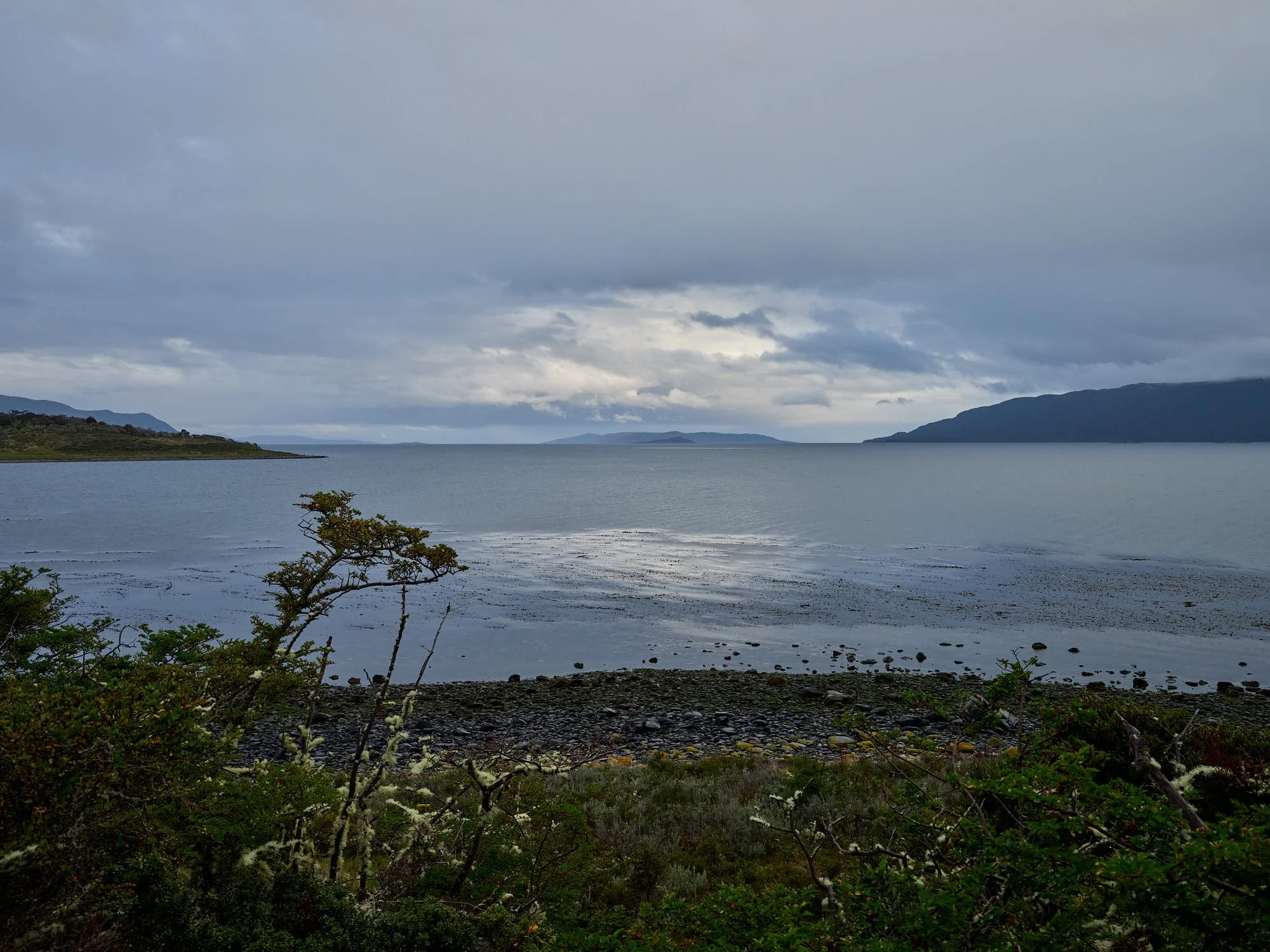
At Estancia Harberton, on the southern tip of Tierra del Fuego, there is no key to the door of the little red-roofed house I’m staying in. Perhaps a clerical error, or just an old habit dying hard. This is a ranch that existed for a century without a road, accessible only by the grey, choppy churn of the Beagle Channel until 1973.
Harberton was built in 1886 by Thomas Bridges, an English missionary who turned to sheep farming at the edge of the map. Harberton is the oldest ranch in Argentinian Tierra del Fuego, and the most southerly ranch on earth—a place where the road finally runs out and Antarctica begins to loom large in the imagination.
Today, Harberton looks much as it did in old photographs: a beach-head in the wilderness with whitewashed, weathered wooden buildings set on a sheltered bay, flanked by snow-streaked Andean peaks. Each house still looks out onto an old lavatory building, perched precariously at the end of a small pier in the bay.
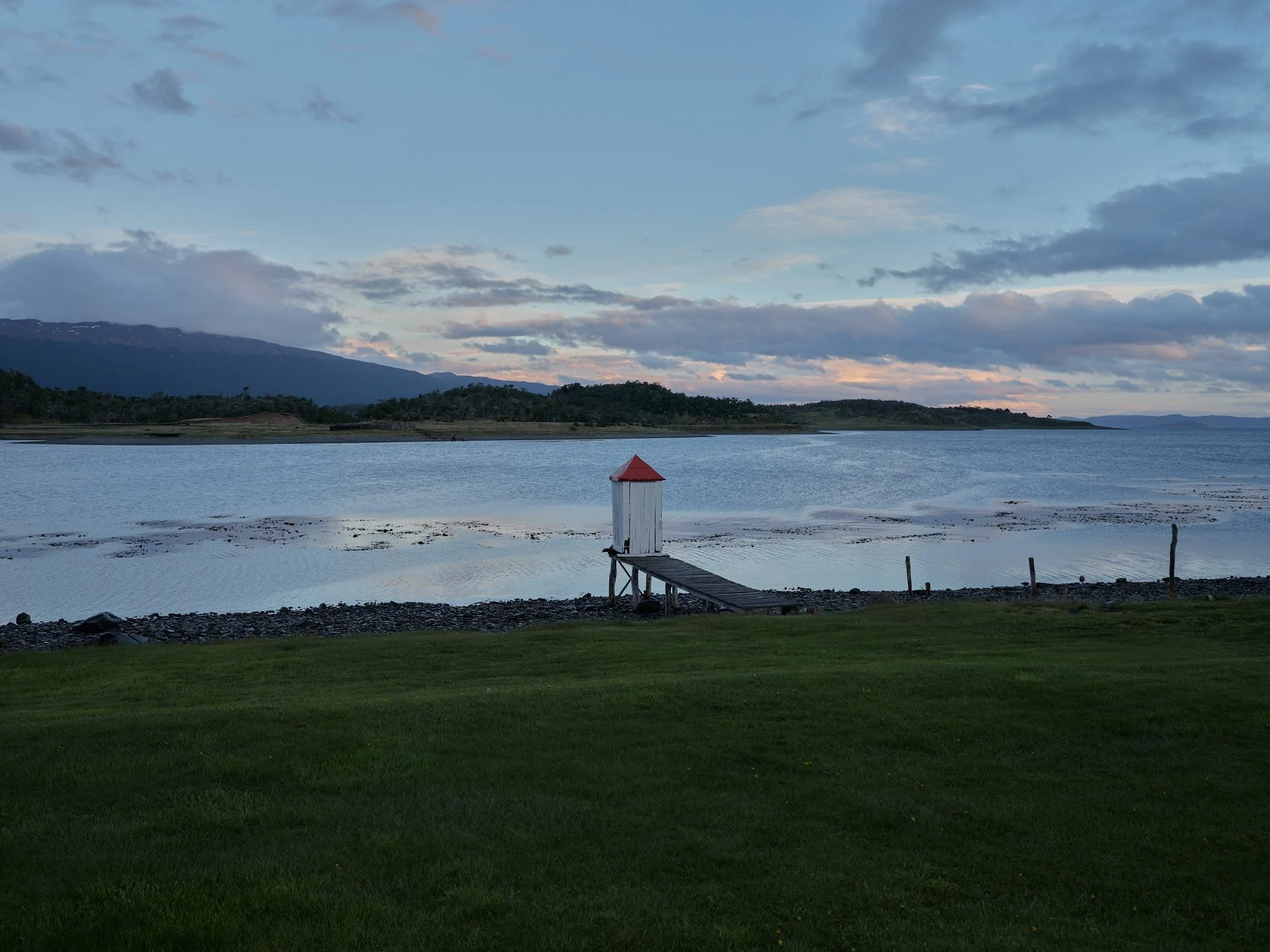
The antiquated lavatory building at Estancia Harberton (not in use)
II.
Sitting by the wood-burner, watching the heat ripple across the living room, I think about the Yaghan people who were here long before the first nails were driven into these boards. They lived naked, slicked in animal grease against the cold, hunting seals and squatting by fires built into the dirt-packed bases of their bark canoes. It was the constant flickering of their fires along the coastline that led Spanish explorers to name this the Tierra del Fuego—The Land of Fire. Though I prefer Thomas Bridges’s word: Fireland.
I go for a walk, leaving my friend Aky drinking tea by the fire. A boisterous black collie appears from between the wooden houses and decides to join me. We pass stacks of winter logs and a neat picket fence fronted with the lean, bleached skulls of killer whales. The dog races ahead; he has probably done this walk with many visitors before me.
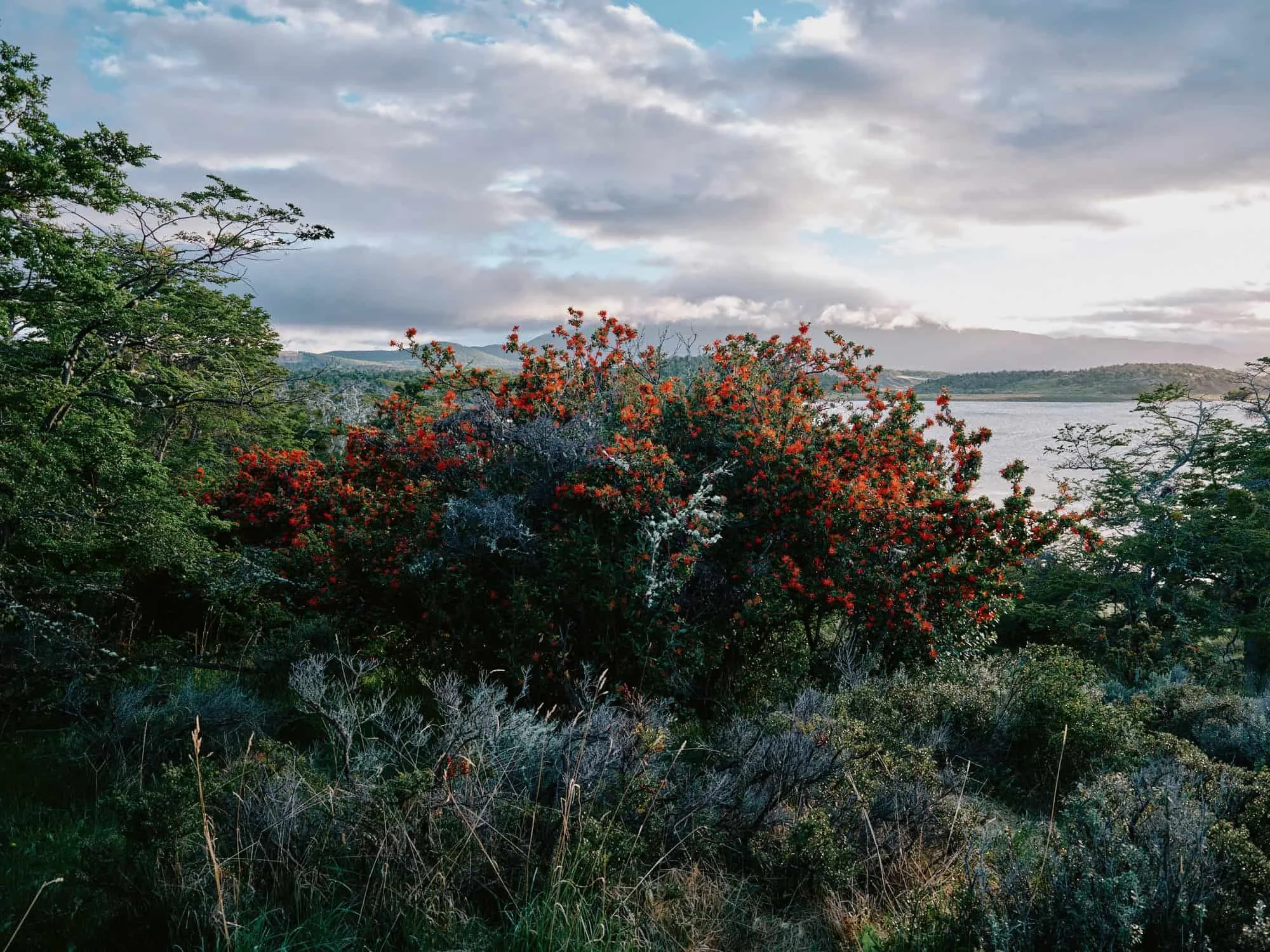
Everything here is pristine. The rocks host tiny forests of moss and hornwort. The shrubs are turning mesmerising shades of red, yellow and orange, ready for the southern summer. Sage-green lichens, the kind that only flourish in air this pure, drape over the Magellan beech trees like uncombed hair.
III.
On the way back, the dog wanders home and I find Tommy Goodall, Thomas Bridges’ great-grandson. He still lives in the original house. We stand near a whalebone arch, the wind whipping between us, and he tells me about the winter of 1995. “It snowed from May until September,” he says, leaning on the memory. “Eighty-five percent of the animals died. It knocked us out.”
Today, the estancia funds itself through tourism. Visitors come for the Magellanic penguins on Martillo Island or the Acatushun Museum—the “Museum at the End of the World.” Inside a small hut labeled casa de huesos (house of bones), Mariana, a resident scientist shows us the meticulously catalogued skeletons of Peale’s dolphin and the Andrews’ beaked whale, some of South America’s rarest creatures. Nearby, plastic tubs hold the blunt smell of sea mammal bodies reduced to bone.
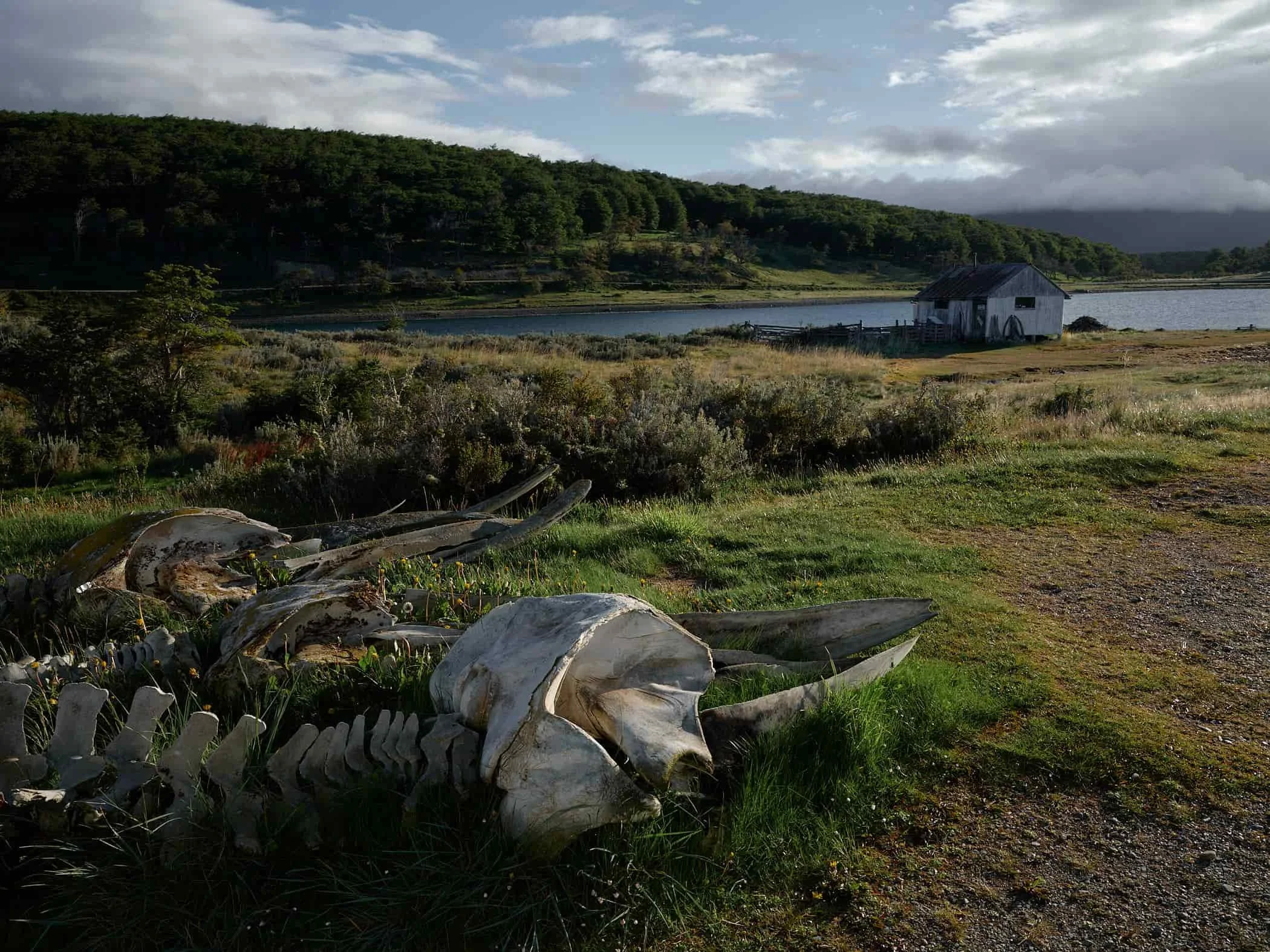
Whale skeletons look out onto the ‘house of hones’ at the Acatushun Museum.
IV.
I’m here because of a book: The Uttermost Part of the Earth, written here by Lucas Bridges in 1947. It’s a book that fired the imagination of Bruce Chatwin and has been a fixture on my shelf for years. Lucas was the third white child born in this wilderness, a boy who grew up sailing boats with his father through the glacier-strewn waters of the Beagle Channel. He became enraptured with the Yaghan, Selkʼnam and Ona tribes: wearing moccasins, hunting with bows, speaking their languages and eventually becoming the first “blood brother” to the Selk’nam.
But The Uttermost Part of the Earth is more than an adventure story; it is a poignant record of an ending. When Darwin sailed down the Beagle Channel in 1830, the Yaghan numbered around 3,000. By 1900, Lucas wrote that only 200 remained — thinned by measles, smallpox, violence, and the slow pull of assimilation into European culture.
The only reminder of the Yaghan tribe at Harberton is a reconstruction of a Yaghan shelter built with branches and foliage on top of the hill, next to the Bridges family graveyard, surrounded by a copse of a Ñire and Lenga trees swaying in the ceaseless wind.
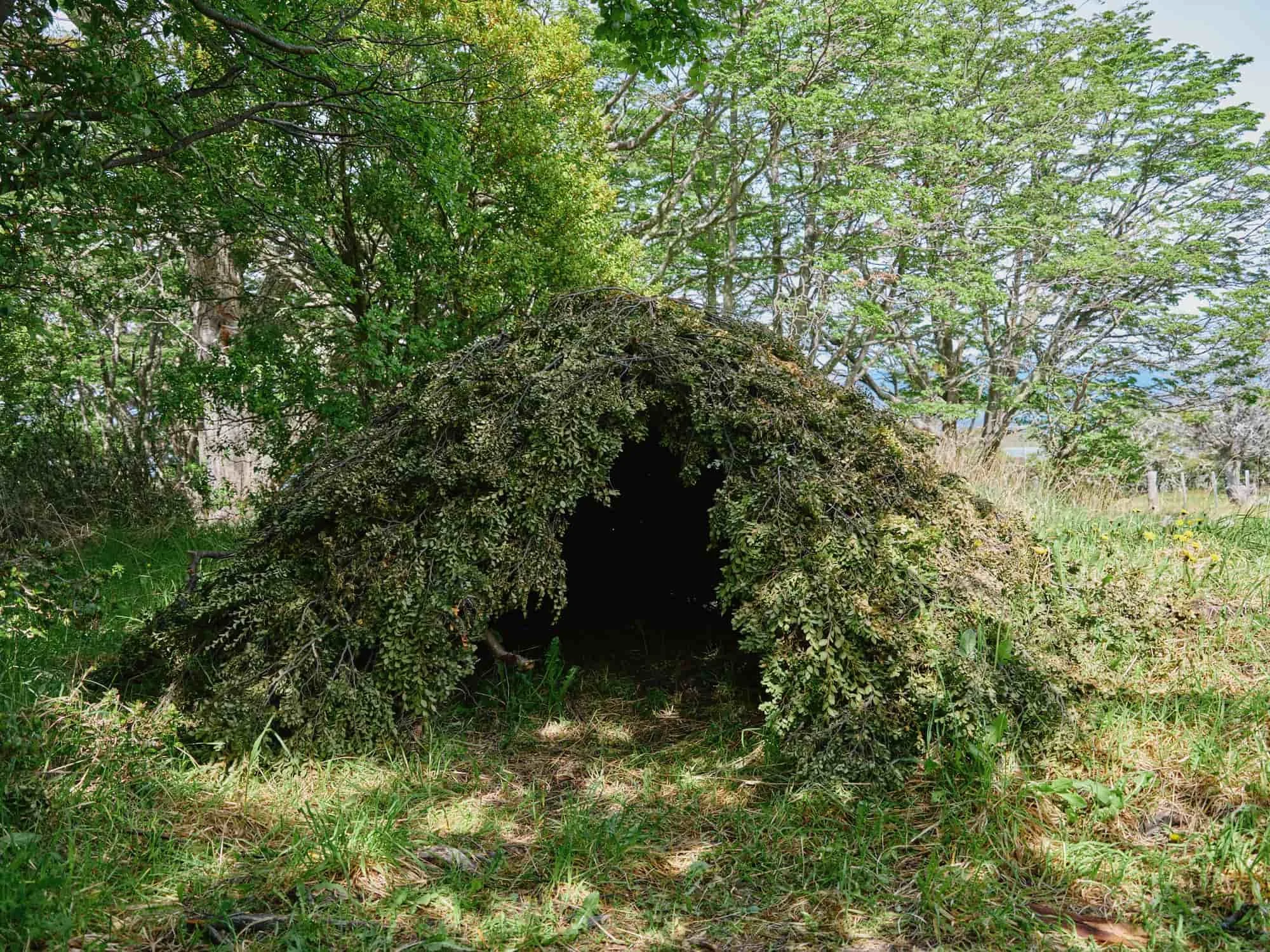
A reconstruction of a Yaghan dwelling at Estancia Harberton.
V.
The Yaghan language went functionally extinct in 2022 with the death of Cristina Calderón, the last native speaker.
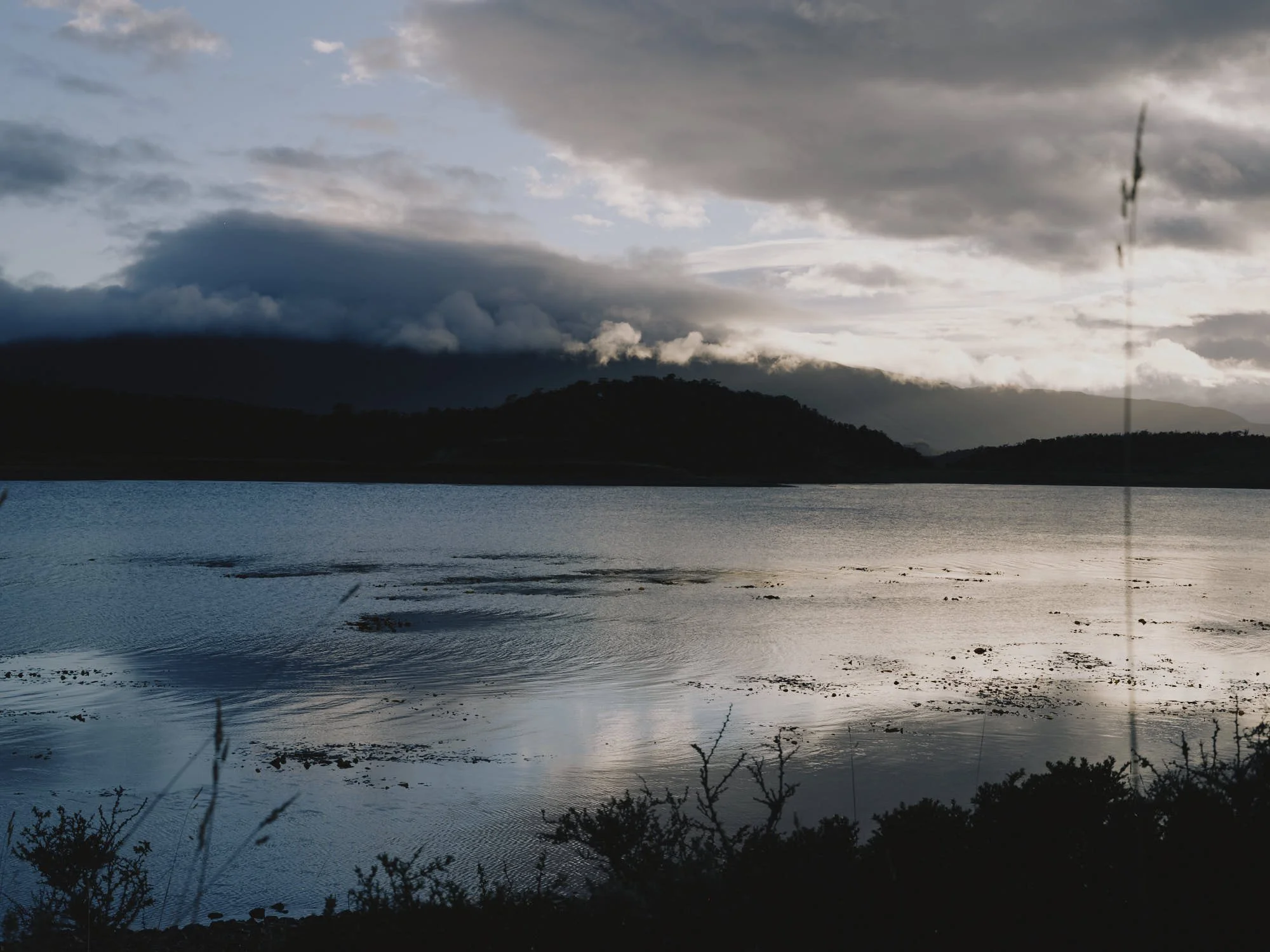
My guide, Joaquin, tells me the last Yaghan word anyone really speaks anymore is mamihlapinatapai. He says it refers to “a moment of meditation around a fire, when the elders pass stories to the young and there is a strong shared quiet.”
It seems a better interpretation than most, but perhaps a touch romantic. Mamihlapinatapai has been pulled into internet culture and reinterpreted in dozens of ways, but its beauty lies in how it eludes the grasp of modern tongues.
For me, the word carries something of Michael Ondaatje’s poem What We Lost: the gestures, courtesies, and hidden knowledge that have slipped away with the loss of tribes such as the Yaghan, the Selk’nam and the Ona.
VI.
On my last day, I meet Abby Goodall, a fifth-generation descendant of Thomas Bridges, who now runs Harberton. She shows me the allotment garden, pulling improbably large rhubarb and cauliflower from the cold Patagonian soil, grown without a polytunnel. When I ask whether she would share her secrets online with my gardening friends in England, she smiles and says, “They need to come here, to have their hands deep in the soil. It’s the only way to learn.”
On the drive back to Ushuaia, my driver mentions he hasn’t been out this way in years. Most people just take the day tour to see the penguins and the whale skeletons, then head back to the city on the coach.
I think about Lucas Bridges, an Argentine by birth, raised among indigenous tribes, who still considered himself an Englishman. I think about the guanaco skin he wore and the storyteller’s heart beating underneath it.
I step out of the house; the door swings, catching the wind, as if the place has never learned the habit of shutting anything out. In the sharp, deliberate light of Tierra del Fuego, these small defences of civilisation feel unnecessary.
PRACTICALITIES
Getting There: Estancia Harberton is located around 1 hour 40 minutes east of Ushuaia, at the southern tip of Argentina. Hire a car in Ushuaia, for the flexibility to explore at your own pace. Most hotels in Ushuaia can arrange a return taxi or private transfer. This is the option I chose—it’s simple, reliable, and allows you to fully take in the landscape without worrying about logistics.
Staying Overnight: I recommend staying overnight at Estancia Harberton at one of the historic houses on the property. Bookings are made directly via email through estanciaharberton.com It’s worth arranging this in advance, particularly in the summer season.
Day Trips
The Acatushun Museum: is a renowned science museum focusing on marine wildlife and regional history. It features over 5,000 marine mammal and bird specimens, alongside historical exhibits detailing the Bridges family and indigenous Yámana history. Allow at least 1-2 hours for the tour Book through estanciaharberton.com
Penguin Island (Isla Martillo): From the estancia, you can arrange a boat trip across the Beagle Channel to Isla Martillo, home to a colony of Magellanic and Gentoo penguins. Book ahead at travel agents in Ushuaia or at Get your Guide
Day trips are typically weather-dependent and should be booked in advance.