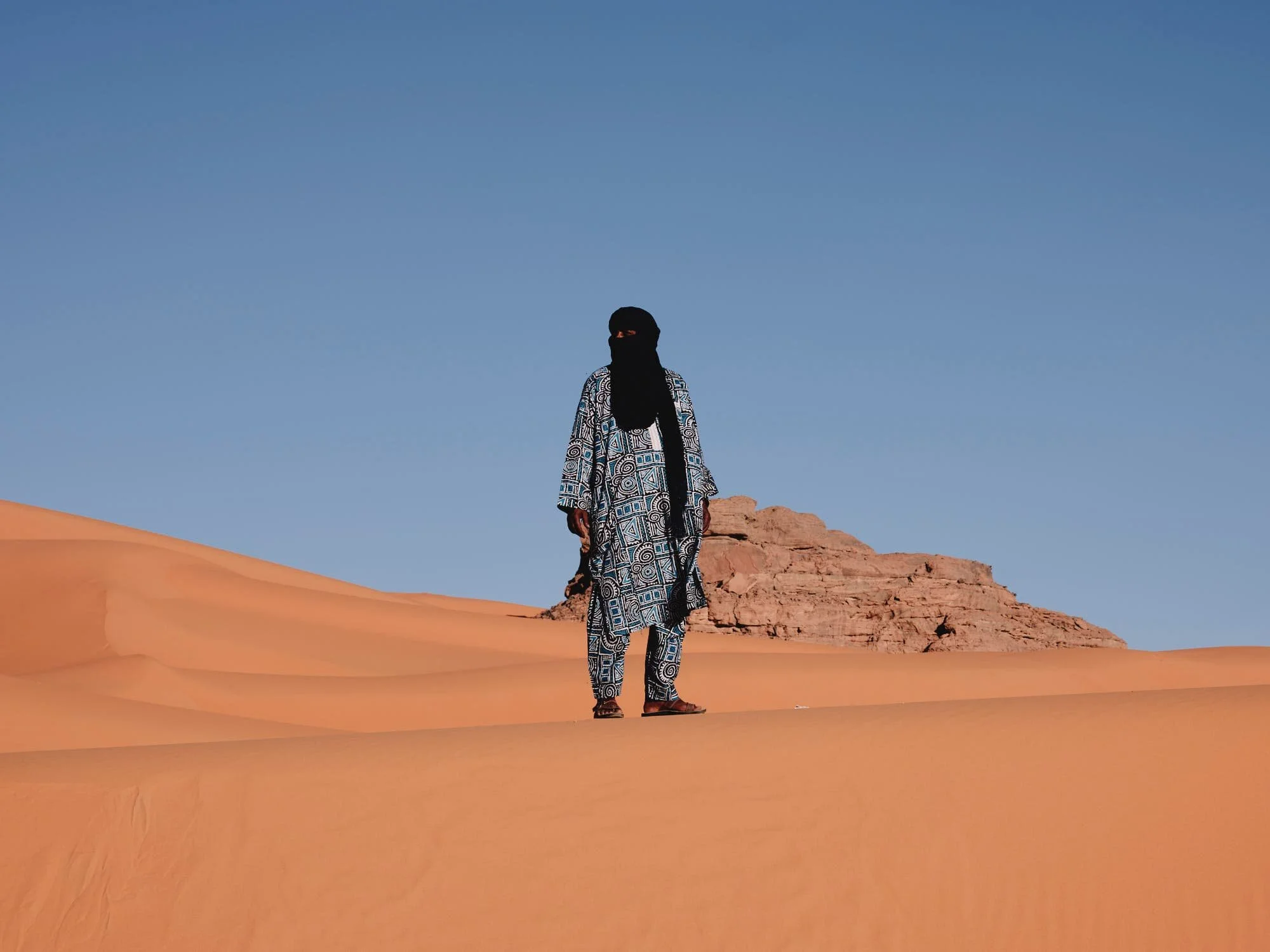
Where to Camel Trek in the Algerian Sahara: Essendilène Sanctuary
While the modern Sahara moves to the hum of the 4x4, those seeking a slow travel experience are returning to the ancient cadence of the camel. A méharée—the traditional term for a camel trek—offers an intimacy with the desert that a vehicle simply cannot replicate.
Why choose A TREK WITH CAMELS?
Unlike a motorised tour designed to cover big distances, a camel trek in Algeria focuses on depth rather than breadth. You typically journey for five to six hours a day, moving at a meditative walking pace alongside your camel while it carries the expedition's supplies.
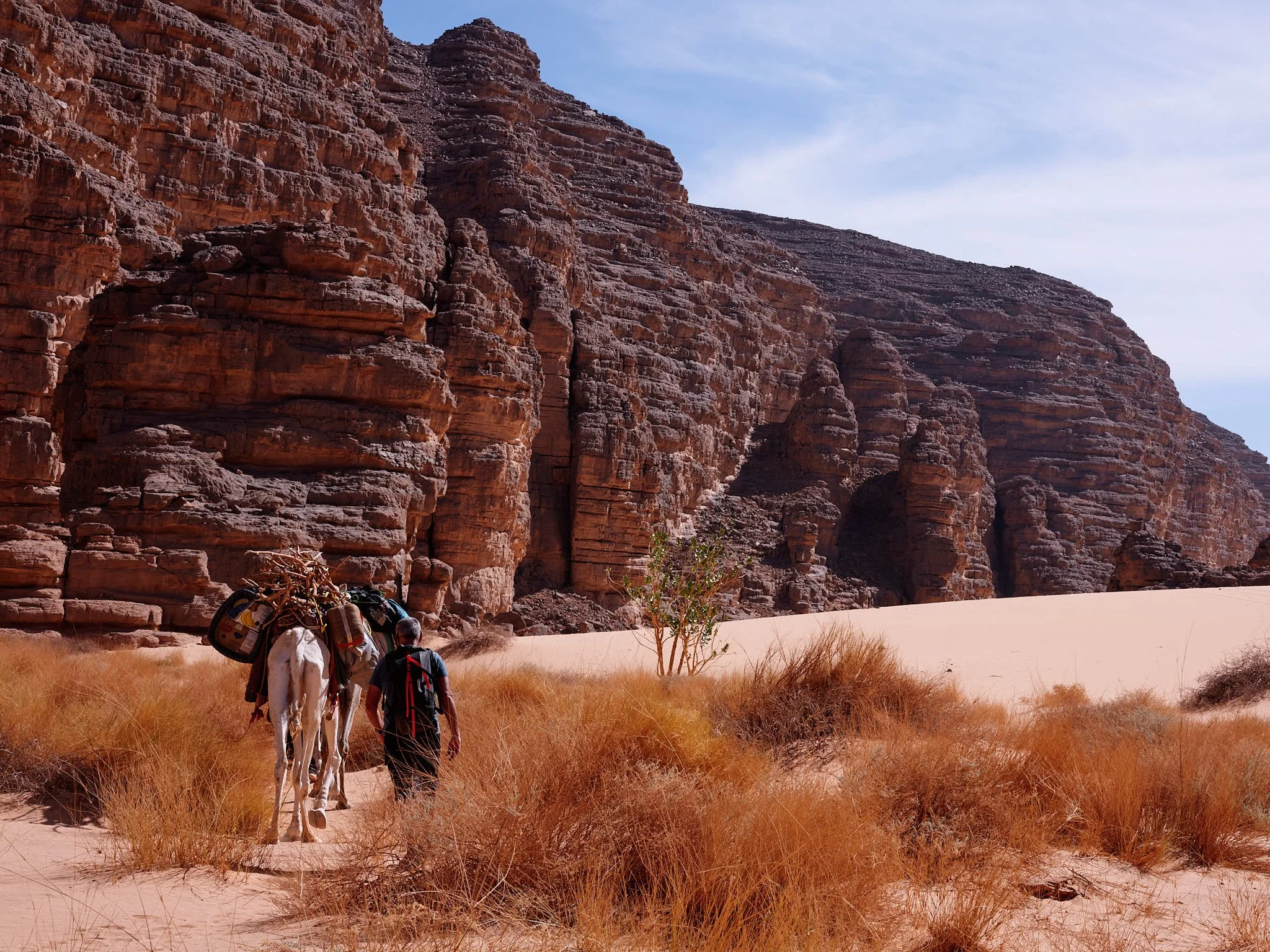
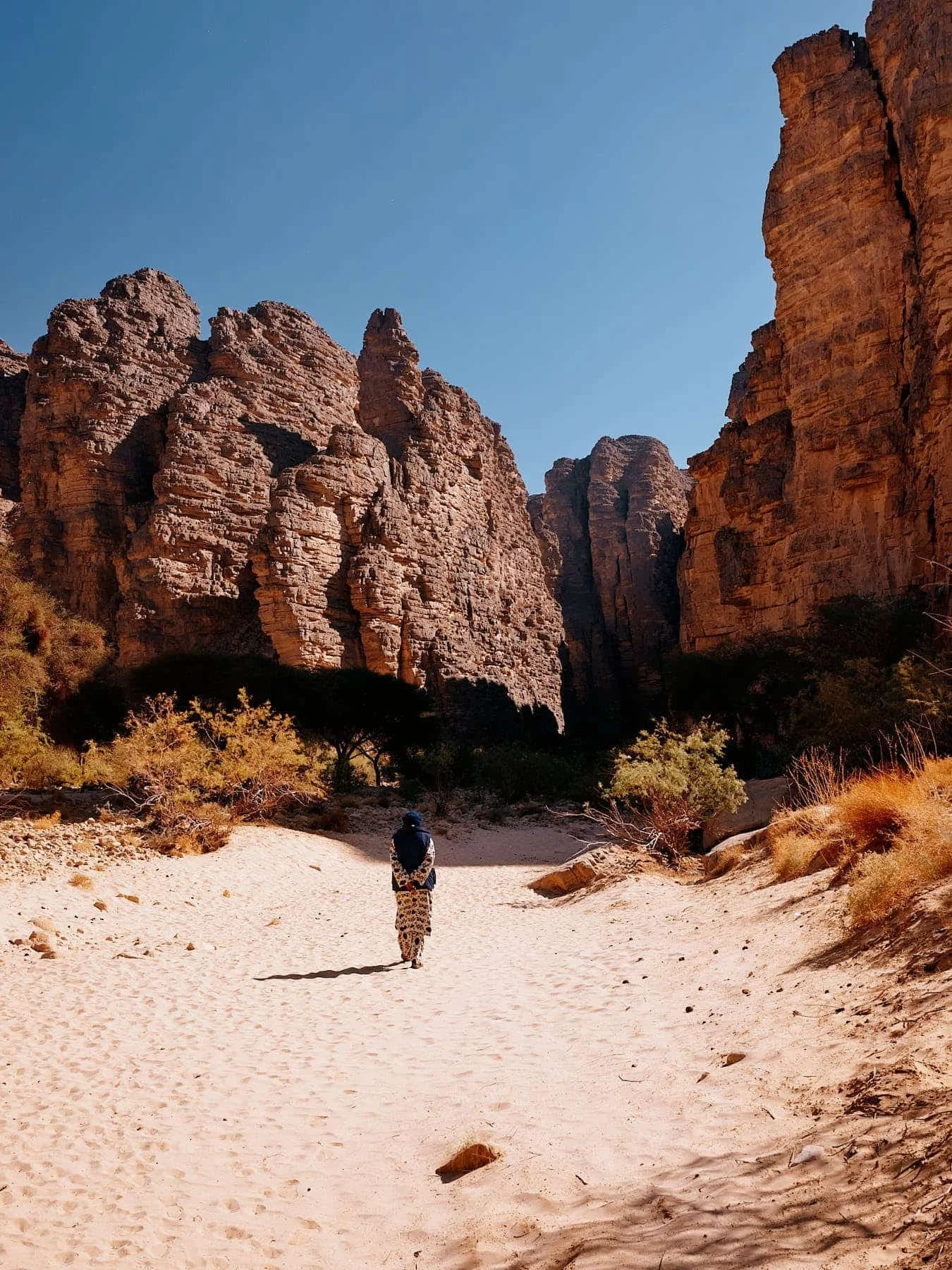
Private camel trekking toward the sanctuary of Essendilène Canyon
On a camel trek you belong to an older, slower world.
On a méharée, you belong to an older, slower world. This unhurried pace reveals the wonders of the Sahara that are otherwise invisible: the tracks of a fennec fox, the beauty and resilience of desert flora, and the whirlwinds of sand that suddenly appear and take off across the landscape.
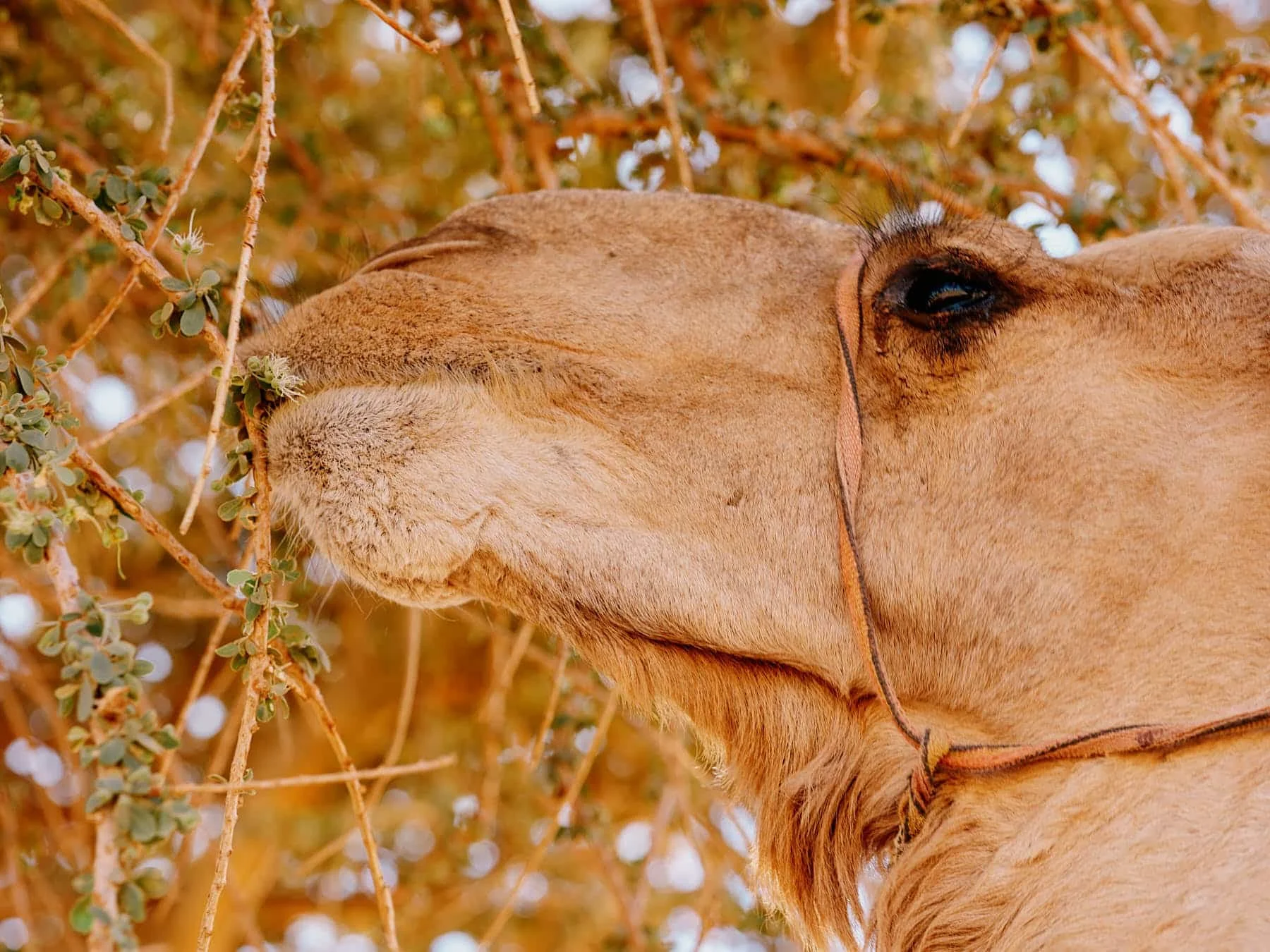
Without the intrusion of an engine, the "Saharan silence" is absolute. It is a rhythm that builds a connection to the land, the traditional Tuareg way of life, and the company of an animal that can navigate the desert for days without a single drop passing its lips.
The Route: Through the Tassili n'Ajjer
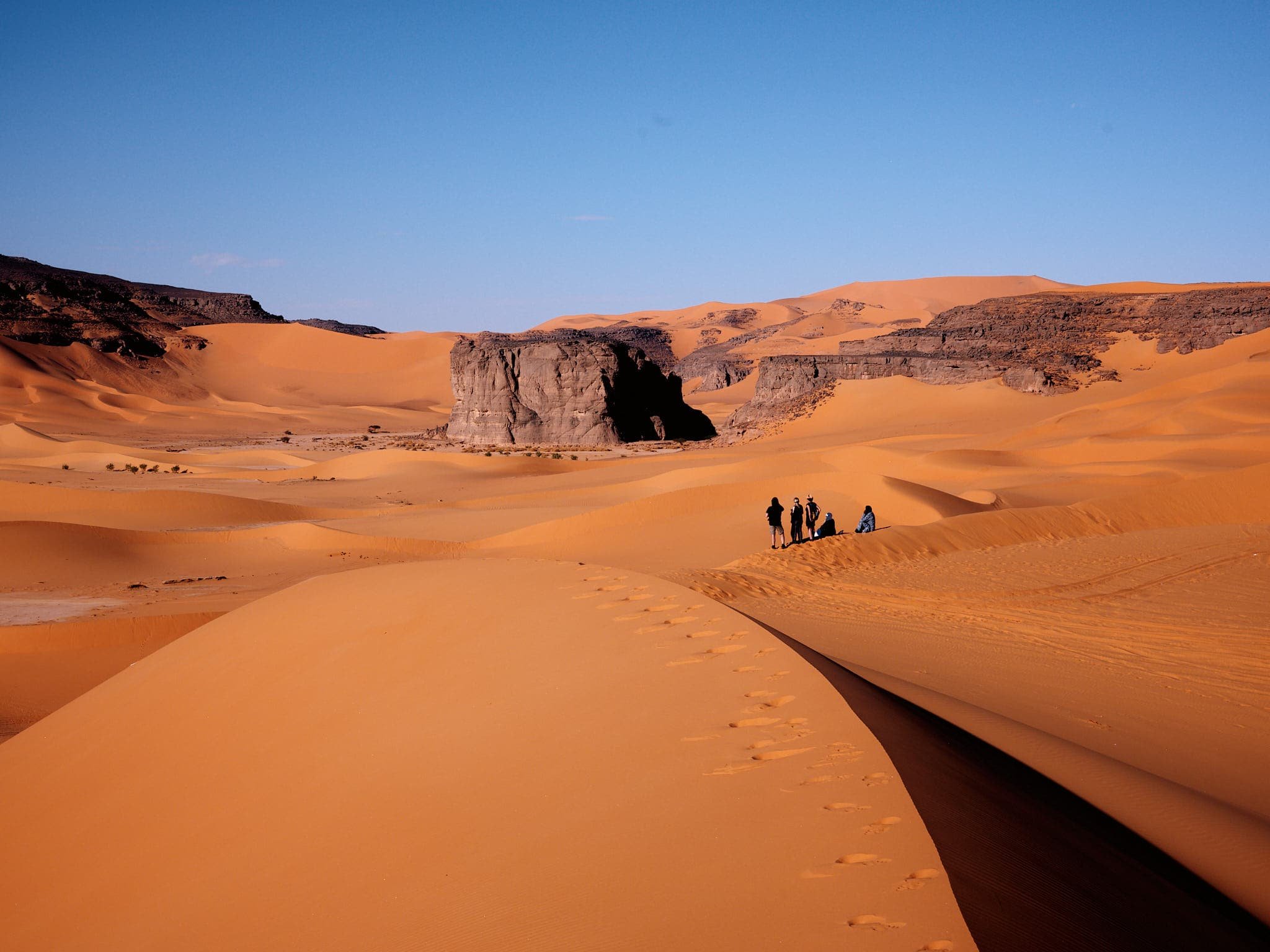
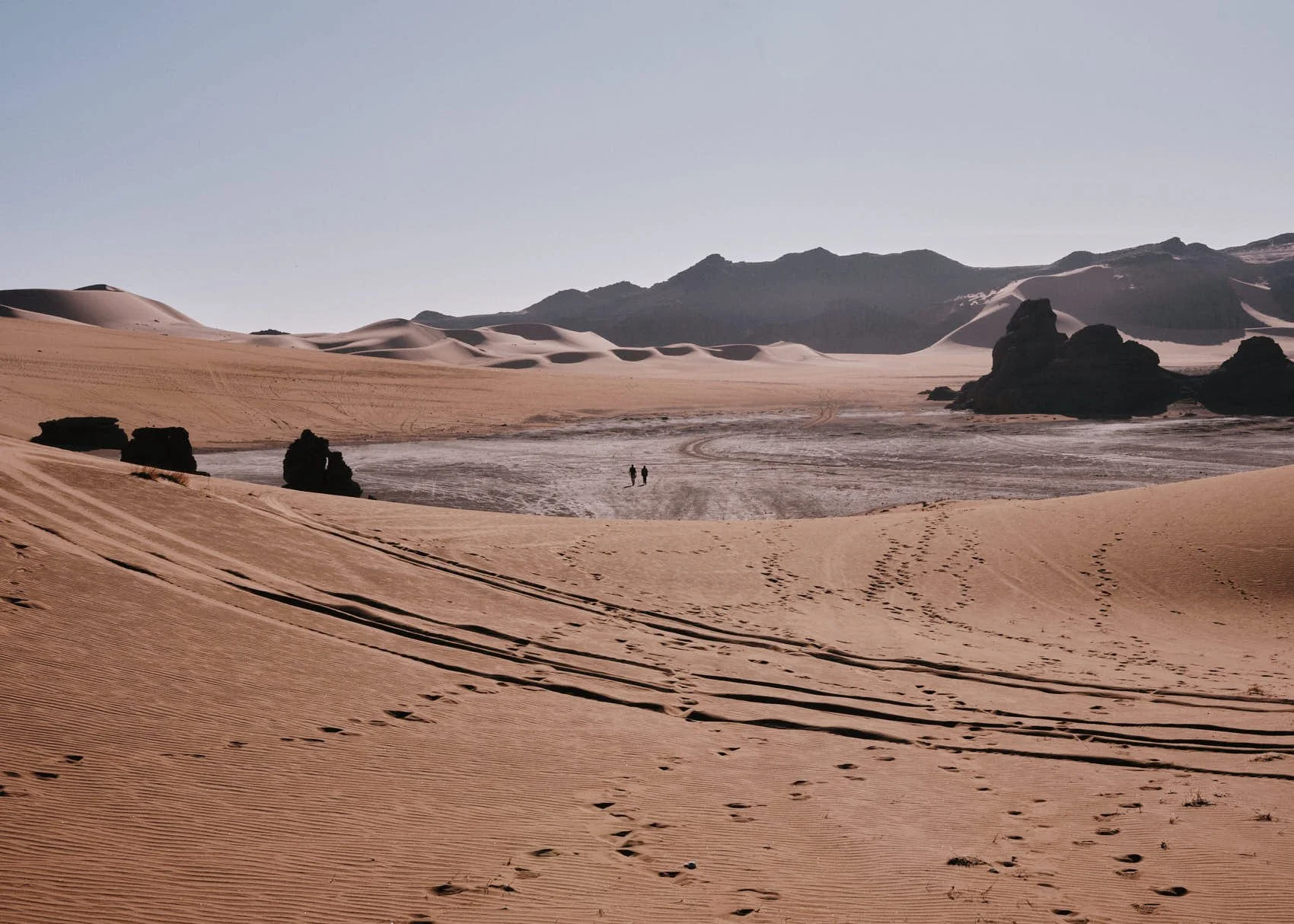
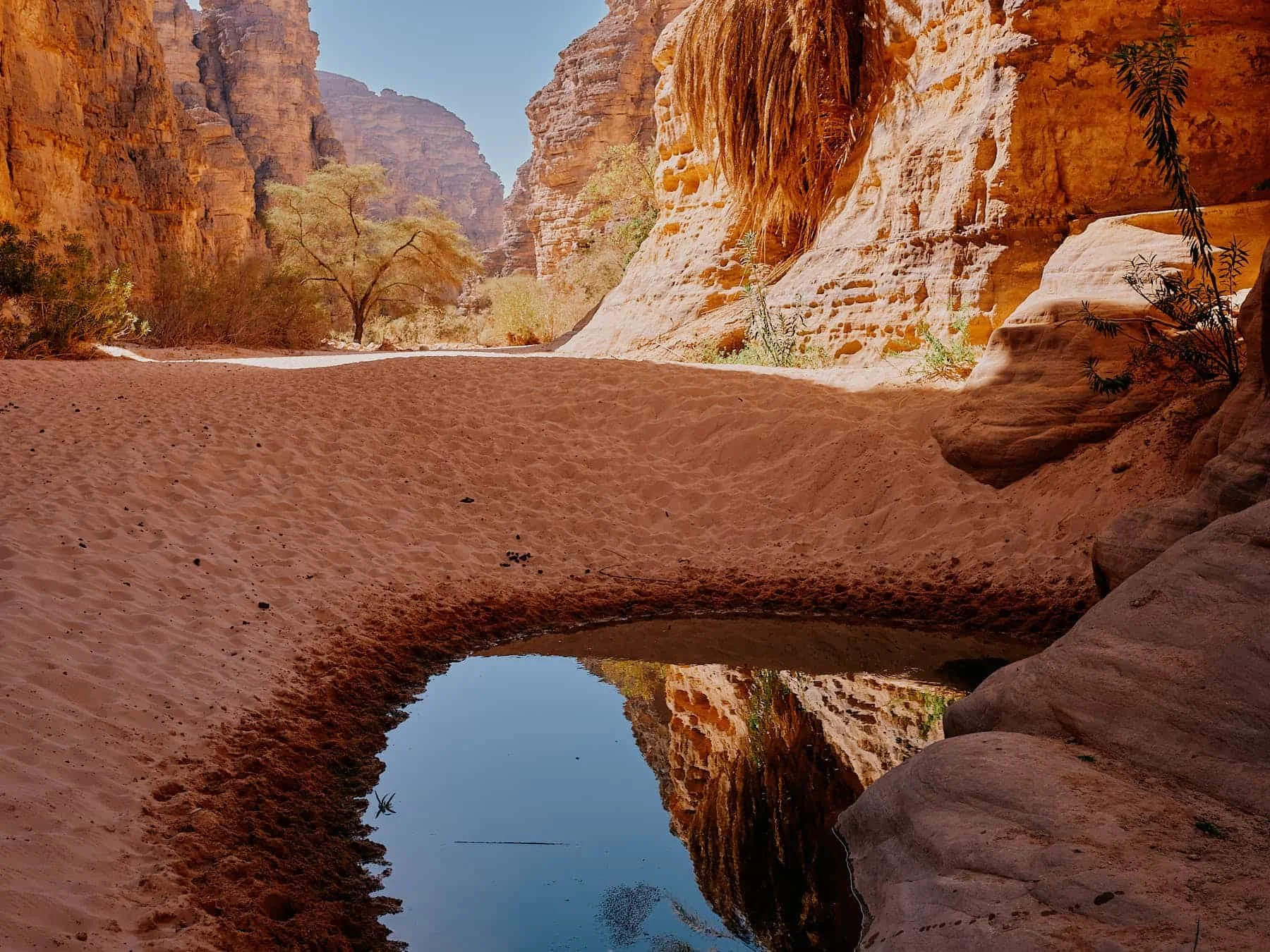
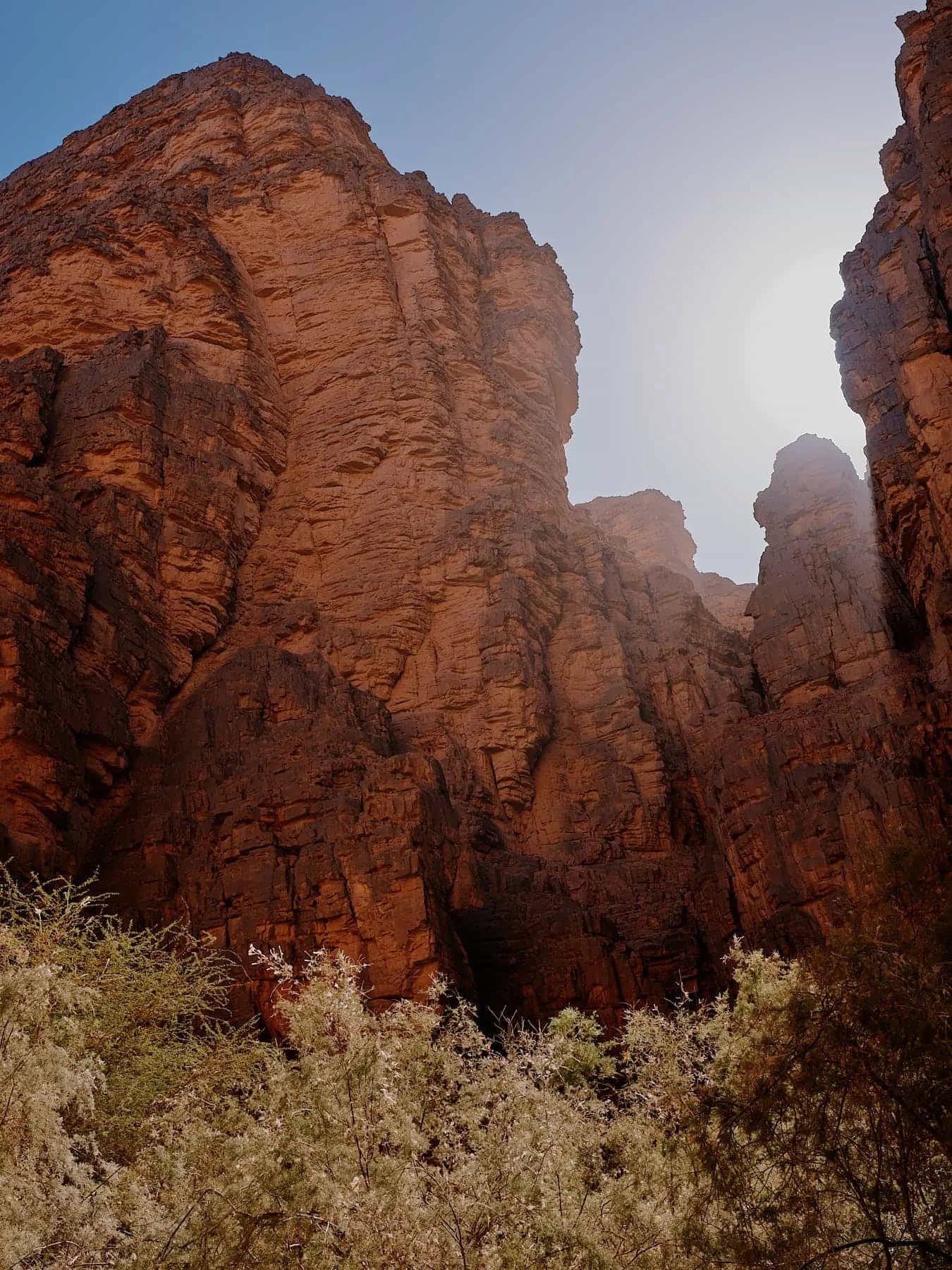
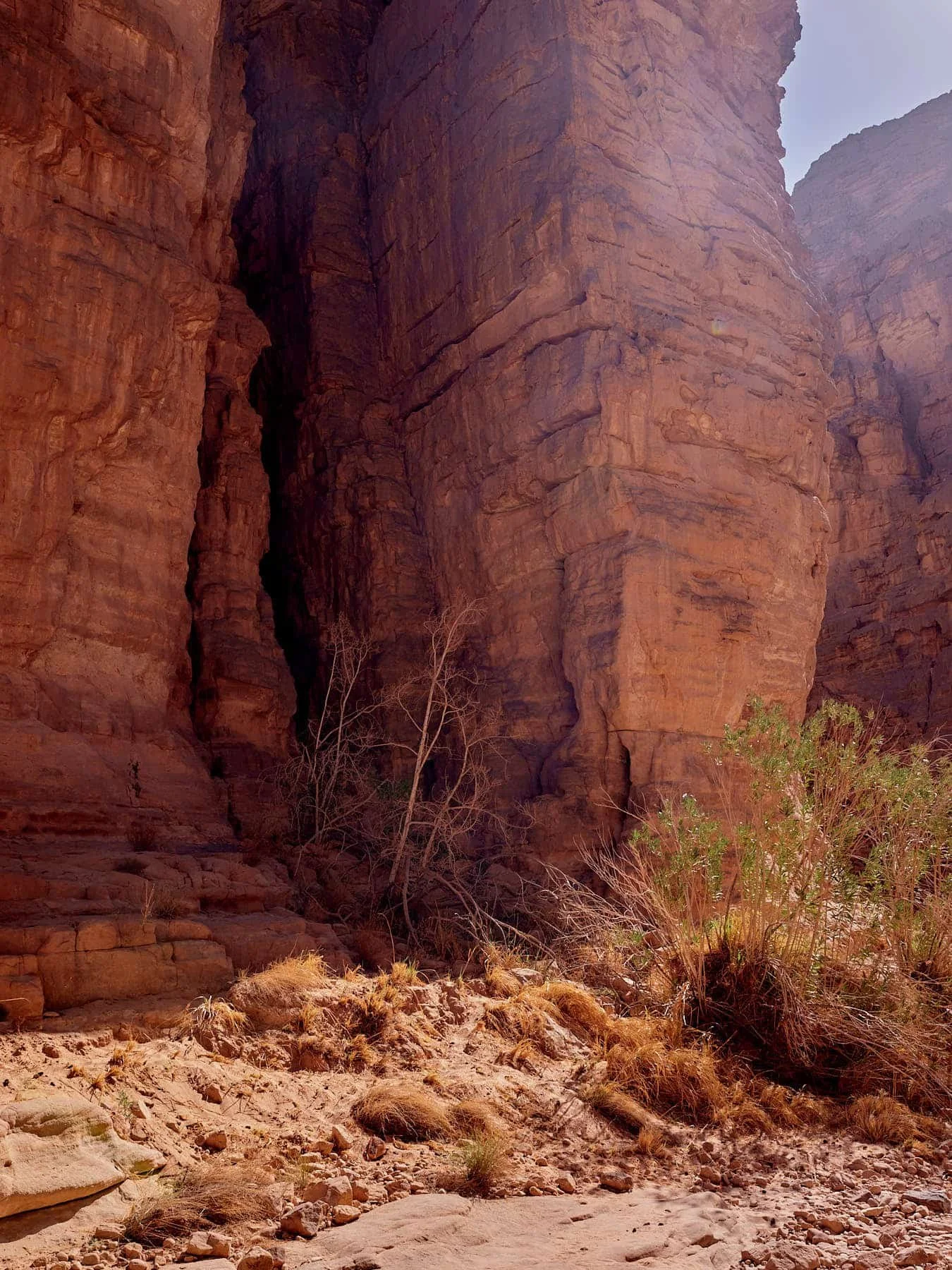
Expeditions to Essendilène Canyon typically depart from the oasis town of Djanet. The route is a masterclass in desert travel, winding past prehistoric rock art, sandstone arches, and dunes. The journey culminates at the canyon itself—a hidden sanctuary where emerald gueltas (rock pools) offer a cool reprieve. To maximize your time in the canyon, most itineraries conclude with a private 4x4 transfer back to Djanet.
Why Essendilène Canyon?
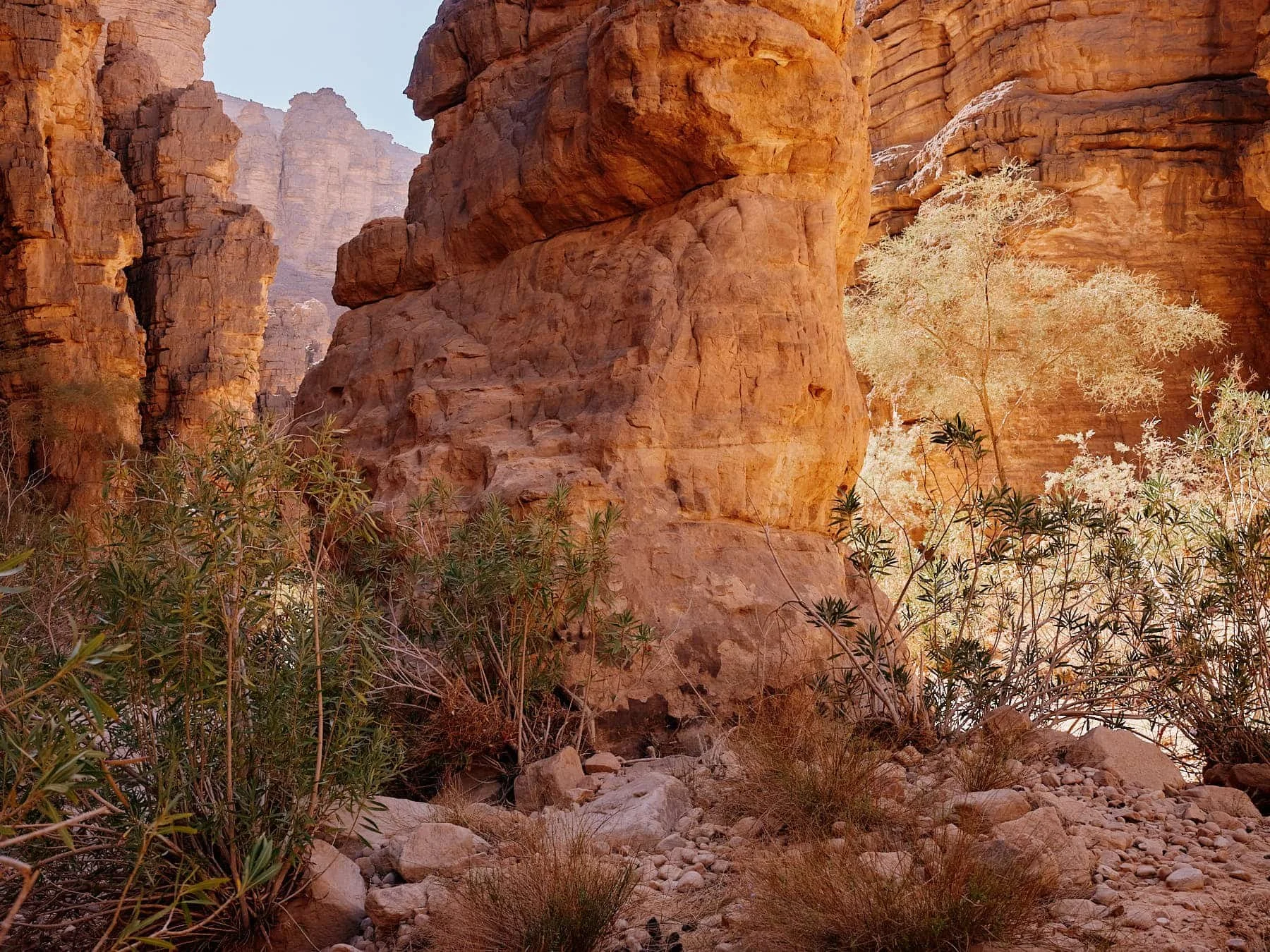
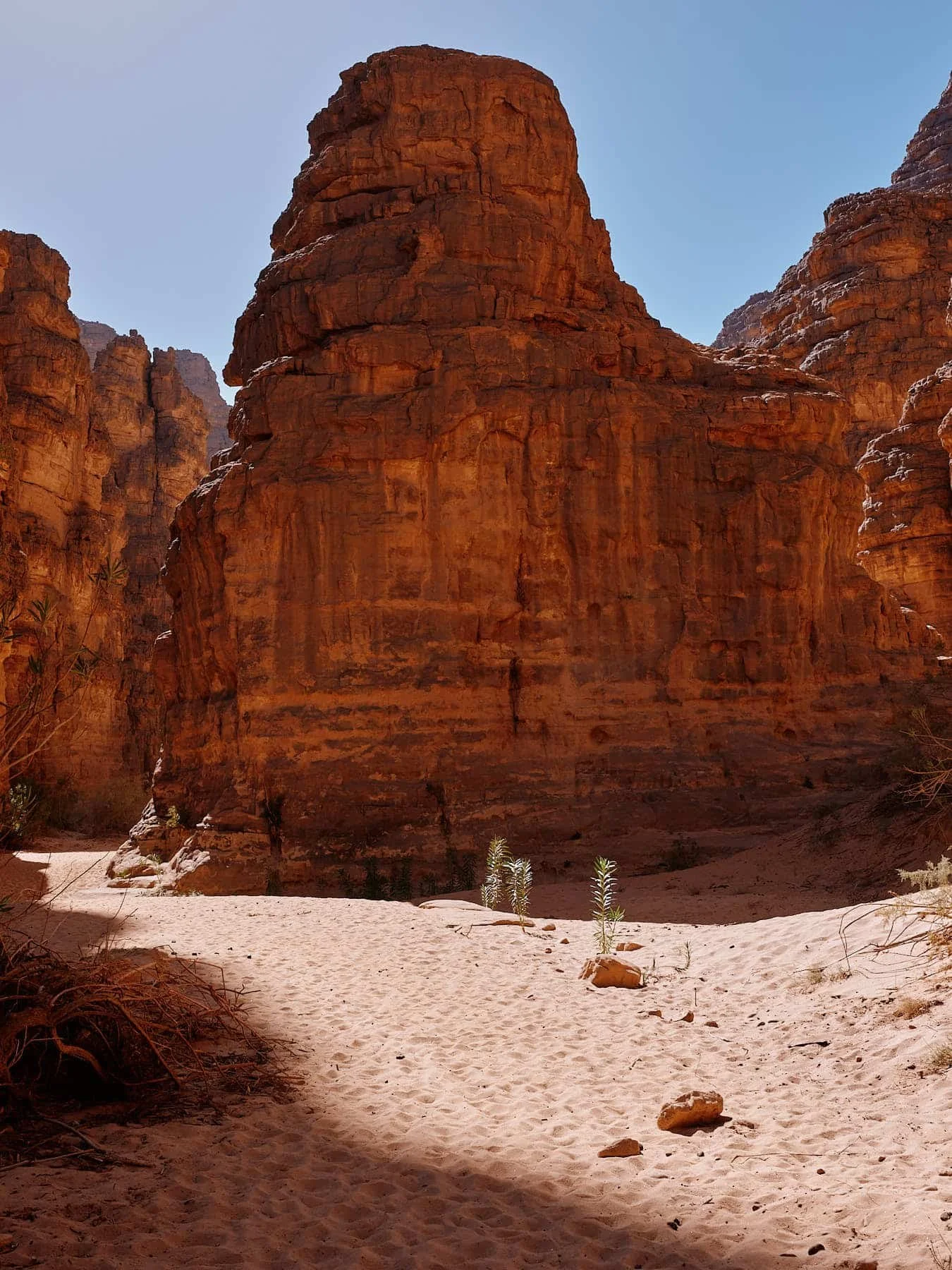
Located north of Djanet, Essendilène is the premier destination for a walking trek with camels. Its magnificent architecture of deep gorges, lush foliage and hidden pools provides a sheltered, environment that avoids the monotony of vast gravel plains. This variety makes for an immersive desert trek achievable within an 8-9 day itinerary.
Expedition Logistics: Planning Your Méharée
A camel trek through Essendilène Canyon is a specialised undertaking that requires Tuareg coordination. These expeditions are typically arranged on a private basis, allowing for a tailored pace and itinerary.
Group Size & Cost: Prices are generally quoted per person and scale based on the size of your private party. I found prices to be reasonable.
The Crew: Your team typically includes a lead Tuareg guide, a professional cook, and cameleers to manage the animals.
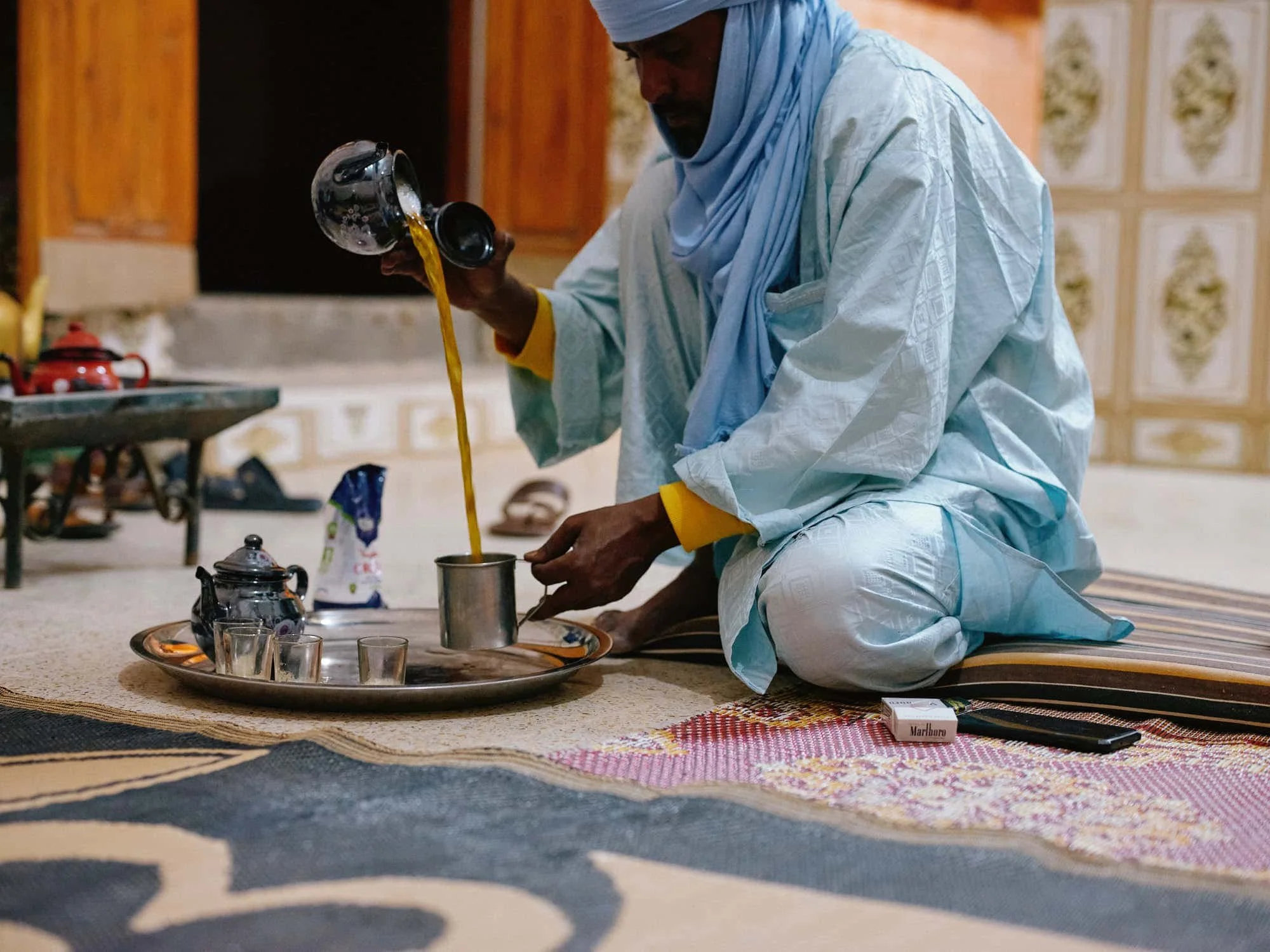
Catering: The cook handles all camp logistics. You can expect a continental breakfast, a light lunch (often a fresh salad prepared in the shade), an afternoon snack, and a hot Tuareg-inspired dinner. An endless supply of traditional tea is a staple of the journey.
Language: Most reputable agencies can provide guides fluent in English, French, German, or Arabic upon request.
Equipment: The price usually includes all camping essentials: robust desert tents, mattresses, and blankets. (Note: Many travelers prefer to bring their own lightweight sleeping bag for personal comfort).
CAMEL TREK oPERATORS
The following Djanet-based agencies are established experts in organizing treks within the Tassili n'Ajjer. I provide these as a resource for your research:
Expert Algeria: Specializes in high-end, culturally immersive itineraries for international travelers. They offer a dedicated "Essendilène by Camel" package.
Tinariwen Tours: A long-standing local operator with roots in Djanet and extensive experience in traditional camel travel.
Duneya Tours: Known for their focus on nomadic heritage and bespoke private expeditions.
I have no personal affiliation with these operators and do not earn commissions from any bookings.
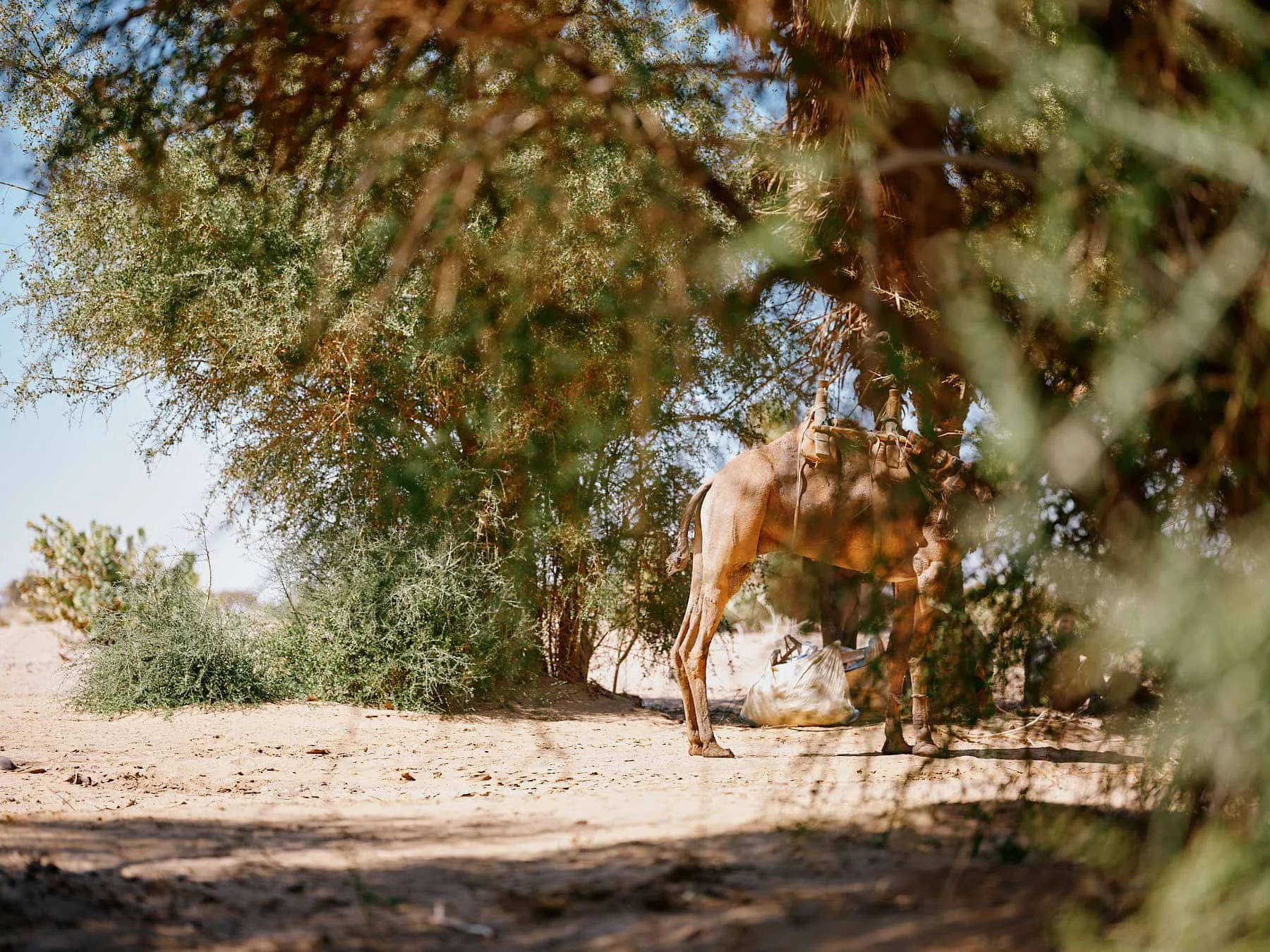
This packing list focuses on the specific requirements of a Saharan méharée—where you need to balance protection from the elements with the weight limits of a camel-supported expedition.
The Camel Trek Packing List
Because you are moving at a walking pace in a high-contrast environment (intense sun by day, sharp drops in temperature at night), your kit needs to be versatile and durable.
Clothing: The Layering System
Loose, Breathable Fabrics: Long-sleeved linen or technical "safari" shirts and lightweight trekking trousers. Avoid denim (too heavy/hot) and shorts (no protection from sun or scrub).
A "Shesh" (Tuareg Turban): You can buy a traditional indigo or cotton veil in Djanet market. Your guide will show you how to wrap it; it is the most effective protection I have found against sun, wind, and sand.
Insulation for Night: A high-quality down jacket or a heavy fleece. Temperatures in the Tassili can plummet to near freezing once the sun sets.
Footwear: Broken-in trekking boots or sturdy trail shoes. Pair these with moisture-wicking wool socks (like Merino) to prevent blisters.
Camp Shoes: A pair of lightweight sandals or Birkenstocks to let your feet breathe at the end of the day.
Sleep & Comfort
Sleeping Bag: While outfitters provide blankets, bringing your own 3-season sleeping bag (rated to 0°C/32°F) ensures personal hygiene and guaranteed warmth.
Silk Liner: Ideal for adding a layer of warmth or for sleeping in just the liner if the night is uncharacteristically warm.
Inflatable Pillow: A small luxury that significantly improves sleep quality on a desert mattress.
Sun & Skin Protection
High-Factor Sunscreen: SPF 50+ is essential. Don't forget lip balm with UV protection.
Polarized Sunglasses: With side shields if possible, to protect against the intense Saharan glare.
Moisturizer & Salve: The desert air is incredibly drying. Bring a heavy-duty hand cream and a small tin of Salve (like Bag Balm or Lucus’ Papaw) for any saddle sores or chafing.
Wet Wipes & Biodegradable Soap: Water is for drinking; "desert baths" are usually done with wipes.
The Trekking Kit
Daypack (20–30L): To carry your water, camera, and layers during the day while the camels carry your main luggage.
Hydration: At least two 1.5-liter reusable water bottles. Your guides will replenish these from wells or bladders.
Headlamp: Essential for navigating camp and the dunes after dark. Bring spare batteries.
Power Bank: There is no electricity in the canyon. A solar-compatible power bank is a wise investment for keeping cameras charged.
The "Slow Travel" Essentials
Journal & Pen: For recording those reflections during the midday rest.
A Lightweight Book: Something evocative of the landscape, like Paul Bowles, Thesiger or Justin Marozzi.
Personal First Aid: Including rehydration salts (Dioralyte), blister pads (Compeed), and any personal medications.
RELATED POSTS