Three Glasses
Nothing about Tuareg tea is hurried, and nothing needs to be explained
Tea in the Sahara is prepared slowly, because there is no reason to prepare it otherwise.
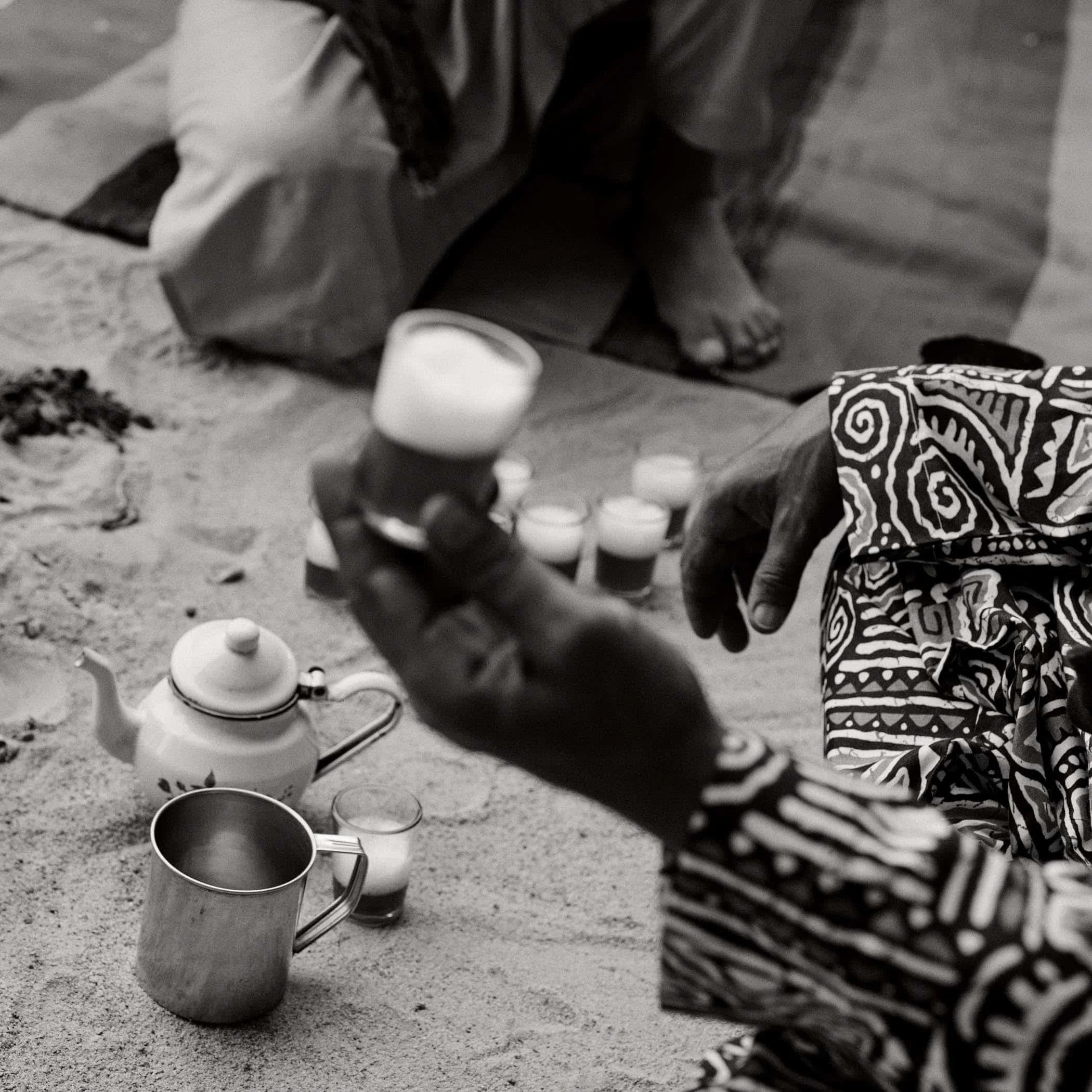
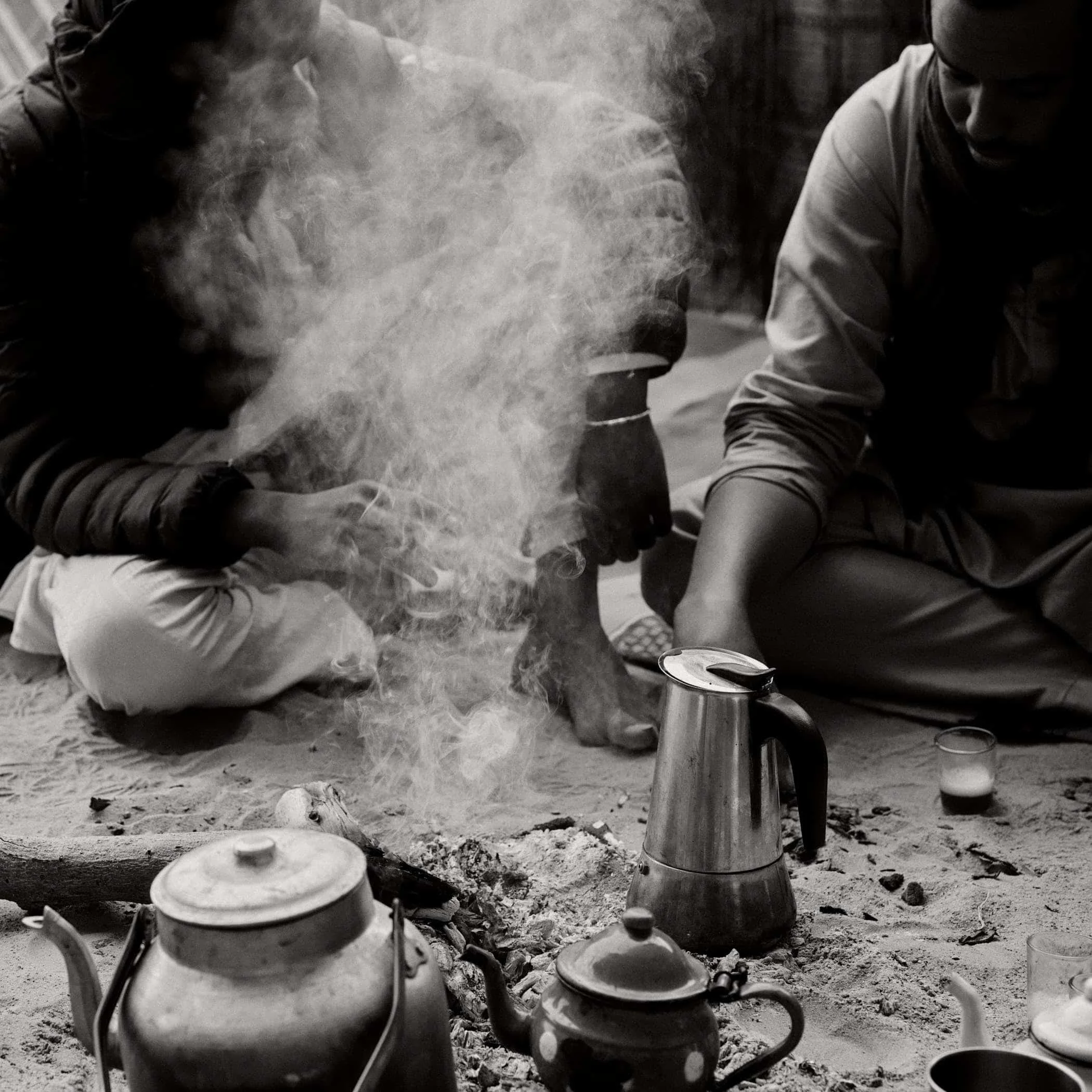
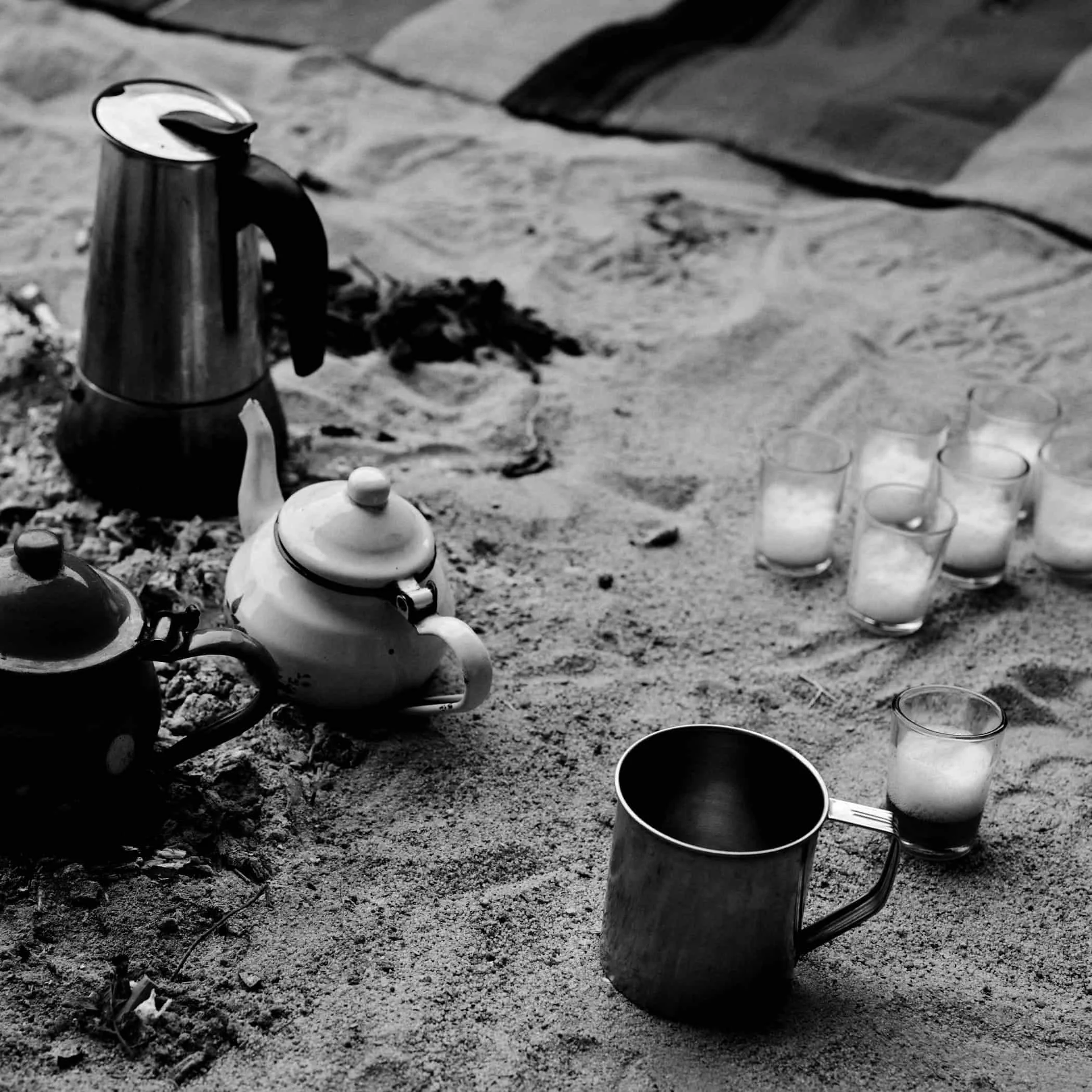
A small metal teapot is set on the coals. The paint—blue or red—is worn thin in places by years of heat and handling. Green tea—Chinese gunpowder—is measured into the pot using the same glasses from which it will later be drunk. Water is added and poured off again. The pot returns to the fire.
The tea is served in three rounds, each drawn from the same leaves.
The first glass is bitter, like life. It is sharp and unsoftened, taken without comment. This is the opening of the ritual. It establishes seriousness.
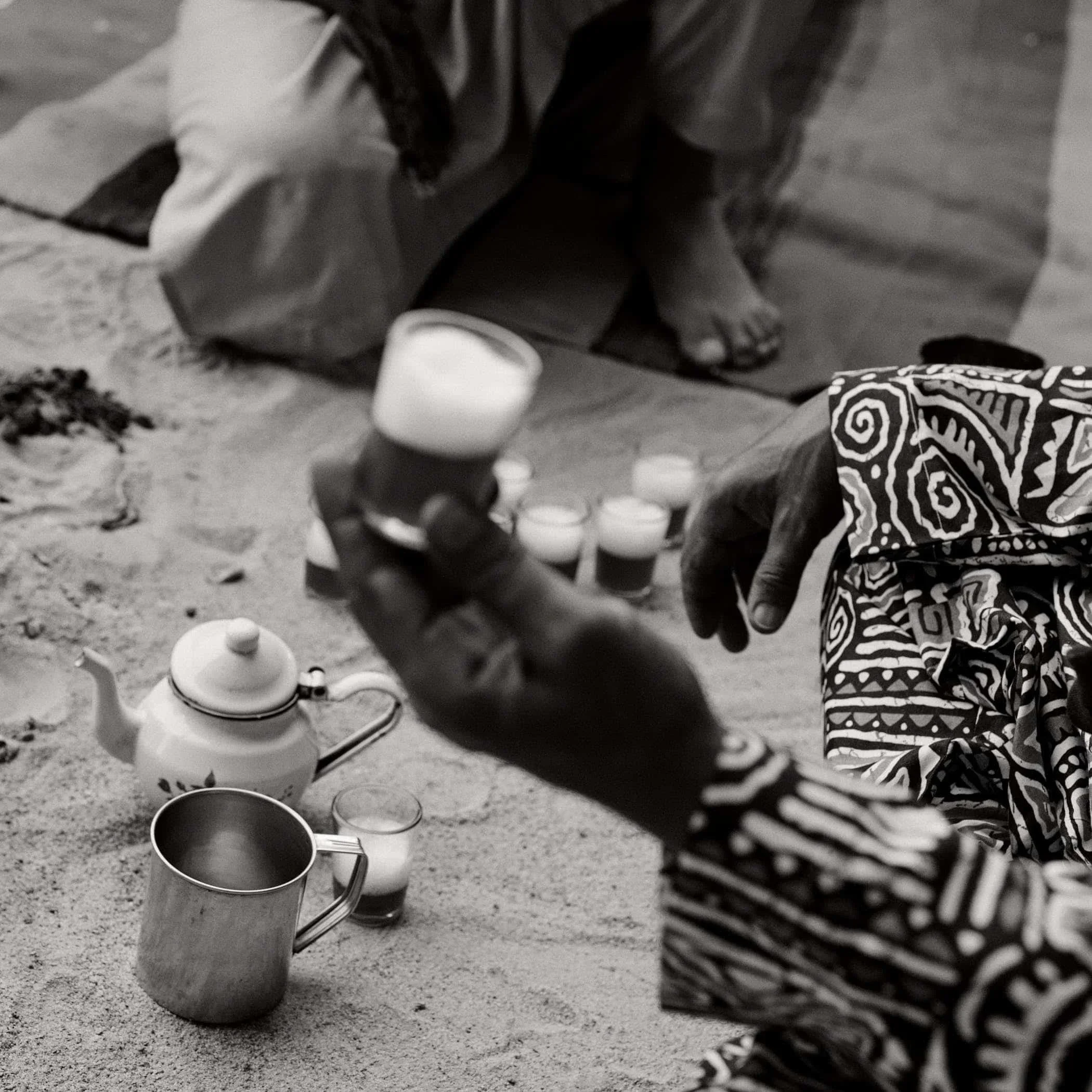
The second glass is sweet, like love. Sugar is added. The bitterness recedes but does not disappear. The tea is poured from a height, the stream thin and deliberate, striking the glass to raise a pale foam. The foam matters. It shows that care has been taken.
By the third glass, the leaves have given nearly everything. The tea is light, faintly colored, mostly sweetness. Children appear now, drawn by what was denied to them earlier. The adults drink without haste. There is no reason to rush the end.
To refuse tea is impolite. To leave before the third glass is to leave something unfinished. Conversation expands and contracts around the ritual, sometimes falling away entirely. Silence is acceptable. Waiting is assumed.
The same leaves produce three different results. Nothing new is added beyond time, heat, and sugar. What changes is the concentration.
Three glasses. One pot.
In the Sahara, this is enough.
With thanks to Piora Klinger and Tito Khellaoui.
RELATED POSTS


Nomadic instincts run deeper than walls.